Ranked · Science Fiction
The Top 10 Comic Science-Fiction Novels About Unqualified Misfits Saving Reality Like Stuart Fails to Save the Universe
by E. M. Larkin
A ranked guide to low-status heroes, cosmic mistakes, pop-culture specialists, dysfunctional teams, accidental responsibility, and universes in the wrong hands
HBO Max launched Stuart Fails to Save the Universe on July 23, 2026, sending The Big Bang Theory’s anxious comic-book-store owner into a multiverse crisis he is spectacularly unprepared to manage. Search results around the series naturally lead back to television coverage and franchise explainers. The more useful reading angle is narrower: comic science fiction about ordinary failures, cultural obsessives and reluctant bureaucrats who become the last available defense against reality-scale disaster.
Every ranked book combines genuine speculative stakes with an underqualified central figure or team. Some heroes are washed-up musicians, entertainment lawyers, disposable starship crew or minor government workers. Others possess real ability but lack status, discipline or the heroic self-image their situation seems to require. Humor is essential, but the joke cannot erase consequence; these people must actually attempt to save a city, planet, timeline or universe.
The ranking favors ensemble chemistry, pop-culture awareness, accidental cosmic responsibility and plots in which embarrassment survives alongside danger. The best matches understand Stuart’s peculiar appeal: failure is not a prelude to hidden perfection. The characters remain awkward, damaged or ridiculous while doing the one brave thing nobody more impressive is positioned to do.
Selection note. These books are ranked for comic tone, low-status heroes and reality-scale responsibility. They are not merely funny space adventures; each turns an unlikely person or dysfunctional group into the hinge of a much larger crisis.
10
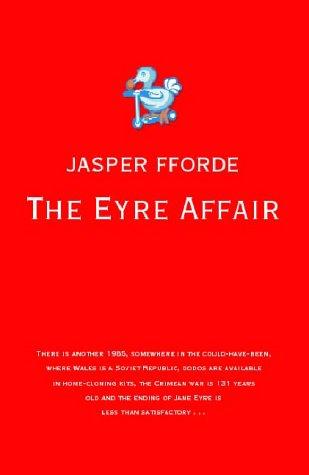
The Eyre Affair
Jasper Fforde · 2001
Heroic mismatch A literary detective pursues a criminal who can enter and alter famous books
Closest Stuart connection Genre fandom becomes operating knowledge when fictional worlds and ordinary reality begin contaminating each other
Main difference A confident alternate-history detective leads the story rather than a conspicuously failed civilian
Best for Bookish jokes, alternate history, metafiction, detective plotting and the beginning of a long Thursday Next series
Thursday Next works for Literary Detectives in an England where debates about Shakespeare can inspire street violence and time travel is an administrative problem. When Acheron Hades kidnaps Jane Eyre from her own novel, Thursday must cross the boundary between text and world to restore a cultural object that has become physically unstable.
Fforde ranks tenth because Thursday is far more capable than Stuart, but the novel treats obsessive cultural knowledge as practical equipment. Its jokes depend on readers understanding genre machinery while accepting that fictional continuity can have lethal stakes. It is the most literary version of a comic-book-store crisis spreading into the architecture of reality.
Know before you start. Includes violence, war trauma, dense allusions and deliberately absurd world building. Familiarity with Jane Eyre improves the jokes but is not required.
9
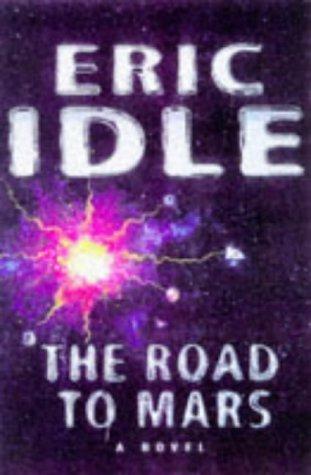
The Road to Mars
Eric Idle · 1999
Heroic mismatch Two struggling entertainers and a robot comedy scholar cross the solar system as political violence gathers around them
Closest Stuart connection Marginal pop-culture workers become entangled in danger much larger than their careers
Main difference A philosophical road novel about comedy, performance and artificial intelligence rather than multiverse repair
Best for Philosophical comedy, show-business failure, robot consciousness, space travel and Monty Python-adjacent sensibility
In the twenty-second century, comedy duo Alex Muscroft and Lewis Ashby travel toward Mars while Carlton, their robot companion, develops a thesis about why humans laugh. Their circuit of minor venues intersects with a larger conspiracy, forcing performers accustomed to failure into events whose stakes exceed any booking they have received.
Idle’s novel shares Stuart’s affection for people whose cultural labor is both ridiculous and necessary. The comedy discussions occasionally halt the plot, yet they make the book unusually attentive to the difference between a joke and the person telling it. It ranks ninth because the adventure remains within one future, but the combination of low status, performance and accidental importance fits.
Know before you start. Includes dated sexual humor, terrorism, violence and extended digressions on theories of comedy. The tone is more essayistic than action-driven.
8
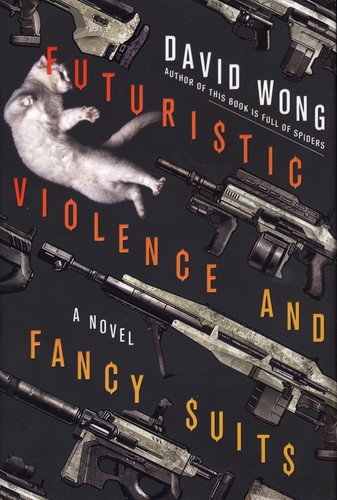
Futuristic Violence and Fancy Suits
David Wong · 2015
Heroic mismatch A broke young woman inherits dangerous attention in a privatized future city dominated by viral celebrity
Closest Stuart connection An ordinary person with little institutional power must survive technology, fandom and villains performing for an audience
Main difference A violent cyberpunk thriller with grotesque internet satire rather than cosmic science fiction
Best for Fast cyberpunk satire, a reluctant heroine, online culture, flamboyant villains and the start of a series
Zoey Ashe lives in a trailer with her mother until the death of a wealthy, absent father makes her the focus of killers and media spectacle. In Tabula Ra$a, crime, implants and online attention reinforce one another. A group of sharply dressed protectors may be her only help, though their loyalties come with inherited complications.
Zoey remains gloriously unprepared for the persona strangers project onto her. The novel’s strongest Stuart connection is its understanding that fandom, branding and humiliation can become physical forces when technology scales them. It ranks eighth because the danger is citywide rather than universal, but it offers a similarly messy collision between nerd culture and unwanted responsibility.
Know before you start. Includes graphic violence, misogyny, sexual threats, animal peril and deliberately abrasive humor. The author now publishes under the name Jason Pargin.
7
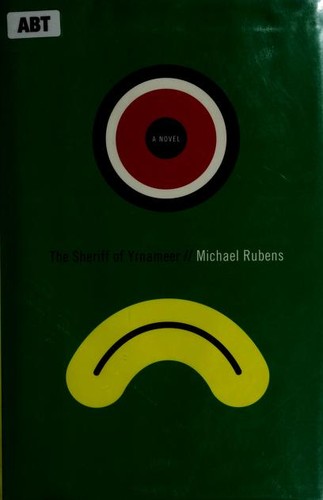
The Sheriff of Yrnameer
Michael Rubens · 2009
Heroic mismatch A cowardly smuggler is mistaken for a legendary lawman and must defend an isolated planet
Closest Stuart connection A man whose public identity exceeds his courage becomes the community’s only plausible hero
Main difference A far-future western spoof centered on deception and frontier defense
Best for Space western comedy, an impostor hero, colorful aliens, frontier stakes and a standalone adventure
Cole is an opportunistic space traveler with debts, bad luck and no desire to die nobly. A chain of lies leaves him carrying the reputation of a famous sheriff to Yrnameer, a remote planet threatened by violent enemies. The inhabitants need the legend, and Cole must decide how long performance can substitute for competence.
Rubens builds its comedy from the gap between franchise-ready mythology and the frightened person wearing it. Cole’s reluctance is not cute camouflage for perfect heroism; courage arrives unevenly and often after self-preservation fails. It ranks seventh because its plot is linear rather than multiversal, but its low-rent cosmic tone and counterfeit hero suit Stuart well.
Know before you start. Includes violence, sexual humor, cowardice played for comedy and intentionally broad caricature. The humor is more television-sitcom direct than subtle.
6
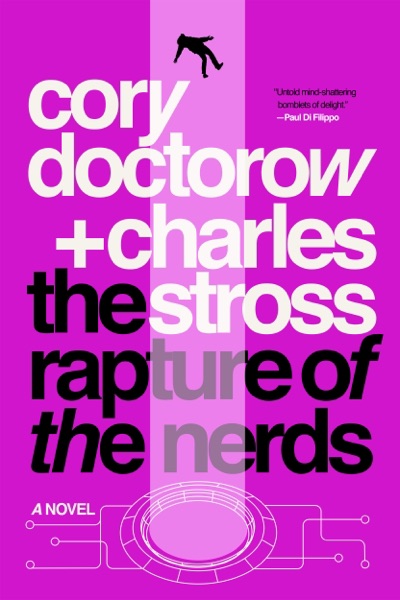
The Rapture of the Nerds
Cory Doctorow and Charles Stross · 2012
Heroic mismatch A resistant technophobe is dragged into the legal and existential chaos of a posthuman singularity
Closest Stuart connection Nerd culture has literally reshaped reality, leaving an irritated nonhero to navigate its consequences
Main difference A densely referential posthuman satire whose plot behaves like a sequence of escalating thought experiments
Best for Posthuman absurdity, singularity satire, British comic SF, identity puzzles and relentless conceptual invention
Huw lives in a world where most of humanity has uploaded, transformed or joined a solar-system-scale cloud of computation. A jury summons leads to infection by unstable technology, identity complications and questions about what the remaining humans owe the intelligence surrounding them. Avoiding transcendence proves harder than surviving it.
The novel weaponizes every argument associated with technological fandom: abundance, copying, privacy, embodiment and the conviction that the next upgrade fixes human nature. Huw’s exhaustion supplies the grounding comic voice. It ranks sixth because the information density can overwhelm character, but no selection better matches a universe endangered by nerds who believe they understand universes.
Know before you start. Includes sexual material, body transformation, ideological caricature and extremely dense references. It is intentionally chaotic and not a gentle introduction to either author.
5
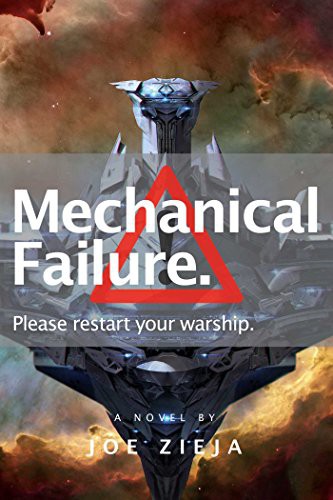
Mechanical Failure
Joe Zieja · 2016
Heroic mismatch A former sergeant rejoins an incompetent space military just as its automation begins behaving catastrophically
Closest Stuart connection A reluctant, compromised man becomes the nearest thing a dysfunctional institution has to a responsible adult
Main difference Military parody with robots and bureaucracy rather than comic-book multiverse mechanics
Best for Military SF parody, malfunctioning automation, found-team friction, quick pacing and the first Epic Failure novel
R. Wilson Rogers has been smuggling after leaving the military, but legal trouble pushes him back into service. The Meridan Patrol Fleet he remembers has automated itself into absurdity. As drills, regulations and machine decisions move toward real disaster, Rogers must work with officers who mistake procedure for readiness.
Zieja’s comedy depends on systems failing in recognizable ways: nobody has the full picture, incentives reward denial and the person best placed to intervene would strongly prefer not to. Rogers is more experienced than Stuart but just as reluctant to become a symbol. It ranks fifth for ensemble farce and institutional failure with consequences beyond the punch line.
Know before you start. Includes combat, profanity, bureaucratic humor and broad military stereotypes. Readers looking for hard science or solemn strategy should choose elsewhere.
4
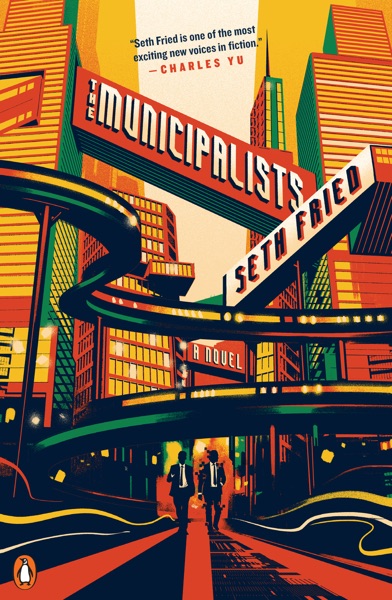
The Municipalists
Seth Fried · 2019
Heroic mismatch A rule-bound civil servant and an irreverent artificial intelligence try to prevent a citywide technological attack
Closest Stuart connection A socially awkward specialist becomes an action hero only because his unglamorous knowledge is suddenly indispensable
Main difference A municipal-tech satire focused on one city and the politics of urban planning
Best for Odd-couple banter, urban planning, artificial intelligence, civic satire and a hopeful standalone
Henry Thompson works for the United States Municipal Survey and believes deeply in orderly cities, approved procedure and minimal improvisation. Sent to Metropolis after a colleague disappears, he is paired with OWEN, a holographic AI who drinks, jokes and ignores Henry’s preferred boundaries. Their investigation exposes a plan to attack the city’s infrastructure.
Henry is the bureaucratic cousin of a comic-book-store owner: he has expertise few people respect and interpersonal skills that do not improve under pressure. The partnership with OWEN gives the novel a lively double act, while the city’s systems make abstract policy physically vulnerable. It ranks fourth because the stakes stop short of reality itself, but its misfit chemistry is exceptionally close.
Know before you start. Includes terrorism, alcoholism played partly for comedy, violence and debates about redevelopment and displacement. The tone balances absurdity with sincere civic concern.
3
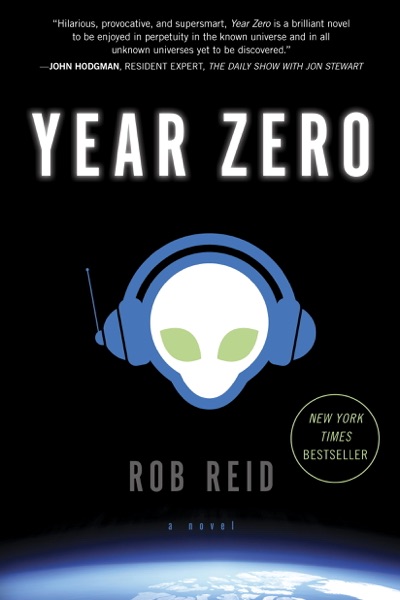
Year Zero
Rob Reid · 2012
Heroic mismatch A junior entertainment lawyer learns that alien music piracy has made Earth liable for more money than exists
Closest Stuart connection An obscure pop-culture professional must save the planet because interstellar fandom has misunderstood human rules
Main difference A copyright satire whose aliens and legal jokes matter more than parallel universes
Best for Music jokes, copyright satire, friendly aliens, a civilian hero and a fast standalone plot
Nick Carter works at a powerful law firm when extraterrestrials reveal that humanity’s music is the greatest art in the universe. Unfortunately, aliens have copied it without licenses, and the statutory damages now threaten the galactic economy. Some interested parties find destroying Earth easier than renegotiating the bill.
Reid turns entertainment knowledge and administrative trivia into planetary defense. Nick is not secretly a fighter or scientist; his usefulness comes from understanding the absurd system that created the threat. That makes him one of Stuart’s closest literary relatives. It ranks third for the exact combination of low-status cultural labor, fandom and cosmic stakes.
Know before you start. Includes violence, legal jargon, geek-culture references and jokes that reflect the early 2010s. The science is cheerfully subordinate to the premise.
2
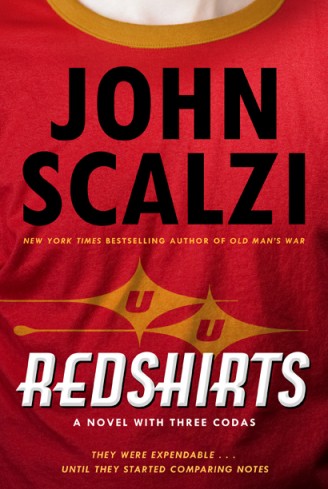
Redshirts
John Scalzi · 2012
Heroic mismatch Disposable crew members discover that narrative logic is killing them and decide to confront its source
Closest Stuart connection Minor franchise figures become aware that reality treats them as expendable supporting characters
Main difference A metafictional starship comedy modeled on television production rather than superhero multiverses
Best for Star Trek satire, metafiction, ensemble banter, quick chapters and a comic premise with a sincere afterlife
Ensign Andrew Dahl notices that away missions aboard the Intrepid produce suspiciously consistent deaths among junior crew. Senior officers survive, scientific explanations arrive as nonsense and everyone with experience knows when to hide. Dahl and his fellow new recruits investigate the pattern and discover a connection between their universe and a badly written television show.
Scalzi ranks second because the premise elevates background people without pretending they were always destined for the center. Survival requires the redshirts to understand genre, collaborate and challenge creators who barely considered them human. The codas add emotional consequence to what could have remained a clever parody, making failure and authorship matter beyond the joke.
Know before you start. Includes frequent death, profanity, existential distress and three stylistically unusual codas. Familiarity with television science fiction enriches the comedy.
1
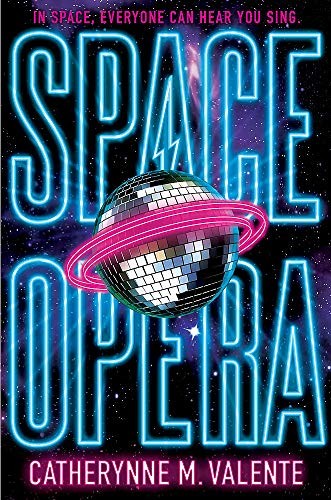
Space Opera
Catherynne M. Valente · 2018
Heroic mismatch A washed-up glam-rock act must represent humanity in a galactic song contest whose losers are exterminated
Closest Stuart connection Embarrassing pop-culture figures become Earth’s defense against a cosmic judgment they barely understand
Main difference A flamboyant Eurovision-style performance novel rather than a superhero or multiverse adventure
Best for Maximalist prose, Eurovision energy, alien cultures, queer glam rock, grief and a complete cosmic comedy
After first contact, humanity learns that sentient species prove their worth through the Metagalactic Grand Prix. Earth must compete or be classified as nonsentient and removed. The aliens select Decibel Jones and the Absolute Zeros, a broken glam-rock act whose surviving members have grief, history and almost no current career to support the assignment.
Valente takes first place because failure remains visible at every scale. Decibel is not polished into an ideal representative; the qualities that made the band excessive, wounded and ridiculous are also what make performance meaningful. Cosmic survival depends on art, friendship and the refusal to let humiliation define sentience. That is Stuart’s underdog logic at its brightest and most unapologetically strange.
Know before you start. Includes death, substance use, dense digressions and a highly ornate narrative voice. Readers who prefer restrained humor may find the style overwhelming.
Which Comic Science-Fiction Novel Should You Read First?
Where to start. Start with Space Opera if you want failed pop culture turned into literal planetary defense. Choose Redshirts when Stuart’s status as a supporting character suddenly promoted into cosmic importance is the main attraction. Both are funny, self-aware and more emotionally serious than their premises initially suggest.
Year Zero is the cleanest civilian-professional match: an entertainment lawyer saves Earth through knowledge nobody heroic would possess. The Municipalists offers the best odd-couple partnership, while Mechanical Failure places similar dysfunction inside an automated military.
Read The Rapture of the Nerds for the densest multiverse-adjacent technological chaos, The Eyre Affair for literary fandom and Futuristic Violence and Fancy Suits for violent internet-age satire. The Sheriff of Yrnameer and The Road to Mars are looser space comedies about performers—one accidental, one professional—whose roles become larger than expected.
Comic science fiction works best when the humor does not cancel the emergency. The misfit may understand that the universe is absurd, but somebody still has to act before the absurdity kills everyone. Low status becomes an advantage because these characters notice the discarded rules, background people and cultural details grand heroes ignore.
Space Opera wins by making imperfect performance proof of humanity. Redshirts makes supporting characters fight the story that classified them as disposable. Across the list, failure is neither cured nor romanticized. It becomes experience—a messy record of surviving long enough to recognize the crisis when it finally needs exactly the wrong person.