Sony's new Resident Evil reaches theaters on September 18, 2026 with an all-new story directed by Zach Cregger. Its official premise follows medical courier Bryan through one catastrophic night, returning the franchise to the combination that made its earliest entries so effective: a confined route, biological terror, scarce information, and institutions whose scientific ambition has escaped their control.
Bio-horror turns the language of progress into a warning label. A parasite may begin as medicine. A fungus may have industrial value. A laboratory may be designed for containment while its corporate owner creates incentives to underreport failure. The monster is frightening, but the protocol explaining why nobody stopped it is often worse.
This ranking favors engineered organisms, outbreak investigation, corporate or military laboratories, bodily transformation, and survivors forced to learn the rules while danger is already moving. Zombie fiction appears when the biology and institutional origin matter as much as the siege. The closest matches make every specimen, security door, and reassuring executive statement feel potentially lethal.
Selection note. The ranking rewards biological mechanisms, institutional culpability, containment pressure, and characters who must understand an outbreak to survive it. Generic zombie action ranks below stories where science and corporate decision-making are part of the horror.
10
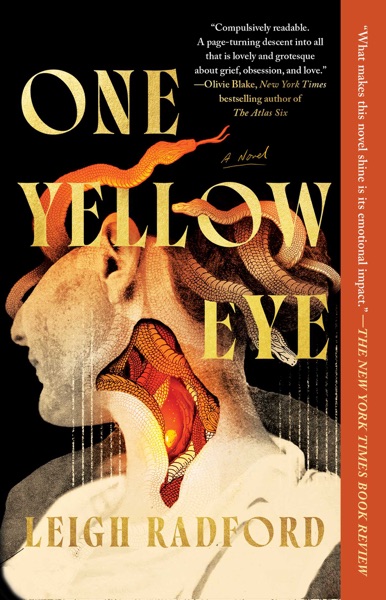
One Yellow Eye
Leigh Radford · 2025
Outbreak After a fast zombie pandemic, a medical researcher hides her infected husband and searches for evidence that personhood remains inside him
Closest Resident Evil connection A scientist pursues a cure in intimate proximity to infection while government containment treats every altered body as already lost
Main difference A claustrophobic marriage-and-grief novel concentrates on one captive infected person
Best for Readers who want a recent zombie novel, obsessive love, scientific hope, domestic confinement, grief, and a more intimate outbreak aftermath.
Kesta survives the collapse but refuses to accept that her husband Tim is entirely gone. Concealing him in their London home, she observes his behavior and attempts to reach whatever remains behind his one changed eye. Scientific hope, denial, love, and danger become impossible to separate.
It ranks tenth because its scale is domestic rather than corporate. The novel offers a strong emotional variation on the familiar question behind virus horror: if treatment might exist, when does killing the infected become prevention, and when does it become abandonment?
Know before you start. The book includes infection, captivity, gore, death, bereavement, marital obsession, medical experimentation, and sustained fear of violent transformation.
9
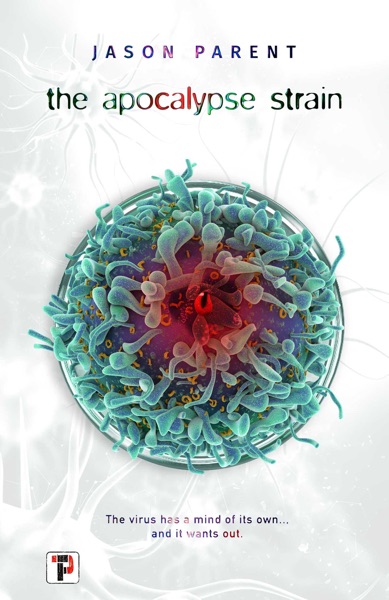
The Apocalypse Strain
Jason Parent · 2020
Outbreak Researchers in a remote high-security facility confront a rapidly mutating pathogen and the breakdown of containment
Closest Resident Evil connection A sealed laboratory becomes a survival maze once experimental biology begins changing both victims and the rules
Main difference The narrative is a compact independent thriller rather than part of a large franchise mythology
Best for Readers who want an isolated research facility, rapid mutation, a contained cast, outbreak suspense, and a short route from experiment to catastrophe.
Parent builds tension from professional spaces becoming hostile: corridors, air systems, protective gear, and procedures that were designed for controlled danger. As infection spreads, the surviving team must decide what evidence can be trusted and whether escape would save them or expose everyone outside.
It ranks ninth because its characterization is secondary to the containment scenario. Readers looking for the laboratory architecture and escalating biological threat of Resident Evil will find a direct, fast version of that pleasure.
Know before you start. The novel includes graphic infection, mutation, death, scientific experimentation, confinement, paranoia, and violence.
8
Infected
Scott Sigler · 2008 in print
Outbreak Alien or engineered spores grow into intelligent triangular organisms beneath human skin and push hosts toward violence
Closest Resident Evil connection Infection creates escalating body horror while investigators race to understand a threat that cannot remain contained
Main difference The most intense conflict occurs inside one infected man's body and mind
Best for Readers who want extreme body horror, a fast conspiracy, an aggressive protagonist, alien infection, and medical investigation.
Former football player Perry Dawsey discovers painful growths that communicate with him and resist removal. Meanwhile, epidemiologists and government agents investigate a series of violent deaths. Perry's strength and stubbornness make him both an unusually capable survivor and a dangerous host.
Sigler writes biological invasion with relentless physical specificity. Cutting out the organism may spread it; listening to it may surrender control. It ranks eighth because corporate wrongdoing is less central, but the fusion of infection, conspiracy, and self-mutilating survival belongs squarely in bio-horror.
Know before you start. The novel includes graphic self-mutilation, gore, infection, murder, racist and misogynistic language, paranoia, child death, and government violence.
7
The Cobra Event
Richard Preston · 1997
Outbreak A genetically engineered biological weapon produces horrific neurological symptoms in New York City
Closest Resident Evil connection Investigators follow grotesque symptoms toward a human-designed pathogen whose creator understands panic as part of the weapon
Main difference A procedural bioterror thriller grounded in contemporary public-health systems
Best for Readers who want forensic pathology, public health, bioterrorism, procedural detail, New York, and a realistic 1990s thriller tone.
Pathologist Alice Austen examines a young victim whose death does not fit any ordinary disease. Federal investigation reveals a designer agent combining traits selected to kill, terrify, and destabilize. The search moves through autopsy rooms, laboratories, city infrastructure, and the policy nightmare of acknowledging an attack.
Preston's clinical detail makes the pathogen feel frighteningly plausible, even where the science has aged. It ranks seventh because the threat is deployed deliberately rather than leaked by a corporation, while the race between evidence and institutional response strongly matches outbreak-investigation horror.
Know before you start. The book includes child death, graphic autopsy material, self-injury caused by infection, animal testing, terrorism, gore, and dated scientific assumptions.
6
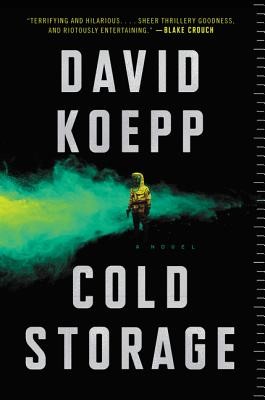
Cold Storage
David Koepp · 2019
Outbreak A lethal extraterrestrial fungus stored beneath a self-storage facility escapes decades after authorities believed it contained
Closest Resident Evil connection A buried government secret, disposable workers, an adaptive organism, and a facility full of locked spaces become one disastrous night
Main difference Broad humor and ordinary security guards balance the fungal horror
Best for Readers who want fast fungal horror, one-night pacing, self-storage weirdness, competent ordinary heroes, dark comedy, and cinematic action.
Roberto Diaz helped contain the organism when it first appeared in Australia. Years later, changing temperatures awaken the sample in an underground military vault now beneath commercial storage units. Diaz and two night workers must prevent a fungus capable of controlling animal behavior and spreading explosively from reaching the wider world.
Koepp uses physical geography with a screenwriter's clarity. Elevators, vents, lockers, and improvised tools matter because nobody has time for a complete explanation. It ranks sixth as the list's most purely entertaining locked-facility outbreak, with corporate neglect embedded in the building itself.
Know before you start. The novel includes graphic fungal infection, body horror, animal death, gore, military secrecy, and some deliberately broad characterization.
5
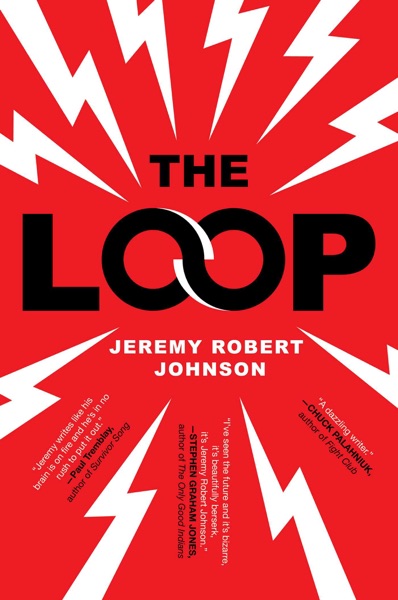
The Loop
Jeremy Robert Johnson · 2020
Outbreak Teenagers in an affluent Oregon town become violently altered after experimental biotechnology enters their bodies
Closest Resident Evil connection A powerful company treats a community as a test environment while young survivors navigate streets transformed into a kill zone
Main difference Teenage outsiders and conspiracy satire create a punk, small-town perspective
Best for Readers who want biotech conspiracy, teenage survivors, violent small-town horror, dark humor, outsider friendship, and anti-corporate anger.
Lucy Henderson already feels excluded in Turner Falls when privileged students begin behaving with extreme violence. The outbreak traces back toward a local technology corporation and experiments concealed beneath the town's prosperity. Lucy and a few friends must move through a community where phones, bodies, and authority have all become suspect.
Johnson understands the Umbrella-shaped terror of company towns: corporate success has made residents reluctant to ask what the employer is doing. It ranks fifth because engineered rage, adolescent body horror, and a cover-up turn a familiar American town into a laboratory whose subjects never consented.
Know before you start. The novel includes graphic violence, body horror, bullying, racism, suicide references, animal harm, corporate experimentation, and harm involving teenagers.
4
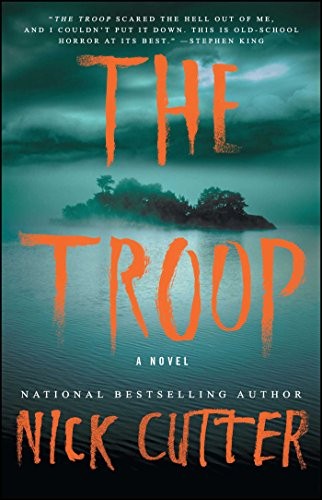
The Troop
Nick Cutter · 2014
Outbreak A starving stranger brings a genetically engineered parasite to a Boy Scout camping trip on an isolated island
Closest Resident Evil connection A military research organism escapes containment, and stranded civilians discover its biology through escalating bodily catastrophe
Main difference The story concentrates on children and one scoutmaster with almost no access to technology or rescue
Best for Readers who want extreme survival horror, parasites, an island setting, secret experiments, deteriorating group dynamics, and no safe character.
Scoutmaster Tim Riggs takes five boys to Falstaff Island for a weekend when an emaciated man arrives by boat. His impossible hunger comes from an experimental worm designed to consume its host. Interspersed documents gradually reveal the laboratory program while group fear exposes existing cruelty among the boys.
Cutter creates dread from appetite and isolation. The parasite's rules are horrifying, but human decisions determine how quickly the camp collapses. It ranks fourth because the engineered origin and contained setting are excellent matches, though the cruelty and graphic detail exceed most versions of Resident Evil.
Know before you start. The novel includes extreme body horror, child death, animal cruelty, bullying, self-harm, starvation, gore, infection, and medical experimentation.
3
Parasite
Mira Grant · 2013
Outbreak Genetically modified tapeworms sold as universal medical implants begin producing alarming changes in their human hosts
Closest Resident Evil connection A celebrated biotech corporation conceals the consequences of a product that has entered millions of bodies
Main difference The protagonist's identity is inseparable from the organism, making the supposed infection the source of personhood as well as danger
Best for Readers who want biotech conspiracy, parasites, medical mystery, corporate villains, identity questions, and the first volume of a completed trilogy.
Sally Mitchell survived a catastrophic accident after her SymboGen implant repaired damage doctors considered irreversible. Years later, she has little memory of her earlier life and depends on the company studying her recovery. Reports of people entering violent sleepwalking states suggest that the engineered parasites are not behaving as advertised.
Grant excels at corporate reassurance. Contracts, public relations, patents, and medical dependency make exposure difficult even before the outbreak escalates. It ranks third because it gives the corporate-lab premise its most complete ethical form: the cure, product, victim, and emerging species may all occupy the same body.
Know before you start. The novel includes infection, medical exploitation, disability issues, body horror, violence, corporate abuse, memory loss, and cliffhanger elements.
2
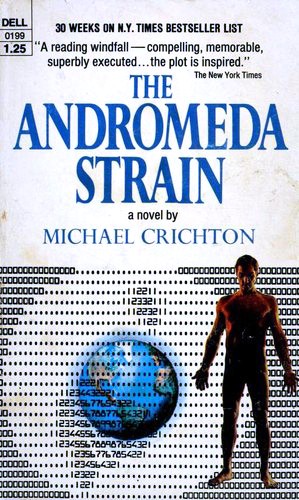
The Andromeda Strain
Michael Crichton · 1969
Outbreak Scientists in a secret underground facility study an extraterrestrial microorganism after it kills nearly an entire desert town
Closest Resident Evil connection Layered containment systems become dangerous when scientists misunderstand the organism and the institution's fail-safes
Main difference A cool procedural emphasizes investigation and engineering over character or monsters
Best for Readers who want the foundational outbreak procedural, secret facilities, scientific problem-solving, diagrams, tight pacing, and minimal sentiment.
A military satellite returns to Earth carrying a microscopic agent. A team descends into Project Wildfire, a laboratory built to isolate biological threats, and attempts to determine why two people survived exposure. Every test alters the model, while an automatic nuclear protocol introduces a second route to catastrophe.
It ranks second because Crichton created the blueprint for modern laboratory thrillers: decontamination levels, screens, samples, alarms, and a countdown produced by the safety system itself. The prose can be emotionally remote, but its lesson remains essential—containment technology is only as sound as the assumptions programmed into it.
Know before you start. The novel includes mass death, infant and elder peril, animal testing, nuclear threat, dated science, and clinical descriptions of fatal illness.
1
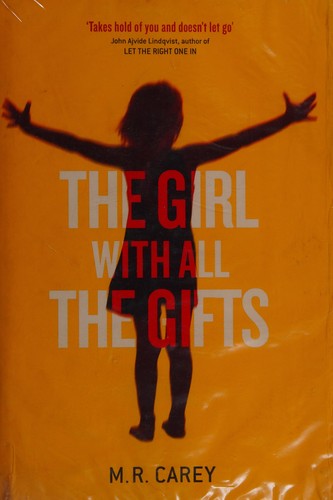
The Girl with All the Gifts
M. R. Carey · 2014
Outbreak A fungal pandemic has transformed most humans, while a military laboratory studies infected children who retain intelligence
Closest Resident Evil connection Scientists, soldiers, a gifted infected child, a compromised facility, and a journey through outbreak ruins force competing definitions of a cure
Main difference The infected protagonist's future matters more than restoring the old human order
Best for Readers who want the strongest all-around match, an infected child protagonist, fungal zombies, ruined Britain, moral conflict, and a memorable ending.
Melanie attends lessons in a cell and is strapped into a chair whenever soldiers move her. She adores teacher Helen Justineau and does not initially understand why adults fear her. When the base falls, Melanie travels with Helen, scientist Caroline Caldwell, and military survivors through a landscape transformed by the cordyceps-like fungus.
It ranks first because Carey combines nearly every key element—laboratory ethics, infection biology, military containment, ruin exploration, and a vulnerable person treated as valuable research material—without losing emotional force. The central conflict is not simply whether humanity can be saved. It is whether saving one version of humanity justifies destroying the next.
Know before you start. The novel includes child experimentation, restraint, fungal infection, violence, death, cannibalism, military force, and ethically disturbing research.
Which Bio-Horror Novel Should You Read First?
Where to start. Choose The Girl with All the Gifts for the closest complete match: an infected child, military research base, scientists with competing ethics, a failed perimeter, and a journey through an altered world. Read The Andromeda Strain if laboratory procedure and containment design are more important to you than character drama.
Pick Parasite for the strongest corporate-biotech conspiracy, or The Troop for the most extreme engineered-organism horror. The Loop turns a company town into a test site, while Cold Storage offers the fastest and funniest one-night facility disaster.
Choose The Cobra Event for forensic public-health investigation, Infected for internal body horror, The Apocalypse Strain for a sealed laboratory, and One Yellow Eye for a recent, intimate attempt to cure someone the rest of society considers lost.
Bio-horror is frightening because its disasters are built from recognizable virtues: curiosity, health, security, efficiency, and the belief that a living system can be controlled once it has been named. The failure begins when institutions protect the project more urgently than the people exposed to it. By the time the alarm sounds, secrecy has already become part of the organism's environment.
The Girl with All the Gifts ranks first because it refuses to treat containment as a neutral good. The laboratory can generate knowledge and still be morally indefensible. Melanie may be a danger, victim, student, specimen, and future at once. That complexity captures the best of Resident Evil: the horror is never only what escaped the lab, but what the lab believed it had the right to make.