Insidious: Out of the Further opens in theaters on August 21, 2026, with a premise that makes the franchise’s most distinctive idea newly searchable: Gemma can enter the Further and bring things back. Plenty of horror lists recommend generic haunted-house novels to Insidious fans. Far fewer isolate the mechanism that actually separates the series from other possession stories—the sleeping mind leaving the body, crossing a hostile realm and creating a route that something else can use.
Every book here gives dreams, astral projection, out-of-body travel or a psychic “inscape” concrete narrative consequences. A nightmare that merely predicts danger is not enough. The dreamer must travel, carry evidence across the boundary, become vulnerable while absent from the body, or discover that a mental landscape contains other minds. Several selections use those ideas for supernatural thrillers; others approach them through grief, family history or speculative medicine.
The ranking favors the clearest two-way doors. The highest books make astral travel essential to the plot and treat the traveler’s unattended body as part of the danger. Lower choices may use shared dreams or private worlds rather than literal projection, but all reproduce the central Insidious fear: sleep is not an escape from the haunted place. It is how the haunted place finds an address.
Selection note. This is a mechanism-first ranking. The books must make dreams, astral separation or psychic realms function as places that can be entered, crossed or contaminated. General possession fiction and ordinary haunted houses are excluded.
10
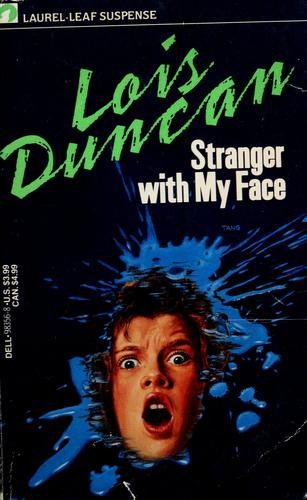
Stranger with My Face
Lois Duncan · 1981
Boundary crossing A teenager learns that astral projection can send consciousness beyond the body
Closest Insidious connection A talented projector can approach an unattended body and threaten the person who belongs inside it
Main difference A concise young-adult suspense novel rather than adult supernatural horror
Best for Readers who want a short vintage thriller, sinister twins, body displacement, teenage isolation and supernatural rules that are easy to follow.
Laurie Stratton begins seeing someone who looks exactly like her. Friends report encounters Laurie cannot remember, and the explanation points toward Lia, a twin separated from her at birth. Lia knows how to project her astral form and offers to teach Laurie, presenting the ability as liberation from physical limits. Her interest in Laurie’s life and body soon feels less sisterly.
Duncan reached the body-theft danger decades before it became a common streaming-thriller twist. The projection rules are simple, the suspense is direct and the isolated island setting intensifies Laurie’s uncertainty about whom she can trust. It ranks tenth because the characterization and cultural material show their age, and its YA construction resolves ideas adult horror might explore more deeply. As an accessible introduction to astral doubles, it remains remarkably close to the list’s core.
Know before you start. The novel includes adoption secrets, attempted body theft, death, animal harm, manipulation and dated language surrounding Indigenous beliefs.
9
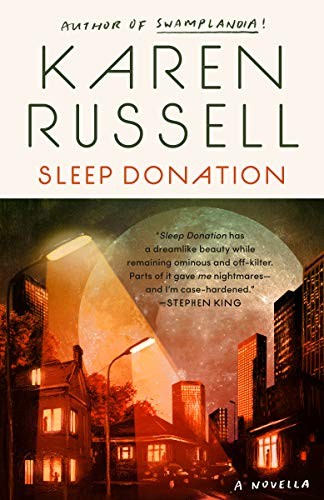
Sleep Donation
Karen Russell · 2014; expanded edition published in 2020
Boundary crossing Donated sleep can carry a nightmare from one unconscious mind into thousands of recipients
Closest Insidious connection A seemingly private sleep-state becomes a transmissible route for hostile experience
Main difference Literary speculative fiction about public health, grief and institutional ethics rather than demons
Best for Readers who want a short literary dystopia, epidemic anxiety, morally ambiguous charity, strange medicine and an original shared-nightmare premise.
An insomnia epidemic has made sleep a scarce medical resource. Trish Edgewater recruits donors for the Slumber Corps using the story of her dead sister, while a universally compatible infant known as Baby A becomes indispensable to the system. When a donor’s nightmare contaminates the supply, people who sought rest enter the same terrifying dream.
Russell turns the idea of “bringing something back” into infrastructure. The danger is not an individual spirit following one traveler home; it is a nightmare distributed through a charitable network that has monetized trust and grief. It ranks ninth because nobody roams a mapped astral realm, and the horror remains social as much as supernatural. The novella’s compressed, dreamlike logic is perfect for readers who want to see the Further reimagined as a contaminated public utility.
Know before you start. The book includes child endangerment, terminal illness, death, exploitation, sleep deprivation and medical distress. The 2020 edition expands the earlier novella.
8
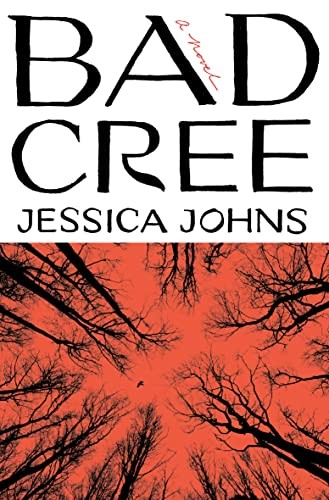
Bad Cree
Jessica Johns · 2023
Boundary crossing Mackenzie’s recurring dreams begin leaving physical remains in her waking life
Closest Insidious connection The barrier fails in both directions, allowing grief and a predatory presence to follow a dreamer home
Main difference An Indigenous family horror novel in which reconnection, not solitary combat, provides the strongest defense
Best for Readers who want grief horror, Cree family relationships, dream imagery, crows, a contemporary setting and an ultimately hopeful emphasis on collective care.
Mackenzie lives in Vancouver at a distance from her Cree family in Alberta. After dreaming of crows tearing apart her dead sister, she wakes holding a severed crow’s head. Further dreams bring more impossible evidence and intensify the sense that something connected to family loss is pursuing her. Returning home means facing relatives, memories and a violence larger than one haunting.
Johns ranks eighth because the dreams are permeable without functioning as a navigable alternate dimension. The match lies in consequence: Mackenzie cannot dismiss a nightmare when it stains the bed and changes what waits outside. Unlike many astral-horror protagonists, she becomes safer by sharing what is happening. Family knowledge corrects the isolation on which the threat depends, giving the book a communal answer to a subgenre that often treats psychic talent as private doom.
Know before you start. The novel includes sibling death, grief, animal death, colonial violence, substance misuse and threatening dream imagery. Cree language and cultural practices are integral to the story.
7
The Between
Tananarive Due · 1995
Boundary crossing A man who survived an impossible childhood death experiences dreams that may be alternate versions of reality
Closest Insidious connection Sleep opens onto fatal possibilities while danger closes around the dreamer’s family in waking life
Main difference Psychological and social horror centered on a Black family facing racist threats
Best for Readers who want psychological horror, family stakes, alternate realities, racial terror and a character-driven novel that invites more than one interpretation.
Hilton James should have drowned as a child, but his grandmother died saving him—or perhaps exchanged something more complicated for his life. As an adult, Hilton is a husband, father and social worker. When his wife, a judge, receives racist death threats, his sleep fills with increasingly destabilizing versions of loss. Waking evidence and nightmare logic begin to overlap.
Due refuses to make the supernatural problem separable from ordinary terror. The family faces a human stalker, institutional pressure and Hilton’s deteriorating ability to identify the reality in which he can protect them. It ranks seventh because its “between” is ambiguous rather than a realm with reliable geography. That uncertainty produces a deeper version of the unattended-body fear: what if consciousness is moving among outcomes and the self that wakes is not securely anchored to one life?
Know before you start. The book includes racist threats, stalking, child endangerment, death, mental deterioration, marital strain and violence.
6
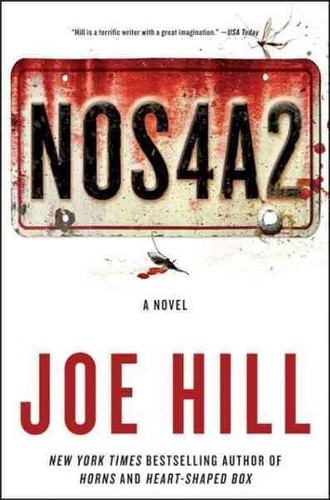
NOS4A2
Joe Hill · 2013
Boundary crossing Strong creatives build private inscapes and travel into them through objects that focus psychic ability
Closest Insidious connection A child-stealing predator uses an otherworldly destination that can be entered, escaped and reopened
Main difference A sprawling road-and-rescue horror novel built around vehicles rather than sleep
Best for Readers who want a long supernatural thriller, psychic vehicles, child-rescue stakes, a memorable villain, dark Christmas imagery and a complete standalone.
Victoria McQueen can ride her bicycle across the Shorter Way Bridge to find lost things. Charlie Manx drives kidnapped children to Christmasland, an inscape where joy has been warped into permanent appetite. Their powers create real routes through psychic space, and their conflict continues across decades as Vic’s own child becomes a target.
Christmasland is one of the list’s most fully realized nightmare realms. It has rules, residents, attractions and a seductive promise that disguises what entering costs. Hill ranks sixth because Vic usually crosses while awake, so the mechanism is psychic travel rather than classic astral projection. The rescue structure, endangered family and predator who treats gifted children as doors make it an excellent match for the later Insidious films. The novel’s length lets the power scar a whole adult life.
Know before you start. The novel includes child abduction, child abuse, addiction, sexual violence, graphic death, body horror and self-harm.
5
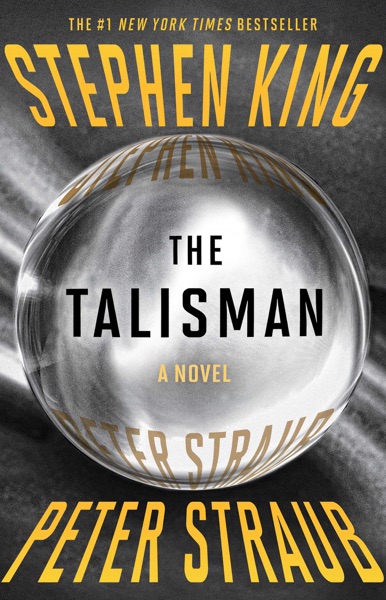
The Talisman
Stephen King and Peter Straub · 1984
Boundary crossing A twelve-year-old moves between the United States and the Territories, where people have parallel counterparts
Closest Insidious connection Crossing into another realm becomes the only way to save a vulnerable family member
Main difference A huge dark-fantasy road quest rather than concentrated domestic horror
Best for Readers who want an epic quest, parallel worlds, a child hero, frightening institutions, strong friendship and a long journey that mixes fantasy with horror.
Jack Sawyer’s mother is dying. To find the object that might save her, he travels across America and “flips” into the Territories, a dangerous parallel world with medieval textures, magical beings and counterparts connected to people in his own reality. The journey repeatedly tests whether Jack can cross safely, whom he can bring and how injury in one world affects the other.
King and Straub rank fifth because the portal system provides a broader adventure than the Further’s trapped-house terror. Yet the emotional engine is strikingly close: a child enters a hostile realm because ordinary adults cannot rescue the person he loves. The Territories contain allies and beauty as well as predators, while the twinner idea makes identity itself part of the border. Its enormous length and episodes of cruelty demand more commitment than most entries.
Know before you start. The book includes child abuse, homophobic language, racism, animal death, cancer, graphic violence and prolonged danger to minors. Some material is conspicuously dated.
4
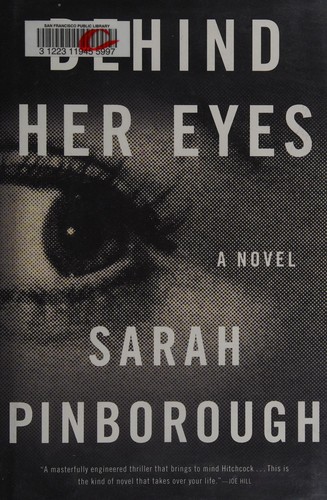
Behind Her Eyes
Sarah Pinborough · 2017
Boundary crossing Lucid dreaming becomes astral projection, allowing consciousness to observe places and approach bodies
Closest Insidious connection Leaving the body creates a vulnerability more dangerous than the traveler understands
Main difference A domestic psychological thriller whose supernatural mechanism is concealed inside a relationship mystery
Best for Readers who want a twist-driven thriller, toxic marriage, lucid-dream techniques, unreliable friendship and a supernatural explanation hidden inside realistic suspense.
Louise kisses a stranger and discovers the next day that he is her new employer, David. She then becomes friends with his wife, Adele, and enters a triangle in which each person offers a different version of the marriage. Adele teaches Louise techniques for controlling dreams. Those lessons feel therapeutic until the book reveals how much access a disciplined dreamer may possess.
This is the most spoiler-sensitive entry. Its value for an Insidious list cannot be explained fully without damaging the experience, but astral projection is not decorative; it reorganizes everything the reader believes about motive, observation and identity. It ranks fourth because much of the novel presents as domestic suspense before the mechanism becomes explicit. Readers who dislike last-act supernatural turns may resist it. Those fascinated by a spirit finding the wrong body should read with as little additional information as possible.
Know before you start. The novel includes addiction, domestic abuse, manipulation, death, mental-health treatment and body violation. Avoid detailed reviews if you want the central twist preserved.
3
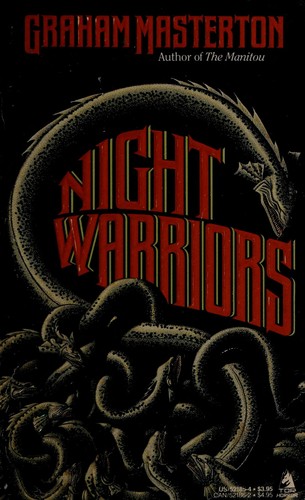
Night Warriors
Graham Masterton · 1986
Boundary crossing Selected people enter dreams in armored astral forms to fight a demon attacking sleepers
Closest Insidious connection A team deliberately crosses into a nightmare realm where psychic injury can destroy waking bodies
Main difference Maximalist 1980s horror fantasy with magical weapons, explicit violence and a larger combat system
Best for Readers who want dream combat, a supernatural team, grotesque monsters, magical armor, 1980s excess and the beginning of a continuing series.
After a grotesque death announces a supernatural attack, several ordinary people discover they can become Night Warriors. Sleep transforms them into powerful avatars equipped for combat inside dreams. Their opponent operates through nightmare, sexual terror and bodily corruption, so defeating him requires entering landscapes shaped by fear rather than waiting for the threat to emerge.
Masterton offers the list’s most literal dream-realm action. The warriors prepare, cross, fight and learn that the rules of an unconscious environment can be weaponized. That makes the book structurally close to an action-heavy Insidious sequel. It ranks third rather than first because its sexualized horror is extreme, its gender politics are dated and its escalation can feel lurid rather than uncanny. For readers who want the Further expanded into a full supernatural battle system, it is difficult to beat.
Know before you start. The novel includes explicit sexual violence, child death, body horror, misogyny and graphic gore. It is substantially more extreme than the film franchise.
2
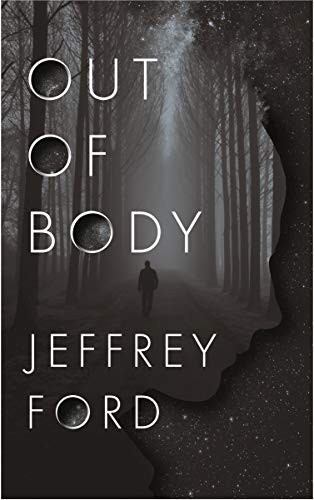
Out of Body
Jeffrey Ford · 2020
Boundary crossing Trauma and sleep paralysis push a librarian’s consciousness out of his body
Closest Insidious connection Astral projection exposes a sleeper to another traveler who understands the realm far better
Main difference A compact literary horror novella focused on one inexperienced adult
Best for Readers who want a one-sitting novella, sleep paralysis, a bookish protagonist, predatory astral travelers and supernatural horror without franchise-sized lore.
Owen, a small-town librarian, witnesses a violent incident and later begins experiencing sleep paralysis. His consciousness separates from his body, initially making the world seem newly open. Guidance helps him understand the condition, but an old predator also moves outside the body and uses that freedom to hunt. Owen’s ability is therefore both the only way he can perceive the danger and the route by which the danger can reach him.
Ford ranks second because he captures the vulnerable mechanics with unusual efficiency. The body remains behind. Distance becomes seductive. Another intelligence can watch the traveler learn. The novella has no need for a sprawling mythology; its terror comes from realizing that a private neurological experience may contain an inhabited geography. Its literary restraint and short length make it less spectacular than Night Warriors but much closer to the hush and helplessness of the Further.
Know before you start. The story includes murder, blood, sleep paralysis, stalking, trauma and body vulnerability. Its brevity leaves some cosmology intentionally unexplained.
1
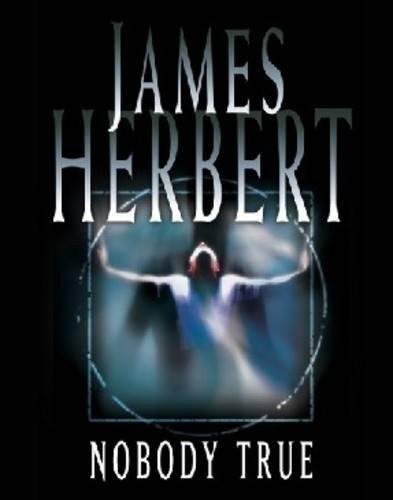
Nobody True
James Herbert · 2003
Boundary crossing Jim True routinely projects from his sleeping body, then returns one night to find that body murdered
Closest Insidious connection The traveler becomes trapped outside the body while another projector threatens the family left behind
Main difference A graphic serial-killer thriller narrated largely by a dead, disembodied investigator
Best for Readers who want the closest premise match, an after-death investigation, family-rescue stakes, a vicious antagonist and a substantial standalone horror thriller.
Jim has treated out-of-body experience as an unusual private freedom. During one journey, someone mutilates his physical body. Still conscious but invisible and unable to communicate normally, Jim follows the investigation into his death, observes the secrets of people he trusted and tries to identify a killer who may be able to perceive him. His wife and child remain physically reachable to the murderer but almost unreachable to Jim.
Herbert takes the basic astral-projection rule to its most frightening logical end. The empty body is not merely at risk of possession; it can be destroyed, leaving consciousness without an obvious route home. The murder investigation gives Jim practical goals, while his condition turns every attempt to warn someone into torment. The killer’s own relationship to projection ensures that the supernatural and criminal plots remain joined.
It ranks first because no other selection combines separation, helplessness, family danger and a hostile fellow traveler so completely. The prose and violence are more aggressive than Insidious, and the serial-killer material occasionally overwhelms the metaphysical mystery. Still, for readers who want an entire novel built on the fear that an astral journey will end with something terrible waiting at the body, Nobody True is the direct hit.
Know before you start. The novel includes graphic mutilation, sexual violence, child endangerment, serial murder, body horror and betrayal. Herbert describes violence in explicit detail.
Which Astral-Horror Book Should You Read First?
Where to start. Start with Nobody True for the most literal extension of the Insidious mechanism: a traveler leaves his body, loses it and must protect a family that cannot hear him. Choose Out of Body if you want the same vulnerability in a much shorter, quieter form. Night Warriors is the action option, turning dream entry into supernatural team combat.
Read Behind Her Eyes when you want astral projection hidden inside a domestic thriller; stop reading descriptions now if its twist is still unspoiled. Choose NOS4A2 for a large, memorable nightmare world and The Talisman for a long parallel-realm rescue quest.
Bad Cree is the best choice for grief, family and dreams that leave physical evidence. The Between offers the most psychologically ambiguous border, while Sleep Donation reimagines nightmares as transmissible medicine. Stranger with My Face remains the accessible vintage route into astral doubles and stolen identity.
Astral horror breaks the comforting assumption that consciousness is safest when the body rests. Its most effective stories make separation initially attractive: the traveler can move without walls, visit distant places or control a dream. Terror begins when freedom proves reciprocal. If a person can go out, another presence can follow the route in.
Nobody True ranks first because it removes the body entirely and leaves its hero to discover what agency a witness can retain without flesh. Out of Body concentrates the same vulnerability, while Night Warriors turns it into combat. Across all ten books, the nightmare realm is never just somewhere the character visits. It is a relationship between two doors—and the traveler controls only one of them.