Ranked · Fantasy
The Top 10 Adult Fantasy Novels About Modern Gods and Dangerous Quests Like Percy Jackson Season 3
by E. M. Larkin
A ranked adult guide to active gods, dangerous prophecies, modern cities, impossible journeys, divine families, inherited burdens, reluctant mortals, and young heroes who stop assuming the immortals know best
Percy Jackson and the Olympians Season 3 premieres on Disney+ on November 20, 2026, adapting The Titan’s Curse. The story sends Percy into a winter rescue quest involving the Hunters of Artemis, a dangerous prophecy, an imprisoned goddess and the burden of literally holding up the sky. Most “books like Percy Jackson” pages still route readers toward middle-grade series. The open search opportunity is the adult reader who wants gods in the present tense, friendships tested by prophecy and a quest whose victory carries an adult moral price.
The novels below are not simply retellings of Greek myths. Their gods ride trains, occupy city apartments, lose followers, manipulate families and discover that immortality does not produce maturity. Several use other pantheons or invent new civic divinities, because the deeper Percy appeal is not one mythology. It is the collision between old supernatural obligations and ordinary modern life.
The ranking favors active gods, dangerous journeys, chosen or inherited burdens and protagonists who can question divine authority without escaping its consequences. Romance-forward retellings and young-adult adventures are excluded so the list serves adult fantasy readers clearly. All ten ranked books come from different authors and have not appeared as ranked selections in the previous Website lists.
Selection note. These books are ranked for adult readers seeking gods who intervene directly, quests shaped by prophecy and mortal characters who resist divine agendas. They are not ranked by mythological fidelity alone.
10
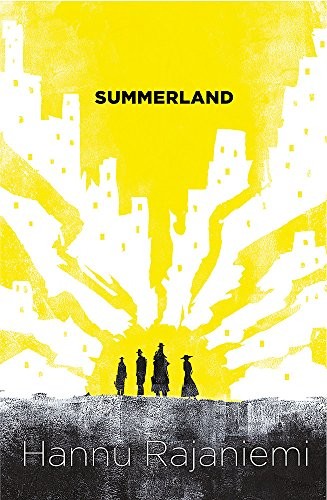
Summerland
Hannu Rajaniemi · 2018
Mythic core The British Empire has colonized the afterlife and turned communication with the dead into espionage infrastructure
Closest Percy connection Supernatural realms operate beside ordinary government, and crossing between them becomes a dangerous mission
Main difference Dense alternate-history spy fiction with ghosts and quantum ideas rather than gods at summer camp
Best for Readers who want ghost espionage, alternate history, ambitious world-building and a puzzle-heavy standalone.
In an alternate 1938, the discovery of an afterlife has created a new imperial territory called Summerland. British intelligence officer Rachel White investigates a Soviet mole while dead agents, occult technology and political factions operate across both sides of mortality.
Rajaniemi earns tenth place by making the supernatural administratively real. Like Olympus above Manhattan, Summerland is not a vague metaphor; it has institutions, travel rules and powerful residents who interfere with human politics. Rachel’s quest is procedural rather than mythic, and the novel demands attention to invented technology, which lowers its accessibility. The reward is an adult treatment of the Percy premise: once another realm becomes reachable, governments will recruit it, map it and ask young operatives to carry costs their leaders avoid.
Know before you start. The book includes suicide, war, political violence and dense speculative exposition. Readers unfamiliar with spy fiction may find the opening demanding.
9
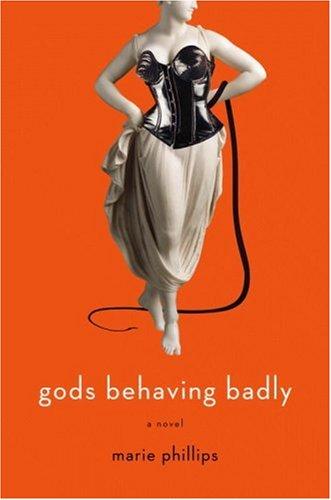
Gods Behaving Badly
Marie Phillips · 2007
Mythic core The Greek gods live together in a decaying London house after centuries of diminishing power
Closest Percy connection Olympians are petty, recognizable personalities whose divine disputes endanger ordinary people
Main difference Adult comic satire with sexual farce and domestic dysfunction instead of heroic adventure
Best for Readers who want a quick standalone, Greek gods in contemporary London, romantic comedy and irreverent treatment of myth.
Artemis works as a dog walker, Aphrodite uses phone sex to supplement the household income and Apollo tries television. When divine selfishness entangles two mortals, the consequences reach the Underworld and threaten what remains of the gods’ relationship with humanity.
Phillips provides the most direct comic bridge from Riordan’s Olympians to adult fiction. Immortality has not made the gods wise; it has given their grudges time to become household routine. The novel ranks ninth because its humor is broader, more sexual and less emotionally earnest than The Titan’s Curse. It still captures a core pleasure of Percy’s world: myths become funnier and more alarming when their gods have to share a bathroom, hold jobs and encounter mortals who refuse to remain supporting characters.
Know before you start. The novel includes sexual coercion played through dark comedy, infidelity, death and deliberately immature gods.
8
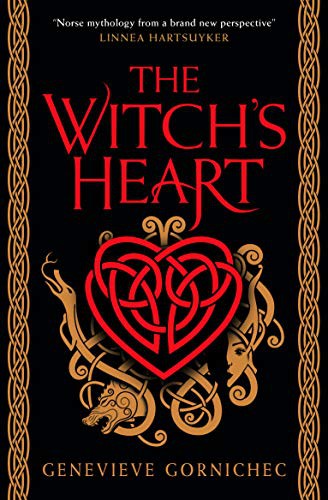
The Witch’s Heart
Genevieve Gornichec · 2021
Mythic core The witch Angrboda builds a family with Loki while prophecy marks their children for roles in Ragnarök
Closest Percy connection A parent confronts a prophecy that turns loved children into pieces on the gods’ board
Main difference Intimate Norse domestic tragedy centered on motherhood rather than a team quest
Best for Readers who want Norse mythology, queer love, motherhood, prophecy and a complete bittersweet story.
After surviving punishment by Odin, Angrboda retreats to the edge of the world. Loki’s arrival brings love, complication and three extraordinary children. Visions reveal the family’s place in the end of the gods, forcing Angrboda to decide whether foreknowledge is a command, a warning or a trap.
Gornichec ranks eighth because prophecy is never abstract. Each famous monster begins as a child known by a mother, and every divine plan asks her to accept that mythology has already decided what the family means. That emotional problem connects directly to The Titan’s Curse, where young characters are assessed by what they may become. The novel is slower and more romance-centered than Percy, but its adult focus on protecting children from stories written by power gives the familiar myths new moral force.
Know before you start. The book includes torture, child loss, abandonment, infidelity and apocalyptic violence.
7
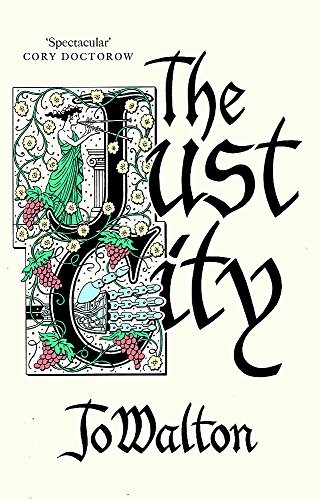
The Just City
Jo Walton · 2015
Mythic core Athena creates an experimental city based on Plato’s Republic, populated by scholars, rescued children and self-aware workers
Closest Percy connection Gods recruit young people into a project they call noble without fully respecting mortal choice
Main difference Philosophical social experiment with debate and education rather than monster fighting
Best for Readers who want Plato, time travel, ethical debate, artificial intelligence and a trilogy that keeps revising its premise.
Athena gathers adults from different centuries and purchases children from ancient slave markets to build Plato’s ideal city. Apollo enters the project as a mortal after realizing he does not understand consent. The inhabitants soon expose the gap between a perfect design and the lives placed inside it.
Walton’s gods are neither simple villains nor dependable mentors. They possess immense knowledge and still fail to anticipate what ordinary autonomy will do to their plan. The book ranks seventh because its action consists largely of teaching, argument and institutional change. Readers drawn to the way Camp Half-Blood trains children for divine wars may find its questions unusually sharp: who chose the curriculum, what counts as a free choice inside it and why do gods call mortal suffering educational?
Know before you start. The novel includes slavery, sexual assault, unequal power and philosophical discussions of eugenics and consent.
6
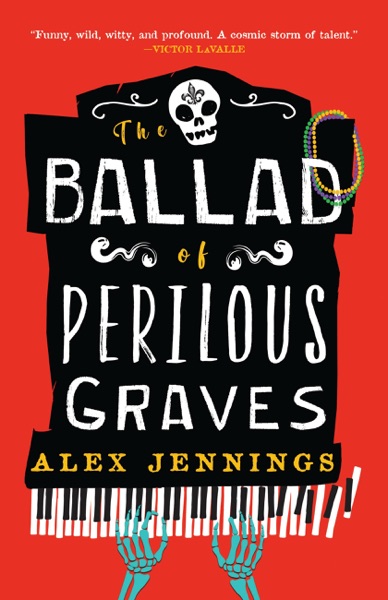
The Ballad of Perilous Graves
Alex Jennings · 2022
Mythic core Living songs, neighborhood spirits and legendary figures sustain a magical version of New Orleans
Closest Percy connection Young heroes must recover escaped supernatural forces before their city’s hidden mythic order collapses
Main difference Jazz-infused surrealism whose cosmology grows from New Orleans rather than an ancient pantheon
Best for Readers who want Black speculative fiction, jazz, New Orleans, child-and-adult perspectives and inventive city mythology.
Perry, Brendy and Peaches are children in Nola, a city where music is infrastructure and strange beings are part of neighborhood life. Nine songs escape from the magical piano that contains them. In a parallel, more familiar New Orleans, an adult artist becomes connected to the same rupture.
Jennings offers the ranked list’s strongest sense of a modern city possessing its own mythology rather than borrowing one. The quest is exuberant, but the book also asks who gets to remember a place after displacement, disaster and cultural extraction. It ranks sixth because the narrative shifts between realities and voices in ways that can feel less linear than Percy’s adventures. Its friendship, civic magic and belief that art can hold a world together make it an excellent adult continuation of the same imaginative impulse.
Know before you start. The novel includes violence, racism, addiction, grief and surreal transitions. It rewards readers willing to follow rhythm before explanation.
5
Paternus: Rise of Gods
Dyrk Ashton · 2016
Mythic core Gods and legendary beings from many traditions are members of ancient rival families hiding in the modern world
Closest Percy connection Young people discover that myths are living relatives and become caught in an approaching divine war
Main difference Large-scale action fantasy that combines pantheons into one invented genealogy
Best for Readers who want fast action, many mythologies, hidden immortals, enormous battles and a completed epic trilogy.
Fiona and Zeke work at a care facility where an apparently ordinary old man becomes the target of impossible attackers. Their attempt to protect him reveals a hidden conflict linking deities, monsters and heroes from cultures around the world.
Ashton supplies the most direct adult escalation of Percy’s crossover energy. Modern logistics, secret identities and mythological combat build toward an enormous conflict. The unified genealogy is intentionally pulpy rather than academically faithful, which is both the attraction and the limitation. The book ranks fifth because readers seeking culturally distinct religious traditions may resist the way it places them inside one system. Those who want quests, revelations, found allies and gods colliding at blockbuster speed will find the completed trilogy unusually generous.
Know before you start. The series includes graphic violence, death, religious reinterpretation and a very large cast.
4
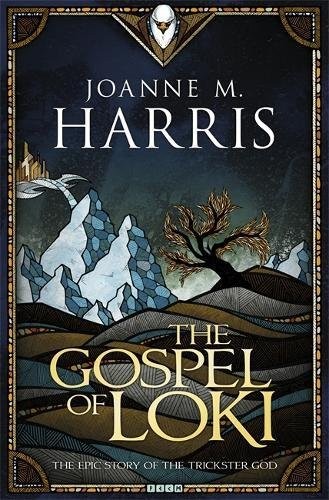
The Gospel of Loki
Joanne M. Harris · 2014
Mythic core Loki narrates his recruitment into Asgard and the chain of grievances leading toward Ragnarök
Closest Percy connection A witty first-person demigod voice turns divine history into a dispute over loyalty, blame and who controls the story
Main difference A mythic autobiography told by an unreliable adult trickster rather than a contemporary quest
Best for Readers who want a witty narrator, Norse myth, moral ambiguity and a compact retelling with a sequel.
Loki presents himself as the indispensable outsider whom Odin invited into a rigid divine order and then punished for refusing to become respectable. Familiar myths appear as episodes in a long relationship between usefulness and exclusion. Every joke also functions as an argument for why the official Asgardian version cannot be trusted.
Harris ranks fourth because voice is central to Percy’s appeal, and Loki offers an adult, much less reliable version of that irreverence. He questions divine authority because he sees its hypocrisy, but insight does not absolve his cruelty. The book has no modern setting and little conventional suspense because readers know the destination. Its pleasure lies in watching prophecy become self-fulfilling: the gods treat Loki as the author of disaster while repeatedly creating the conditions he exploits.
Know before you start. The book includes betrayal, punishment, death and an intentionally self-justifying narrator.
3
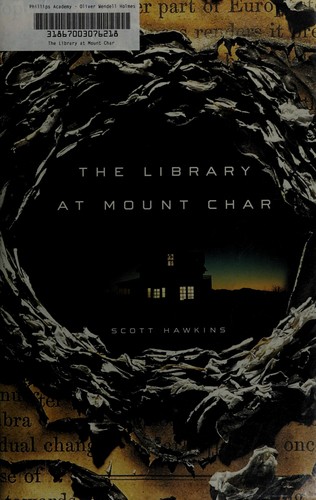
The Library at Mount Char
Scott Hawkins · 2015
Mythic core Adopted children trained by a brutal godlike Father inherit separate branches of supernatural knowledge
Closest Percy connection A group raised for divine purposes discovers that training, prophecy and family loyalty conceal an adult power struggle
Main difference Extremely dark horror-fantasy with graphic abuse and cosmic violence
Best for Readers who want cosmic horror, secret knowledge, damaged siblings, nonlinear plotting and a wild standalone.
Carolyn and the other “librarians” were children when Father took them in after a neighborhood catastrophe. Each was assigned one catalog—languages, medicine, war, death or another aspect of reality—and forbidden to study the rest. When Father disappears, Carolyn’s plan draws an ordinary veteran into a conflict over succession to godlike power.
Hawkins offers a nightmare version of divine camp. The students are capable because training destroyed every alternative self they might have developed. Their found family contains love, terror and strategic betrayal, while the apparent rescue quest hides a much larger design. The novel ranks third for its exceptional fit around dangerous mentorship and inherited cosmic burden. It is far too graphic to recreate Percy’s tone, but adult readers wanting the premise pushed to its harshest conclusion will find it difficult to forget.
Know before you start. The book includes severe child abuse, torture, sexual violence, animal death, murder and apocalyptic destruction.
2
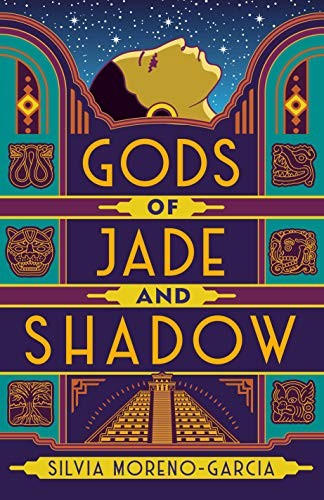
Gods of Jade and Shadow
Silvia Moreno-Garcia · 2019
Mythic core A young woman accidentally frees a Mayan death god and must help him recover his stolen body parts
Closest Percy connection A reluctant human and diminished god travel through the modern world on a deadline while divine relatives obstruct the quest
Main difference A 1920s Mexican historical fantasy with a measured, fairy-tale tone
Best for Readers who want Mayan mythology, Jazz Age Mexico, a road quest, restrained romance and a lyrical standalone.
Casiopea Tun lives under the authority of a wealthy grandfather and cruel cousin in Yucatán. Opening a forbidden chest binds her to Hun-Kamé, the deposed Lord of Xibalba. As they travel by train and automobile across Mexico, he regains power while she experiences a life larger than the one her family permitted.
Moreno-Garcia provides the cleanest quest structure on the list: magical tasks, divine rivalry, a changing partnership and a mortal forced to decide how much of herself the god’s restoration should cost. The modern setting does not flatten Mayan mythology into interchangeable fantasy decoration. It ranks second because the relationship is more intimate and the action less team-oriented than The Titan’s Curse. Its blend of myth, travel and self-determined heroism makes it the strongest choice for readers who want a complete adult adventure in one volume.
Know before you start. The novel includes family abuse, racism, death, blood magic and a bittersweet resolution.
1
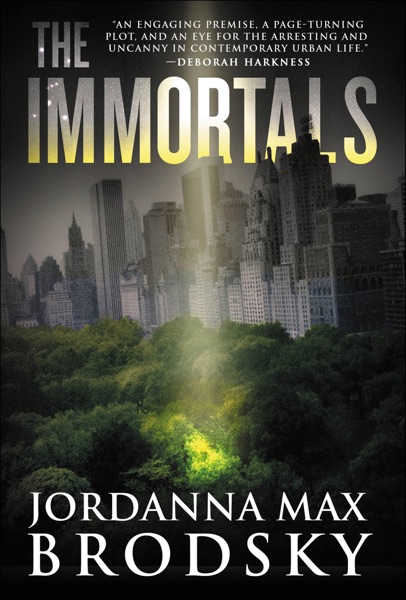
The Immortals
Jordanna Max Brodsky · 2016
Mythic core Artemis lives in present-day Manhattan with diminished power and investigates a ritual murder connected to ancient worship
Closest Percy connection A Greek goddess operates in modern America, protects vulnerable young women and discovers that old enemies still shape mortal violence
Main difference Adult urban-fantasy murder mystery with sexual violence and a romantic subplot
Best for Readers who want Greek gods in Manhattan, a female immortal protagonist, murder investigation and a completed trilogy.
Selene DiSilva is Artemis, though centuries without widespread belief have reduced what that name permits her to do. When she finds a woman’s body arranged in apparent ritual, she joins classics professor Theo Schultz to trace the symbolism. The case forces Selene to confront other immortals and the difference between protecting women as an ideal and understanding their actual choices.
Brodsky earns first place because it ages Percy’s premise without discarding its most enjoyable feature: Greek gods are present, personal and embedded in New York. Selene’s divine identity gives her power, prejudice and obligations. Investigation becomes a quest through the city, while the murdered woman’s humanity prevents myth from turning the crime into spectacle.
The book is darker than Riordan and occasionally more romance-forward, but its central question fits The Titan’s Curse precisely. What does Artemis owe the people who invoke her, follow her or become symbols in her name? Selene must act without assuming divinity makes her interpretation correct.
Know before you start. The novel includes ritual murder, sexual assault, misogyny and violence. The mystery reaches a conclusion while the divine relationships continue.
Which Adult Percy Jackson Read-Alike Should You Read First?
Where to start. Start with The Immortals for Greek divinity in contemporary America and a genuine investigation. Choose Gods of Jade and Shadow for the strongest self-contained quest, or Paternus if you want the largest battles and the most pantheons.
Read The Library at Mount Char only if you want Camp Half-Blood transformed into cosmic horror. The Gospel of Loki offers the best irreverent first-person divine voice, while The Witch’s Heart and The Just City examine the cost of gods assigning roles to children.
Pick The Ballad of Perilous Graves for friendship, music and a city with its own mythology. Choose Gods Behaving Badly for comedy and Summerland for a dense supernatural spy story.
Growing beyond Percy Jackson does not require abandoning the qualities that made the series work. Gods can remain funny, quests can remain propulsive and myth can still collide with subways, apartments and school-age memories. Adult fantasy simply has room to ask who paid for the prophecy and what happens after a mortal stops treating divine attention as an honor.
The Immortals gives Artemis responsibility inside a murder case. Gods of Jade and Shadow lets a young woman help a god without surrendering her future to him, and The Library at Mount Char shows the horror of training children solely for cosmic utility. The strongest adult read-alikes keep the wonder while withdrawing the assumption that the gods know best.