Blake Crouch's Wayward Pines trilogy begins with a beautifully efficient nightmare. Ethan Burke wakes in an unfamiliar town without his wallet, phone, or a believable route home. Everyone knows more than he does. Roads return him to the place he left, rules matter more than explanations, and the ordinary American main street becomes frightening because it has been arranged to prevent an ordinary question: why can no one leave?
The best trapped-town thrillers preserve that combination of enclosure and uncertainty. A physical barrier is useful, but it is not enough. The town must also possess a social or metaphysical logic that the newcomer cannot immediately understand. Escape and explanation become the same problem. Every attempt to solve one exposes another layer of the other.
This ranking includes literal towns, abandoned settlements, and one isolated refuge that functions like a town in miniature. Some are sealed by weather, fog, quarantine, or a dome. Others remain open on a map while memory, supernatural obligation, or the inhabitants themselves make departure impossible. The ranking favors atmosphere, escalating discovery, and the pleasure of realizing that the first explanation was only the perimeter fence.
10
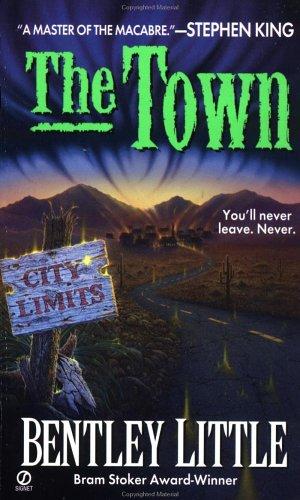
The Town
Bentley Little
First published in this form 2000, following an earlier version titled Guests
Town McGuane, a dwindling Arizona mining community
Closest Wayward Pines connection A homecoming becomes entrapment as local history and a hostile landscape isolate one family
Main difference Family-centered supernatural horror rather than a tightly engineered conspiracy puzzle
Best for Readers who want an obscure, aggressive small-town horror novel with family conflict and culturally specific supernatural elements.
Know before you start The book includes sexual violence, child endangerment, suicide, murder, grotesque imagery, and dated treatment of some identities.
After winning enough money to change his circumstances, Gregory Tomasov moves his wife, children, and mother from California to McGuane, the small Arizona town where he grew up. The population is falling and residents avoid the dark. Gregory nevertheless imagines the move as a return to safety. The family buys an abandoned farm at the edge of town, a place with a violent history and no interest in remaining history.
Bentley Little combines haunted-house logic with a dying town. Gregory's mother brings the Molokan beliefs of her Russian heritage and fears that the household spirit was not properly invited to accompany the family. Other characters offer different explanations. The Tomasovs are therefore trapped not by one obvious wall but by a place where family fracture, folklore, and local evil reinforce one another.
The novel sprawls, shifts among family members, and pursues grotesque episodes more readily than a clean mystery-box design. Its sexual material and tonal excess will alienate readers who come to Wayward Pines for speed and elegant reversals. It ranks tenth because McGuane is permeable in a literal sense. The family could drive away sooner than they do. Yet the book captures the first rule of trapped-town fiction: people rarely recognize a prison while they can still call it home.
9
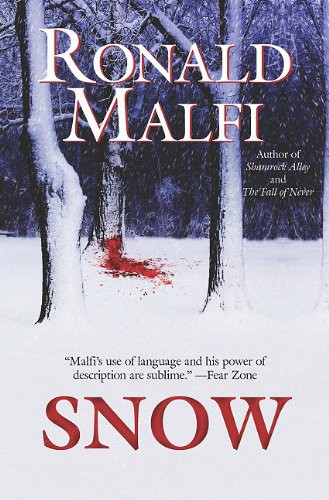
Snow
Ronald Malfi · 2010
Town Woodson, Iowa, during a severe Christmas snowstorm
Closest Wayward Pines connection Outsiders enter a town with dead communications, hostile inhabitants, and no reliable route back out
Main difference A creature-survival novel that reveals its threat early
Best for Readers who want a fast winter monster novel, stranded travelers, and a town converted into a survival map.
Know before you start Expect cannibalistic violence, body invasion, child peril, pregnancy danger, death, and graphic creature attacks.
Todd Curry is stranded at O'Hare while trying to reach his son for Christmas. He joins several other travelers in a rented vehicle, hoping to cross the storm by road. An accident forces the group toward Woodson, where abandoned streets and failing technology quickly suggest that the weather is not the only danger. Shapes move inside the snow, and some of the people they meet are no longer wholly themselves.
Ronald Malfi uses snow as barrier, camouflage, and body. It blocks roads, removes visibility, disables rescue, and allows the creatures to arrive as part of the atmosphere. Woodson becomes frightening because the newcomers cannot tell whether a lit building represents shelter or another occupied shell. Survival requires learning a few usable rules before the storm changes them.
The novel moves quickly and offers little of the social mystery that distinguishes Wayward Pines. Once the nature of the attack becomes clear, the central question is how to cross town alive rather than who designed the town and why. Characterization is functional, and the possession imagery belongs to familiar outbreak horror. It ranks ninth because the enclosure is superbly immediate. The snow does not merely keep help away; it makes every possible exit part of the creature.
8
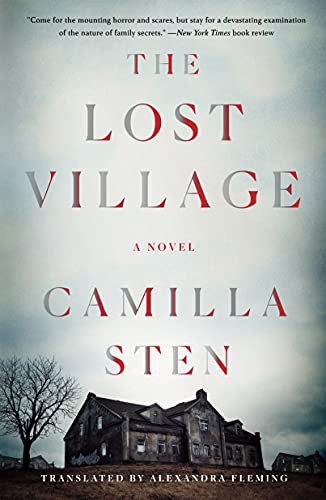
The Lost Village
Camilla Sten
First published in English 2021
Town Silvertjärn, an abandoned mining settlement in northern Sweden
Closest Wayward Pines connection A missing population, an inaccessible location, and a team whose investigation closes the route behind them
Main difference Found-footage-style expedition horror set in an empty town rather than a functioning false community
Best for Readers who enjoy documentary crews, dual timelines, cult histories, and Scandinavian ghost-town atmosphere.
Know before you start The novel includes religious coercion, pregnancy and infant peril, mental illness, ableism, murder, and confinement.
Documentary filmmaker Alice Lindstedt has built her proposed career around Silvertjärn, where nearly nine hundred residents vanished in 1959. Her grandmother's family connection provides fragments but no solution. Alice brings a small crew to the settlement to record material for a film pitch. Isolation, damaged equipment, and unresolved conflict within the team make the deserted buildings feel less like evidence than an audience.
Camilla Sten alternates the expedition with the months before the disappearance. That structure gives the reader social information Alice lacks while withholding the precise connection between past and present. A charismatic religious leader, the economic collapse of the mine, and the vulnerability of people left behind create an explanation more human than the ghost-town premise initially suggests.
Silvertjärn is technically abandoned, which makes this the list's least conventional trapped town. The barrier develops after arrival, and the suspense sometimes relies on characters withholding emotional history as heavily as the town withholds facts. The revelations are more familiar than the setting. It ranks eighth because the empty streets deliver a particular Wayward Pines pleasure: an investigator enters expecting clues and discovers that the scene has been waiting to become active again.
7
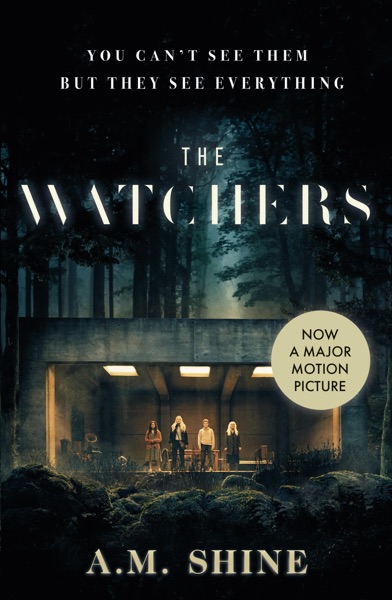
The Watchers
A. M. Shine · 2021
Settlement A concrete refuge inside an unmapped forest in western Ireland
Closest Wayward Pines connection Strangers live by unexplained rules while the landscape prevents every attempt to leave
Main difference Folk-creature horror reduced to a handful of people and one nightly enclosure
Best for Readers who want Irish folk horror, hostile woods, survival rules, and the claustrophobia of being studied.
Know before you start The story includes animal death, confinement, suicide, creature violence, body horror, and prolonged fear in darkness.
Mina's car fails near a forest that does not appear to follow ordinary geography. As darkness approaches, a woman urges her into a concrete building where several survivors gather each night before a wall of glass. Something outside watches them. The rules are simple enough to recite—reach the refuge before dark, stand where the watchers can see, do not open the door—but no one possesses a complete explanation.
A. M. Shine recreates a town's social pressure inside one room. The inhabitants have roles, histories, and unequal authority. Madeline's knowledge keeps them alive, which makes challenging her dangerous even when her rules sound incomplete. The forest behaves like the circular roads of Wayward Pines: movement creates exhaustion rather than distance, and every failed escape strengthens the belief that survival requires obedience.
The novel depends on atmosphere, folklore, and pursuit more than on layered civic conspiracy. Some dialogue is formal, and the later explanation narrows the uncanny possibilities established by the forest. This entry ranks seventh because its refuge is not a town at all. Structurally, however, it is one of the closest matches here. A tiny population performs normal life under observation while the real inhabitants wait outside for someone to misunderstand the boundary.
6
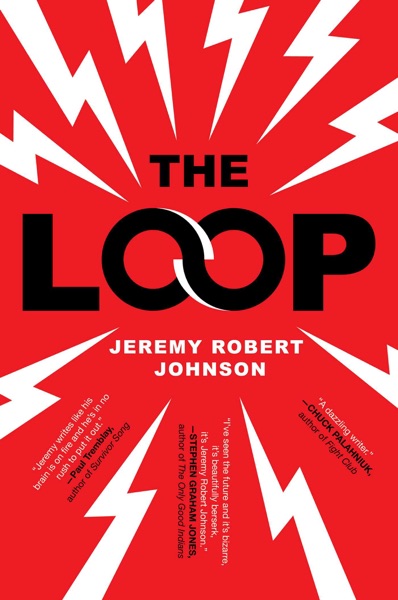
The Loop
Jeremy Robert Johnson · 2020
Town Turner Falls, an affluent Oregon community dominated by a technology company
Closest Wayward Pines connection Corporate secrecy transforms an apparently prosperous town into a violent controlled experiment
Main difference Adolescent outbreak horror with punk energy, graphic violence, and a compressed timeline
Best for Readers who want biotech conspiracy, teenage outsiders, aggressive pacing, and a large amount of body horror.
Know before you start The book includes suicide, self-harm, racism, child abuse, addiction, infection, and exceptionally graphic violence.
Lucy Henderson already understands that Turner Falls has been designed for people unlike her. Wealthy families connected to the local technology company determine the town's hierarchy, while adopted outsider Lucy and her few friends occupy its margins. A disturbing incident involving a student is followed by more erratic behavior. Soon the town's connected devices, medical ambitions, and privileged teenagers appear to be parts of the same experiment.
Jeremy Robert Johnson treats the smart town as a body whose nervous system belongs to a corporation. Communication technology does not bring rescue; it spreads influence and records panic. The people most protected by Turner Falls' prosperity become vectors of its collapse, while the characters routinely ignored by the town are forced to interpret what the powerful have built.
The novel is furious, funny, and deliberately excessive. Its emotional sincerity sits beside gore and apocalyptic momentum, producing a far less controlled experience than Crouch's early trilogy. The outbreak explanation arrives through science-fiction horror rather than a long civic mystery. It ranks sixth because Turner Falls shares Wayward Pines' crucial design principle: the town exists for a purpose its residents were never meant to understand, and the institutions promising progress are the walls.
5
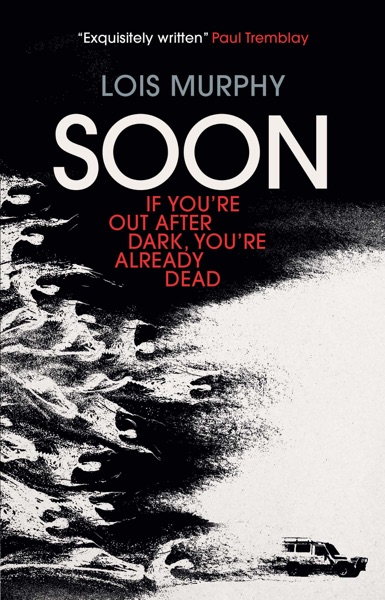
Soon
Lois Murphy · 2017
Town Nebulah, a nearly abandoned settlement in Western Australia
Closest Wayward Pines connection A shrinking population lives by survival routines while an external force makes departure urgent and psychologically difficult
Main difference A melancholy ghost-town novel concerned with why people stay after escape is still possible
Best for Readers who prefer atmospheric Australian horror, dwindling communities, and character-driven dread to elaborate conspiracy.
Know before you start The novel includes death in a supernatural mist, isolation, grief, alcoholism, violence, and themes of civic abandonment.
Nebulah was dying before the mist arrived. Industry disappeared, services withdrew, and most residents left. Then a lethal darkness began entering town after sundown. The remaining six residents shelter indoors each night, maintaining routines that make continued life seem possible. Pete, a former police officer, understands the danger. He also understands that leaving the place where a life failed does not automatically create somewhere else to belong.
Lois Murphy makes enclosure partly voluntary, which gives the novel unusual emotional weight. The road exists. The survivors have reasons—pride, attachment, denial, guilt—for not taking it soon enough. The mist turns those reasons into a countdown. Its supernatural threat is effective, but the abandoned infrastructure and eroded civic life are what make Nebulah feel cursed before anything appears after dark.
The pace is measured, and readers looking for a sequence of large reveals may find the town's grief more prominent than its mythology. The people are not secretly actors in a vast design. They are the final witnesses to a place the outside world has already accepted as dead. It ranks fifth because it reverses the Wayward Pines question. Instead of asking why escape is impossible, Soon asks why a person can remain trapped while the exit is still visible.
4
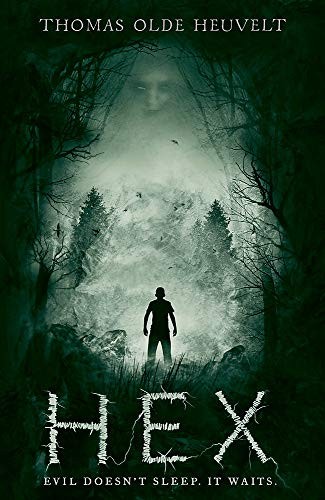
Hex
Thomas Olde Heuvelt
First published in English 2016
Town Black Spring, a Hudson Valley community living under a centuries-old curse
Closest Wayward Pines connection Residents accept invasive surveillance and severe rules because the town's secret cannot safely cross its border
Main difference The whole community knows the supernatural truth from the beginning
Best for Readers who want a cursed town, communal surveillance, generational conflict, and horror about rules that may be necessary.
Know before you start The book includes suicide, child death, animal cruelty, mob violence, mutilation, and an extremely bleak conclusion.
The witch Katherine van Wyler walks through Black Spring with her eyes and mouth sewn shut. She may stand beside a bed, enter a home, or remain in a public street for days. Residents track her through a phone application and conceal her from visitors. The town's elaborate normality is not meant to deceive its own population. It is meant to prevent outsiders from learning what the residents must manage every day.
Thomas Olde Heuvelt begins where many mystery-box stories end: everyone local knows the monster. Suspense comes from watching a younger generation test rules that have hardened into inherited common sense. Surveillance is both protection and prison. The town can locate the witch, but the same network allows residents to monitor one another and enforce secrecy with a cruelty that may exceed the curse.
The English-language novel substantially relocates and revises the earlier Dutch version. Its satire of online behavior can be broad, and the final movement becomes relentlessly punitive. It ranks fourth because Black Spring offers a brilliant inversion of Wayward Pines. The authoritarian civic order is not built around a fabricated danger. The danger is real. The horror lies in discovering that truthful fear can still produce lies, mob rule, and institutions no one knows how to dismantle.
3
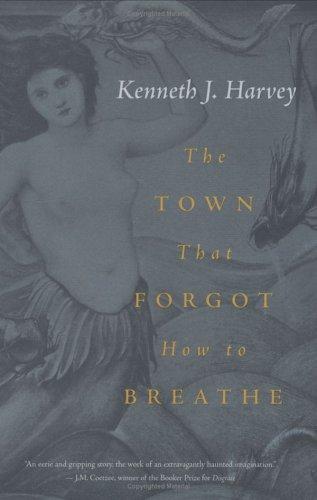
The Town That Forgot How to Breathe
Kenneth J. Harvey · 2003
Town Bareneed, a Newfoundland fishing outport
Closest Wayward Pines connection A medical emergency, military containment, and impossible evidence turn an isolated town into a sealed mystery
Main difference Literary, communal, and folkloric rather than driven by one investigator's rapid discoveries
Best for Readers who want Newfoundland Gothic, ecological unease, ensemble storytelling, and a town whose illness feels historical as well as biological.
Know before you start The novel includes respiratory distress, drowned bodies, child peril, military quarantine, mental deterioration, and disturbing sea life.
Bareneed's residents begin losing the ability to breathe automatically. Perfectly preserved bodies of people long drowned rise from the sea. Creatures associated with sailors' stories appear as though the ocean has opened an archive. As the illness spreads, outside authorities arrive with equipment, explanations, and the power to close the community off from the world.
Kenneth J. Harvey moves among many inhabitants, allowing the town's history, grievances, and beliefs to accumulate alongside the symptoms. The result makes Bareneed feel older and more independent than the forces trying to diagnose it. Scientific response, environmental disturbance, religious interpretation, and folklore overlap without reducing one another to a single clean answer.
The prose is denser and the structure looser than a conventional thriller. Some readers will find the large cast and surreal escalation disorienting, while others will value the refusal to convert every image into plot information. It ranks third because containment operates on every level. Bodies forget the unconscious act that connects them to air, the sea refuses to keep its dead, and a town already endangered by economic history is physically prevented from defining its own catastrophe.
2
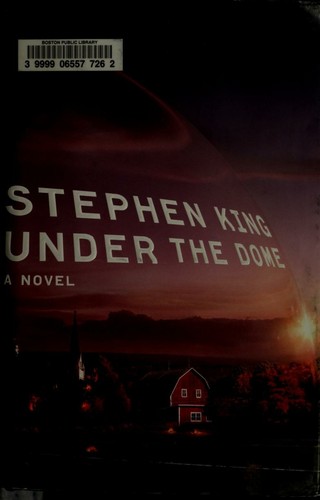
Under the Dome
Stephen King · 2009
Town Chester's Mill, Maine, beneath an invisible barrier
Closest Wayward Pines connection A town is physically sealed while local authority turns information, fear, and scarcity into control
Main difference A massive social-collapse novel with dozens of viewpoints and little uncertainty about the barrier's existence
Best for Readers who want an enormous cast, escalating civic breakdown, visible enclosure, and one of King's most hateful human villains.
Know before you start The novel includes sexual assault, murder, suicide, addiction, child death, animal death, fire, mass casualties, and extensive cruelty.
An invisible dome descends around Chester's Mill with no warning. Vehicles strike it, aircraft crash, and people are separated from family by a surface they can see through but cannot cross. The barrier is the cleanest trap on this list. The more important enclosure develops afterward, as selectman Big Jim Rennie uses emergency conditions to enlarge his authority and discredit anyone capable of resisting him.
Stephen King treats the town as a pressure chamber. Fuel, air, medicine, information, and patience all become finite. Dale Barbara may be the clearest protagonist, but the novel's scale allows teachers, children, police officers, addicts, officials, and opportunists to demonstrate how quickly a community can divide into incompatible versions of reality. The dome creates the experiment; local character determines the result.
At more than a thousand pages in many editions, the book is the opposite of Crouch's compact opening novel. The large cast includes caricatures, the villainy is emphatic, and the ultimate explanation for the dome is less satisfying than the civic disaster it enables. It ranks second because no other novel commits so completely to the physical and political consequences of a trapped town. The wall is inexplicable. What people build inside it is horribly legible.
1
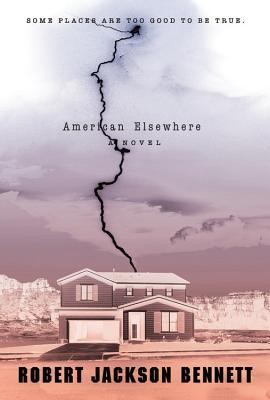
American Elsewhere
Robert Jackson Bennett · 2013
Town Wink, New Mexico, an immaculate community missing from ordinary maps
Closest Wayward Pines connection An investigator enters a manufactured town whose cheerful normality hides a scientific project and an inhuman purpose
Main difference Cosmic science-fiction horror with a larger emotional focus on motherhood and identity
Best for Readers who want the strongest blend of uncanny Americana, investigation, laboratory secrets, cosmic horror, and large-scale explanation.
Know before you start The novel includes suicide, parental grief, body horror, institutional experimentation, violence, and harm involving children.
Former police officer Mona Bright inherits a house from her estranged mother in a town she cannot easily locate. Wink sits beneath a mesa near an abandoned laboratory. Its lawns, diners, and domestic routines resemble mid-century America maintained past the point of authenticity. Residents discourage the wrong questions, certain buildings violate expectation, and Mona's own childhood memories suggest that she is not as external to the mystery as she believes.
Robert Jackson Bennett understands that a false town needs more than false people. It needs habits. Wink's citizens perform gender, work, family, and neighborliness according to an ideal whose source becomes increasingly disturbing. Mona investigates with a police officer's skepticism, but the mystery expands beyond conspiracy into questions about what personhood looks like when imitation has lasted long enough to produce attachment.
The novel is long and changes shape in its second half. The delicate wrongness of Wink gives way to explicit cosmic history and a large confrontation, and some readers will prefer the questions to the answers. It ranks first because it offers the closest complete experience to Wayward Pines without copying its solution: a capable outsider, a town absent from the map, a research facility, enforced normality, and a revelation that turns the community's artificial life into something unexpectedly tragic.
Which Trapped-Town Thriller Should You Read First?
Choose American Elsewhere for the closest full-spectrum match: outsider investigation, artificial normality, scientific secrecy, and a large speculative answer. Choose Under the Dome when the literal barrier and the politics that grow beneath it interest you more than a hidden-town puzzle.
For overt supernatural rules, read Hex. For a stranger, more literary community catastrophe, choose The Town That Forgot How to Breathe. Soon is best for readers interested in why people remain, while The Lost Village offers an abandoned settlement and documentary structure.
Read The Loop for speed and biotech gore, Snow for winter survival horror, and The Watchers for a smaller group obeying unexplained rules inside a hostile landscape. The Town is the deepest-cut recommendation and the best fit for readers who enjoy Bentley Little's willingness to push small-town horror well past good taste.
A trapped town works because it combines two childhood fears: being lost and being watched. The streets are recognizable, the people behave as though life is normal, and every route that should lead outward returns the investigator to someone else's rules.
American Elsewhere ranks first because Wink's secret changes without becoming arbitrary. Its manicured normality begins as menace, develops into evidence, and eventually reveals a need more complicated than simple domination. The best town-sized mystery boxes do not merely explain the wall. They explain why an entire community has agreed to live as though the wall were the horizon.