The most frightening object in Colleen Hoover's Verity is not a locked door or a hidden body. It is a document. Lowen Ashleigh enters the Crawford house to finish another writer's novels and finds an unfinished autobiography containing admissions that may explain the family's catastrophes. The manuscript appears to offer the intimacy of confession, but reading it makes Lowen less certain about the person in the bed upstairs and less able to separate evidence from a story designed to produce a reaction. Amazon MGM's film adaptation, starring Dakota Johnson, Anne Hathaway, and Josh Hartnett, is scheduled for October 2, 2026.
Thrillers about dangerous manuscripts exploit a peculiar form of trust. Readers accept that a text was written in the past, beyond interrogation, yet the words can rearrange every present relationship. A diary may be evidence, bait, plagiarism, or a performance aimed at the exact person holding it. Writers in these novels steal stories, enter archives, reconstruct crimes, and discover that publication can make private danger public without making the truth any clearer.
This ranking emphasizes books in which reading or writing materially changes the threat. Haunted libraries and publishing satire are welcome, but a manuscript must do more than decorate the plot. The strongest selections make authorship a form of control: someone decides what is revealed, what is withheld, and which reader will be unable to stop before the final page.
10
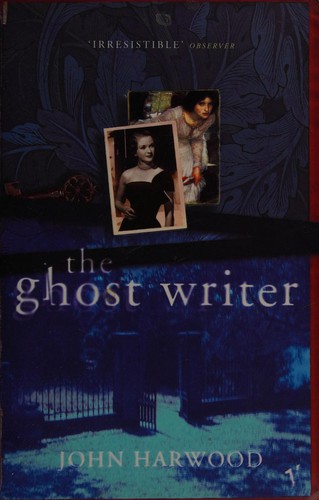
The Ghost Writer
John Harwood · 2004
Dangerous text Victorian ghost stories and family manuscripts conceal an inheritance of secrets
Closest Verity connection A reader reconstructs a woman's hidden life through writing that may have been arranged to mislead him
Main difference A slow Gothic puzzle with nested period narratives
Best for Readers who want an old-fashioned Gothic mystery, English estates, hidden parentage, and stories nested inside stories.
Know before you start The book includes child abuse, confinement, murder, suicide, family deception, and a deliberately intricate chronology.
Gerard Freeman grows up in Australia with a mother who fiercely guards the details of her English childhood. A discovery in her private room and a long correspondence with an English pen pal draw him toward Staplefield, the old house his mother refuses to discuss. Stories embedded inside the novel appear at first to be atmospheric diversions, then begin echoing Gerard's family history with disturbing precision.
Harwood understands that family storytelling is a system of access. Gerard's mother controls the past by refusing direct explanation, while documents offer him the intoxicating impression that he can investigate without permission. The reader and Gerard work from the same unstable archive. Each apparent solution depends on deciding whether an old story records an event, disguises it, or teaches someone how to repeat it.
It ranks tenth because its danger unfolds more gradually than Verity and its elaborate construction can be easier to admire than emotionally inhabit. The connection is nevertheless exact at the level of method. A house contains a text; the text appears to expose a woman; and the person reading mistakes increased information for increased safety.
9
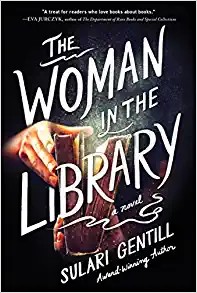
The Woman in the Library
Sulari Gentill · 2022
Dangerous text Draft chapters of a murder mystery are exchanged with a correspondent whose advice becomes increasingly invasive
Closest Verity connection The apparent truth of a written account depends on who prepared it and which reader it was meant to influence
Main difference A witty metafictional mystery built around a novel in progress
Best for Readers who want a clever library mystery, writer characters, correspondence, and a book-within-a-book structure.
Know before you start The novel includes murder, stalking, manipulation, racism in contextual discussion, and a metafictional frame that intentionally interrupts the main plot.
Inside one narrative, four strangers meet in the Boston Public Library after a woman's scream interrupts the reading room. One of them, Australian novelist Freddie Kincaid, turns the encounter into a story while wondering whether the murderer is now part of their group. Outside that narrative, author Hannah Tigone sends each chapter to an American correspondent named Leo, whose editorial comments gradually reveal an alarming investment in the work.
The dual structure makes ordinary reader feedback feel predatory. Leo begins as a useful local resource, correcting American details and supplying color. As his messages intensify, the question is no longer whether Hannah's manuscript is realistic but how much access the manuscript has granted him. Fiction becomes a route through which a stranger can rehearse intimacy and test boundaries.
The novel ranks ninth because its tone is lighter and its central mystery more playful than Hoover's domestic nightmare. Its frame, however, captures a crucial Verity anxiety: a text never arrives alone. It carries an implied author and creates an implied reader, and danger begins when one participant believes that relationship gives him rights the other never offered.
8
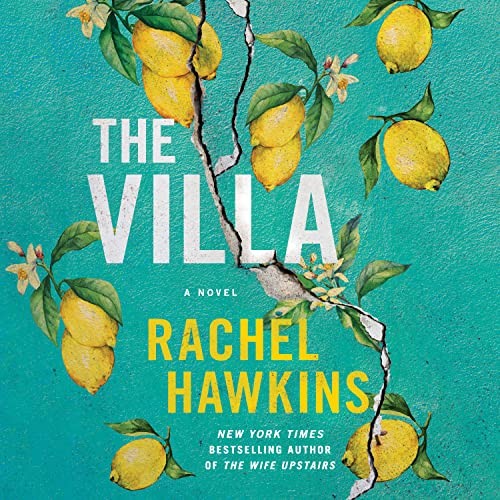
The Villa
Rachel Hawkins · 2023
Dangerous text A bestselling horror novel and buried diary preserve competing versions of a notorious 1970s murder
Closest Verity connection A writer in an isolated house discovers that a woman's private account may overturn the story everyone accepted
Main difference A friendship thriller split between contemporary Italy and a rock-and-roll past
Best for Readers who want Italian atmosphere, toxic friendship, dual timelines, and a mystery hidden in art.
Know before you start The novel includes murder, intimate-partner abuse, infidelity, chronic illness, drug use, reproductive coercion, and manipulative friendships.
Emily joins her successful childhood friend Chess at an Italian villa, hoping the trip will repair both her health and stalled writing career. The house was the scene of a famous 1974 murder involving musicians, lovers, and Mari Godwick, who later wrote the landmark horror novel Lilith Rising. As Emily studies the case, she begins finding clues suggesting that Mari embedded a different history inside her published work.
Hawkins uses authorship to complicate envy. Emily and Chess both earn money through books, but their careers carry different kinds of legitimacy and control. The villa's historical documents promise Emily a story she can own just as her current relationships begin making ownership—of ideas, success, and even illness—feel dangerously unstable.
It ranks eighth because the historical mystery is more puzzle than psychological abyss, and the friendship plot often takes precedence over the manuscript itself. Still, the setting creates an excellent Verity-like pressure chamber. Two writers share a beautiful house, one woman's account threatens another's version of reality, and literary success makes disclosure financially tempting as well as morally urgent.
7
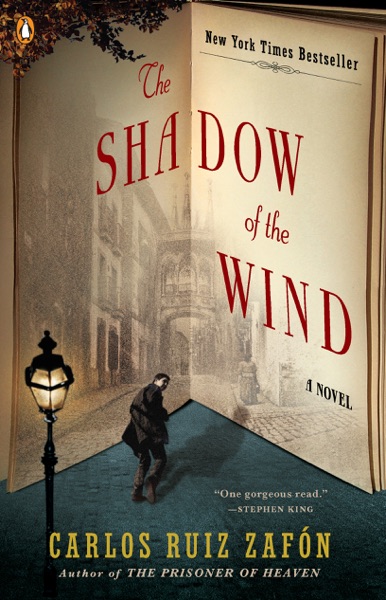
The Shadow of the Wind
Carlos Ruiz Zafón · 2001 in Spanish; 2004 in English translation
Dangerous text A nearly forgotten novel leads its reader toward the ruined life of its author
Closest Verity connection Reading becomes an investigation into whether a tragic narrative was confession, concealment, or warning
Main difference A sweeping historical Gothic set in postwar Barcelona
Best for Readers who want literary mystery, doomed romance, Gothic Barcelona, and a story about the preservation of books.
Know before you start The book includes torture, murder, war and dictatorship, sexual violence, incest, abusive relationships, and florid melodrama.
As a boy, Daniel Sempere is taken to the Cemetery of Forgotten Books and chooses The Shadow of the Wind by Julián Carax. He soon learns that someone has been locating and burning every copy of Carax's work. Daniel's attempt to preserve his book becomes a decades-spanning inquiry into the author's love affair, disappearance, enemies, and resemblance to Daniel's own emerging life.
Zafón makes books physically vulnerable and emotionally contagious. Daniel does not merely want facts about Carax; he begins organizing his identity around the romance and tragedy he uncovers. Testimony arrives from people with incompatible loyalties. The more complete the biography appears, the more Daniel risks treating another person's catastrophe as a script.
The novel ranks seventh because its scale, humor, and historical melodrama are far removed from Verity's compressed household. What connects them is the seduction of literary evidence. Daniel believes the right collection of documents and memories will reveal the real Carax, yet every narrative also expresses the needs of the person telling it.
6
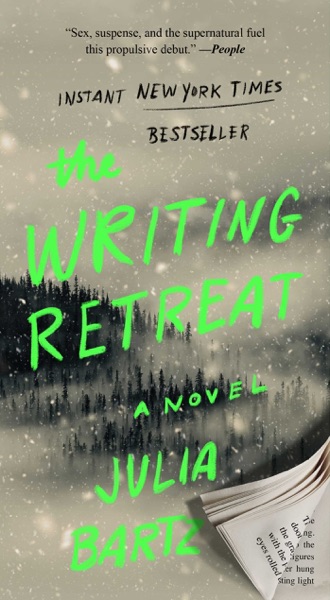
The Writing Retreat
Julia Bartz · 2023
Dangerous text Five writers must produce complete novels during a month at an isolated estate, with publication as the prize
Closest Verity connection A powerful author controls a house in which ambition, surveillance, and a manuscript become impossible to separate
Main difference A more overt horror-thriller with a competitive group of writers
Best for Readers who want a fast feminist horror thriller, dark academia atmosphere, writer rivalry, and an isolated mansion.
Know before you start The story includes confinement, murder, drugging, sexual content, coercion, blood, reproductive themes, and volatile friendship trauma.
Alex has stopped writing after a painful rupture with her former best friend Wren. An invitation to a retreat hosted by celebrated horror novelist Roza Vallo seems like an impossible second chance—until Alex discovers Wren is also attending. At Blackbriar Estate, Roza announces that the guests must each write an entire novel, and that the best manuscript will receive a life-changing publishing contract.
The daily word count gives coercion the appearance of opportunity. Every participant has consented to pressure because the prize represents access to a profession that routinely asks writers to transform private injury into saleable material. Roza understands exactly how to turn admiration into obedience. The manuscript Alex produces becomes both evidence of her endurance and another mechanism keeping her inside the estate.
It ranks sixth because the plot grows more extravagant and conventionally horrific than Verity. The book is strongest when it examines mentorship as controlled intimacy. A famous woman invites younger writers into her private world, promises to recognize their talent, and then uses the fear of artistic failure to make unreasonable demands feel self-imposed.
5
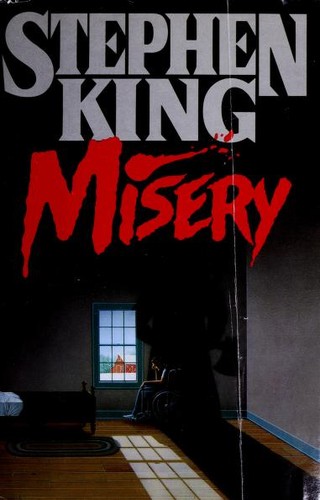
Misery
Stephen King · 1987
Dangerous text A captive novelist is forced to resurrect his heroine in a handwritten sequel
Closest Verity connection Writing inside a secluded house becomes a negotiation over truth, ownership, and physical survival
Main difference The author is the prisoner, and the threat is never concealed behind domestic normality
Best for Readers who want claustrophobic suspense, two unforgettable characters, and horror rooted in the physical labor of writing.
Know before you start The novel contains captivity, addiction, graphic injury, amputation, murder, psychological abuse, and prolonged medical suffering.
After a car crash, novelist Paul Sheldon wakes in the remote home of Annie Wilkes, a former nurse and his self-declared number-one fan. Annie has read Paul's latest book and is enraged that he killed the heroine Misery Chastain. She burns the manuscript he hoped would establish his serious reputation and orders him to write a new novel bringing Misery back without cheating.
King turns the creative process into suspense without romanticizing it. Paul must write well enough to satisfy a reader who controls his medication, food, and body. Yet the forced manuscript also becomes a private territory in which his intelligence can still operate. Annie's close reading is both monstrous and perceptive; she recognizes false narrative solutions immediately, even while demanding an impossible one.
The novel ranks fifth because no reader doubts Annie's capacity for violence. Verity draws much of its tension from uncertainty about illness and performance, whereas Misery is a siege. It belongs near the center because it understands a manuscript as leverage. Words are not symbolic stakes here. Each page changes the probability that its author will live.
4
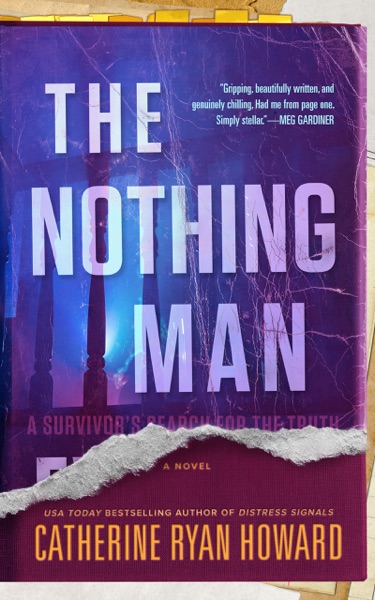
The Nothing Man
Catherine Ryan Howard · 2020
Dangerous text A survivor's true-crime memoir is read by the unidentified killer who destroyed her family
Closest Verity connection The person described in a manuscript is alive, nearby, and desperate to know what the writer has revealed
Main difference A serial-killer thriller built around published nonfiction rather than a secret autobiography
Best for Readers who want an ingenious true-crime structure, cat-and-mouse tension, survivor agency, and a killer forced to read about himself.
Know before you start The book includes home invasion, murder, sexual violence, child death, stalking, trauma, and discussion of real-world true-crime ethics.
Eve Black was the only member of her family to survive an attack by the serial offender called the Nothing Man. Years later, she publishes a true-crime book intended to identify him. Security guard Jim Doyle sees the memoir displayed in a supermarket and begins reading. He knows immediately that Eve's subject is not a mystery. It is him.
Howard alternates between Eve's book and Jim's reaction, making reading an active confrontation. Jim searches every page for evidence that Eve remembers more than she should. His pride wants the crimes accurately recognized; his self-preservation wants the narrative contained. The memoir can injure him without being factually complete because publication gives thousands of strangers the ability to look again.
It ranks fourth because the danger of the text is beautifully literal. Like Lowen, Jim reads with privileged knowledge and assumes that knowledge makes him the best judge of the account. The novel exposes the vanity inside that assumption. A perpetrator may believe he owns the real story, while a survivor's decision to narrate changes whose understanding matters.
3
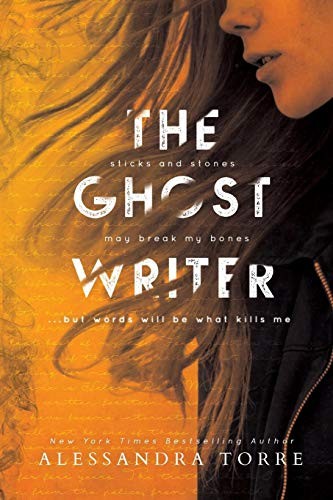
The Ghostwriter
Alessandra Torre · 2017
Dangerous text A terminally ill novelist hires a professional rival to write the true story of her family's destruction
Closest Verity connection A ghostwriter enters a famous author's home and must decide whether a horrifying confession is honest, manipulative, or both
Main difference The confessor is consciously directing the book and racing against death
Best for Readers who want a domestic mystery driven by grief, an adversarial writing partnership, and a morally complicated confession.
Know before you start The novel includes terminal illness, child death, murder, severe depression, suicide references, marital conflict, and major late revelations.
Helena Ross has written bestselling romances while keeping her own life fiercely sealed. Diagnosed with terminal cancer, she decides to produce one final book: an account of what happened to her husband and daughter. Unable to complete it alone, she asks Marka Vantly, an author she has publicly resented, to serve as ghostwriter. Collaboration requires Helena to surrender facts she has organized her entire identity around withholding.
The setup makes authorship a contest over control. Helena wants confession without losing command of tone, sequence, or judgment. Marka needs enough truth to make the book work but cannot assume that a skilled novelist has stopped arranging the reader. Their professional rivalry prevents easy sentiment. Each knows how narrative can turn a damaged person into a sympathetic protagonist.
It ranks third because its premise is the cleanest direct companion to Verity: a ghostwriter, a famous author, a devastated family, and a manuscript promising the truth. Torre's novel is ultimately more interested in grief and disclosure than sustained menace. That emotional difference makes it less sinister, but it also asks a useful question Hoover leaves open—what would confession cost if the accused woman were fully able to choose every word?
2

The Plot
Jean Hanff Korelitz · 2021
Dangerous text A failed novelist steals a dead student's irresistible story idea and becomes a bestseller
Closest Verity connection A successful book may be both truthful and deliberately arranged to conceal the crime behind its creation
Main difference A publishing-world thriller centered on plagiarism and authorship
Best for Readers who want literary ambition, plagiarism, publishing satire, escalating anonymous threats, and a highly discussable ending.
Know before you start The novel includes murder, suicide, family abuse, deception, stalking, plagiarism, and a protagonist whose rationalizations are part of the suspense.
Jacob Finch Bonner once published a respectable novel and now teaches at a struggling MFA program. An arrogant student tells him the premise of a book guaranteed to succeed, then dies before apparently writing it. When no manuscript surfaces, Jake uses the plot himself. The resulting novel makes him famous—until an anonymous message arrives with four words: You are a thief.
Korelitz treats plagiarism as only the opening moral problem. Jake believes ideas cannot be owned, especially by the dead, and can produce a sophisticated defense of every step he took. The threat forces him to research his student's family and discover that the story's real danger lies not in its originality but in where it came from. Fiction has concealed a history while exposing its shape.
It ranks second because it makes a manuscript simultaneously evidence, stolen property, camouflage, and bait. Like Verity, it relies on the reader's awareness that a convincing narrative can survive even when its authorship is compromised. Jake's professional skill does not help him recognize manipulation; it supplies better reasons to keep believing the version that protects him.
1
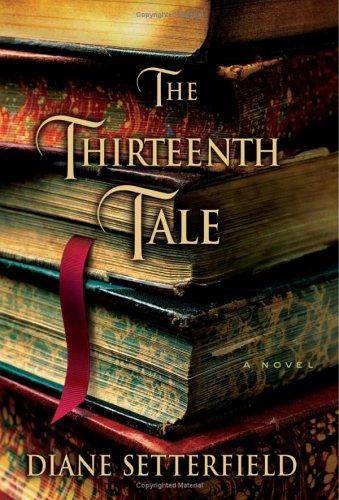
The Thirteenth Tale
Diane Setterfield · 2006
Dangerous text A secretive novelist dictates the supposedly true biography she has refused to tell for decades
Closest Verity connection A writer enters an isolated house to record a famous woman's account of twins, motherhood, fire, and death
Main difference A lush Gothic mystery more concerned with identity and inheritance than erotic suspense
Best for Readers who want a literary Gothic, unreliable biography, twins, ruined estates, and a story built for slow immersion.
Know before you start The novel includes child neglect, incest, sexual violence, mental illness, fire, death, abusive parenting, and deliberately heightened Gothic coincidence.
Biographer Margaret Lea receives an invitation from Vida Winter, Britain's most celebrated novelist and a woman famous for giving interviewers a different invented past every time. Now ill, Vida says she wants to tell the truth. Her account leads Margaret to Angelfield, a ruined estate and the chaotic childhood of twins Adeline and Emmeline March. The missing facts resonate with Margaret's own buried family history.
Setterfield makes listening as dangerous as discovery. Vida controls the order of disclosure and understands exactly how narrative hunger works. Margaret knows she is being managed but cannot refuse the promise of a complete story. Documents, testimony, and physical evidence gradually converge, yet each apparent answer depends on identity—who witnessed an event, who survived it, and who acquired the authority to speak.
It ranks first because it offers the richest version of Verity's essential arrangement: one writer in the house of another, receiving a terrible family narrative from a woman whose incapacity may be part of the performance. Its tone is less feverish, but its final effect is deeper. A confession may reveal the truth and still be the last, most accomplished fiction its author ever constructs.
Which Dangerous-Manuscript Thriller Should You Read First?
Choose The Thirteenth Tale for the closest atmospheric match to Verity: a writer, an imposing house, a damaged family, and a famous woman who may be controlling the investigation through the story she tells. Read The Plot if your favorite element was the possibility that a manuscript can be true, stolen, and manipulative at the same time.
The Ghostwriter offers the most literal ghostwriting parallel, with a warmer and more grief-centered destination. The Nothing Man is the best high-concept thriller on the list, placing a killer inside the audience for a survivor's memoir. Choose Misery when you want the act of producing pages to become direct physical peril.
For a lighter metafictional puzzle, begin with The Woman in the Library. The Villa adds Italian scenery and toxic friendship, while The Writing Retreat turns literary ambition into an isolated-house competition. Readers willing to trade speed for atmosphere should choose The Shadow of the Wind or Harwood's intricately nested The Ghost Writer.
Manuscript thrillers work because reading feels private even when it is not. The author cannot interrupt, the subject cannot object, and the page waits with apparent patience for the reader to decide what happened. That silence makes interpretation feel like control. These novels reveal how quickly it can become exposure instead.
The Thirteenth Tale ranks first because Vida Winter understands the danger better than anyone around her. She does not merely possess secrets; she understands genre, pacing, and the needs of the person chosen to receive them. Like Verity, the novel leaves the reader with a useful suspicion: the most convincing confession may be the story in which truth and manipulation have become impossible to separate.