The most frightening thing in The Stepford Wives is not its secret mechanism. It is how efficiently Stepford makes Joanna Eberhart doubt the evidence in front of her. The lawns are clipped, the husbands are cordial, and every objection can be dismissed as jealousy, nerves, or resistance to a pleasant new life. Ira Levin turns neighborliness into camouflage and perfection into a threat.
The best books like The Stepford Wives therefore need more than sinister suburbs. They need a community with an idea of the correct person: the useful wife, the obedient daughter, the grateful homeowner, the sufficiently devoted mother. Some of the communities below enforce that ideal with technology or law. Others need only manners, tradition, money, and the fear of being the first person to say that something is wrong.
This ranking favors novels in which social pressure is part of the horror rather than decorative background. The selections range from domestic thrillers and folk horror to dystopia and satire, but each asks the same dangerous question: what does a supposedly perfect community have to remove in order to remain perfect?
10
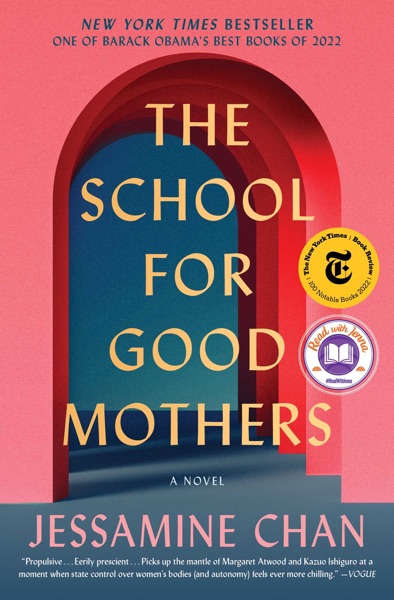
The School for Good Mothers
Jessamine Chan · 2022
Community A state-run residential program for mothers judged unfit
Closest Stepford connection Womanhood is reduced to a measurable performance enforced by observers who call coercion improvement
Main difference A near-future institutional dystopia focused on motherhood rather than marriage
Best for Readers who want feminist dystopia about parenting, surveillance, and the violence hidden inside the language of self-improvement.
Know before you start The novel includes child separation, state surveillance, racism, emotional abuse, institutional punishment, and sustained parental distress.
Frida Liu makes one terrible parenting decision and loses custody of her young daughter. The state offers a route back, but it requires a year at an experimental school where mothers train on eerily responsive child substitutes. Every gesture, tone, and emotional response becomes data. Failure no longer means private shame; it becomes evidence in a system empowered to decide whether Frida deserves her child.
Jessamine Chan replaces Stepford's smiling volunteers with professional evaluators, yet the governing logic is familiar. The institution has already decided what a good mother looks like. It can therefore interpret fatigue, anger, cultural difference, or imperfect affection as defects to be corrected. The women are encouraged to monitor one another, making solidarity difficult precisely when they need it most.
The novel is longer, sadder, and less mechanically tidy than Levin's satire. Its speculative system sometimes feels designed to make every possible cruelty visible, and the repetition is part of its exhaustion. It ranks tenth because it is not really a community mystery: Frida and the reader understand the nature of the machine early. What it shares with The Stepford Wives is the terror of having a narrow social ideal converted into apparently objective fact.
9
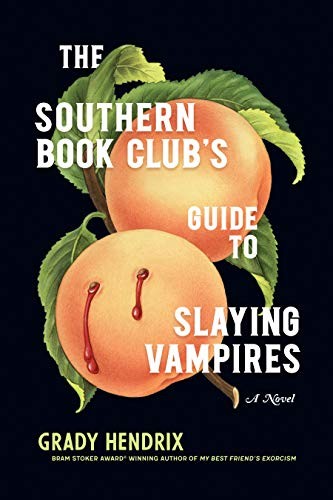
The Southern Book Club's Guide to Slaying Vampires
Grady Hendrix · 2020
Community An affluent Charleston suburb in the 1990s
Closest Stepford connection Housewives see danger clearly while husbands protect comfort, reputation, and another man's authority
Main difference An explicit supernatural predator and much more graphic horror
Best for Readers who want angry suburban horror, female friendship, and a villain whose social protection is as important as his supernatural power.
Know before you start Expect racism, sexual assault, domestic abuse, harm to children and animals, suicide, blood, and graphic violence.
Patricia Campbell's book club begins as a refuge from domestic routine. Its members read true crime, trade neighborhood intelligence, and briefly become people whose curiosity matters. Then James Harris arrives. He is charming, attentive, financially useful, and welcomed by the husbands. Patricia's suspicions sound increasingly unreasonable because the community has more incentive to believe the helpful newcomer than the woman disrupting dinner.
Grady Hendrix understands how a suburb can turn unpaid domestic knowledge into both power and trap. Patricia notices changed children, frightened neighbors, and absences that respectable residents prefer not to count. The threat is first visible in a poorer Black neighborhood, and the ease with which the suburb ignores those victims is not incidental. The monster survives through race and class before supernatural strength becomes necessary.
The book is messier than Levin's immaculate construction. It swings between comedy, domestic drama, and scenes of startling brutality, while several husbands are drawn broadly enough to make the satire feel blunt. It ranks ninth because it eventually confirms the monster in spectacular terms. Its strongest Stepford-like scenes come earlier, when Patricia knows what she saw and discovers that marriage has given someone else the authority to define reality.
8
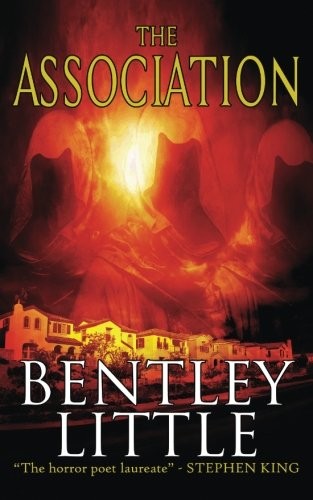
The Association
Bentley Little · 2001
Community A planned mountain development governed by an all-powerful homeowners' association
Closest Stepford connection The dream home is an instrument of conformity, and friendly rules become a system of intimate control
Main difference Maximalist horror satire that escalates far beyond Levin's restraint
Best for Readers who enjoy aggressive social satire, bureaucratic nightmares, and horror that keeps escalating after realism has left the neighborhood.
Know before you start The book includes animal harm, sexual violence, murder, mutilation, harassment, and deliberately extreme grotesquerie.
Barry and Maureen believe they have found privacy, scenery, and a house worth reorganizing their lives around. Bonita Vista's homeowners' association initially appears merely officious. Its covenants regulate ordinary irritations: appearance, maintenance, visitors, and the uses to which a resident may put supposedly private property. Refusal reveals that these are not guidelines. They are the local form of sovereignty.
The premise makes literal what The Stepford Wives leaves socially implicit. Buying a home is also buying entry into a governing arrangement whose power is strongest when it resembles paperwork. Bentley Little is very good at the moment when petty bureaucracy stops being funny but remains too banal for outsiders to believe. Neighbors comply because each concession seems easier than open conflict.
Subtlety is not the novel's aim. The punishments grow grotesque, the association's reach becomes extravagant, and the satire repeats its point with the insistence of a violation notice nailed to the door. That excess places it below the more psychologically exact books on this list. Still, few novels better capture the violation of discovering that ownership does not mean autonomy. Stepford offers a beautiful house in exchange for a self; Bonita Vista puts the exchange in the bylaws.
7
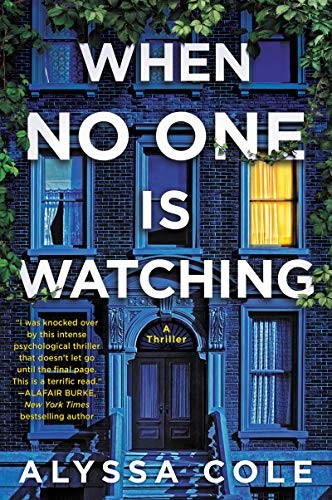
When No One Is Watching
Alyssa Cole · 2020
Community A historically Black Brooklyn neighborhood undergoing rapid gentrification
Closest Stepford connection A polished new social order depends on erasure, disbelief, and neighbors disappearing behind renovated facades
Main difference A racial and economic conspiracy thriller with dual viewpoints and a more action-driven finale
Best for Readers who want a fast conspiracy thriller about gentrification, neighborhood memory, and the danger of an official history.
Know before you start The novel includes racism, forced displacement, police violence, medical abuse, parental death, confinement, and murder.
Sydney Green watches the neighborhood that raised her being rewritten in real time. Longtime residents leave without proper goodbyes. A supposedly educational walking tour presents Black history as a footnote to incoming wealth. New neighbors treat concern as hostility, while real estate language makes displacement sound like natural improvement. Sydney begins researching a more truthful tour with Theo, one of the few newcomers willing to admit that the official story feels wrong.
Alyssa Cole turns gentrification into the ideal engine for social paranoia because it makes visible changes easy to explain away. A closed business, an unanswered phone, or an unfamiliar face can be ordinary. Taken together, they suggest intention. Sydney's grief and anxiety allow other people to question her judgment, while the neighborhood's history supplies evidence that respectable institutions have always known how to make theft look administrative.
The final explanation is heightened and the climax shifts into a broader thriller register, losing some of the unnerving plausibility of the first half. The book also develops a romance that softens the isolation central to The Stepford Wives. It ranks seventh because its best horror is architectural and linguistic: the new version of the community arrives with tasteful fixtures, cheerful branding, and no place for the people who remember what was there.
6
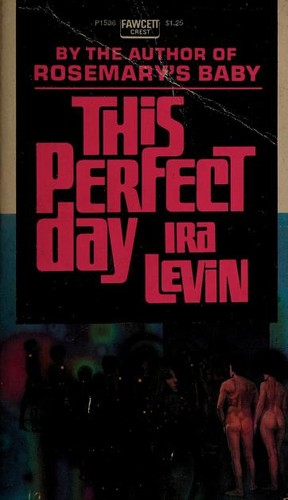
This Perfect Day
Ira Levin · 1970
Community A global society managed by the computer UniComp
Closest Stepford connection Ira Levin again imagines comfort produced through the systematic removal of difference and desire
Main difference A full-scale technocratic dystopia rather than a compact suburban mystery
Best for Readers curious about Levin's larger dystopian vision and willing to trade suburban economy for world-spanning conspiracy.
Know before you start The story includes forced medication, eugenics, reproductive control, kidnapping, coercive sexual behavior, and period gender assumptions.
Li RM35M4419, privately nicknamed Chip, lives in a world where almost every choice has been made benevolently unnecessary. Uni assigns work, partners, treatment, movement, and reproduction. Citizens share a tiny pool of names, receive regular medication, and call one another members of the Family. Hunger and war have receded. So have privacy, ambition, art, and the right to want anything that has not been provided.
Read beside The Stepford Wives, the novel reveals Levin's recurring obsession with standardization. Stepford converts women into ideal domestic products; UniComp applies the principle to everyone. Both systems succeed because they produce genuine convenience for the people permitted to benefit. The question is not whether the world is pleasant. It is whether pleasantness can justify eliminating the person capable of judging it.
The plot expands into rebellion, hidden enclaves, and a series of reversals that make the book more conventionally dystopian than Levin's best domestic thrillers. Some sexual and gender politics have aged poorly, and Chip's awakening receives more space than the society's victims. It ranks sixth because its scale diffuses the close social pressure that makes Stepford so unnerving. As a companion novel, however, it is invaluable: the suburb was never Levin's only target. Perfect systems were.
5
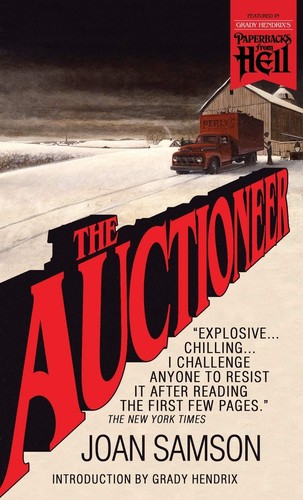
The Auctioneer
Joan Samson · 1975
Community A poor rural New Hampshire town gradually overtaken by a charismatic fundraiser
Closest Stepford connection Ordinary people surrender autonomy one polite concession at a time while social agreement makes resistance seem shameful
Main difference Rural economic horror with no speculative explanation and almost no comic distance
Best for Readers who prefer quiet folk horror, social coercion, and plausible evil over supernatural spectacle.
Know before you start The book includes economic exploitation, threats, community violence, animal loss, death, and a relentlessly bleak atmosphere.
Perly Dunsmore arrives offering energy, auctions, and civic improvement. At first, the farmers donate objects they can spare. The auctions support local causes, and refusing would mark a family as selfish. Then the collections continue. Useful tools, livestock, and possessions with private meaning become public obligations. Each demand is only slightly worse than the last, which lets the town adapt before it understands what adaptation has cost.
Joan Samson's great subject is not one villain's charisma but a community's inability to interrupt its own manners. John and Mim Moore can see that the auctions are destroying their household, yet private recognition does not create public resistance. Neighbors wait for someone else to speak. Authority expands inside that silence, assisted by economic precarity and the old fear that making trouble may leave a family alone when it next needs help.
The novel is spare, bleak, and almost painfully linear. Readers expecting a hidden mechanism will find none; the horror is that coercion can operate through known institutions and familiar faces. It ranks fifth because it reproduces Levin's social trap without reproducing his plot. Perly does not need to replace anyone. He needs the town to keep behaving as though cooperation remains voluntary after everyone knows it is not.
4
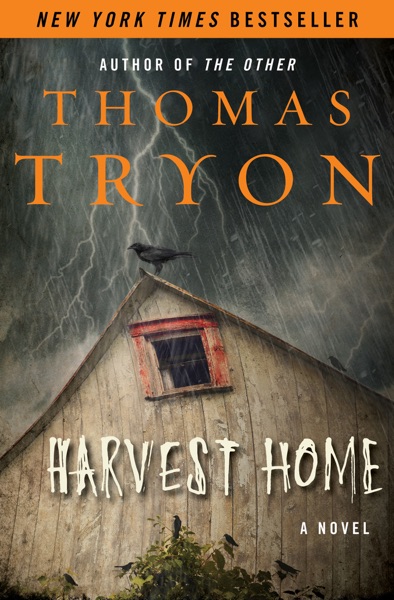
Harvest Home
Thomas Tryon · 1973
Community Cornwall Coombe, an isolated New England village organized around agricultural tradition
Closest Stepford connection Newcomers mistake secrecy and rigid roles for picturesque tradition until belonging becomes a demand
Main difference Slow folk horror centered on fertility ritual, seasonal power, and rural isolation
Best for Readers who want patient rural folk horror, seasonal ritual, and a beautiful village whose customs cannot be safely observed from outside.
Know before you start The novel includes sexual violence, incestuous implications, reproductive coercion, animal killing, mob violence, and period misogyny.
Ned Constantine moves his family from New York City to Cornwall Coombe hoping for beauty, quiet, and a more authentic life. The village supplies all three. Its customs seem eccentric but coherent, its matriarchic Widow Fortune commands respect, and the annual cycle gives communal life an order the city lacked. Ned's curiosity gradually changes from admiration to suspicion as accidents, taboos, and preparations for Harvest Home begin to align.
Thomas Tryon gives the reader time to understand why the family wants the village to be good. That desire is essential. Like Joanna in Stepford, Ned finds that asking direct questions is itself a violation of the local social contract. His wife and daughter form relationships he cannot supervise, making his investigation look less like protection than an outsider's need for control. The village can therefore defend itself with both secrecy and plausible criticism of the man challenging it.
The novel is much longer and more ceremonially serious than Levin's satire. Its sexual politics are deliberately disturbing and sometimes treated with a period sensationalism that modern readers may find exploitative. It ranks fourth because Cornwall Coombe is one of horror's most persuasive closed communities. The harvest ritual matters, but the deeper trap is Ned's discovery that a community can welcome a newcomer without ever granting him the right to define what welcome means.
3
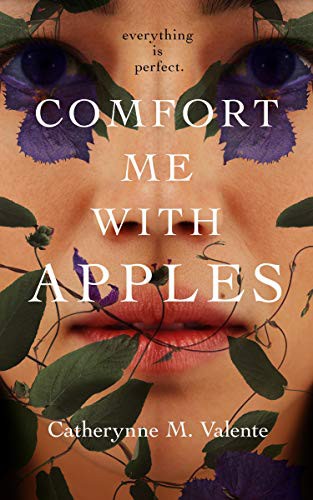
Comfort Me with Apples
Catherynne M. Valente · 2021
Community Arcadia Gardens, a gated development governed by increasingly ominous covenants
Closest Stepford connection A perfect wife in a perfect home discovers that domestic perfection requires ignorance and replacement
Main difference A short mythic puzzle whose central revelation changes the meaning of the entire setting
Best for Readers who want a brief, elegant domestic nightmare and enjoy realizing that every early detail meant something else.
Know before you start The book includes coercive marriage, bodily violation, patriarchal violence, animal imagery, and a major reveal that is easy to spoil.
Sophia is happy because everything around her confirms that she should be. Her husband is perfect, their house is perfect, and Arcadia Gardens protects perfection through exact rules. Yet her husband is absent too often. A locked drawer contains an object that does not belong to her. The basement is forbidden. Her neighbors answer questions in ways that sound reassuring until the reassurance becomes more frightening than the mystery.
Catherynne M. Valente uses the language of luxury development as a form of scripture. The covenants tell residents how to preserve beauty, but they also establish what may be seen, named, or remembered. Sophia's simple declarative voice places the reader slightly ahead of her without making the destination obvious. The result is close to Levin in method: short chapters, polished surfaces, and a joke so severe that it becomes horror.
This novella is best entered with minimal plot information, and its ranking depends on the precision of its Stepford resemblance rather than breadth. It does not develop a large social world or allow every implication equal space. What it does, it does cleanly. Arcadia Gardens is the metaphysical endpoint of Stepford's promise: not merely a community where women are made to fit men's desires, but a reality whose rules insist that desire came first and the woman afterward.
2
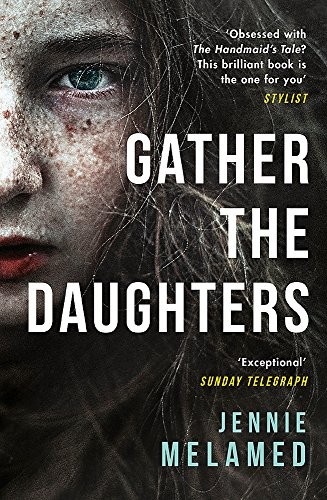
Gather the Daughters
Jennie Melamed · 2017
Community An isolated island colony ruled by a patriarchal religious code
Closest Stepford connection Girls are trained to accept a social order that values them only through service, marriage, and reproduction
Main difference Multiple adolescent viewpoints expose abuse from inside a long-established cult rather than through an adult newcomer
Best for Readers who want literary cult fiction, adolescent rebellion, and a sustained examination of how patriarchy reproduces itself.
Know before you start The novel includes incest, child sexual abuse, domestic violence, eating disorders, forced marriage, suicide, and reproductive coercion.
The island's families believe the mainland was ruined and that their Founding Ancestors preserved the correct way to live. Children enjoy a season of relative freedom before girls become wives and mothers. Janey delays that transition by starving herself. Vanessa reads more than the community intends. Caitlin understands violence through her home. Their separate suspicions begin to form a collective knowledge the adults have worked to prevent.
Jennie Melamed shows how a closed society makes the intolerable ordinary by distributing it across ritual, family affection, and language. There is no single men's club where the conspiracy can be exposed. Fathers who participate in abuse may also appear tender; mothers transmit rules that have harmed them; girls police one another before learning how to rebel together. The system survives because it has shaped the emotional vocabulary through which its victims understand love.
The novel is far more harrowing than Levin's cool satire, and its treatment of abuse is the central experience rather than a late revelation. Its lyrical style sometimes creates distance where a thriller would accelerate. It ranks second because it answers one of The Stepford Wives' most troubling unanswered questions: what would the community look like after enough time had passed for girls to be born inside it? The result is not perfect obedience. It is inherited damage beginning to recognize itself.
1
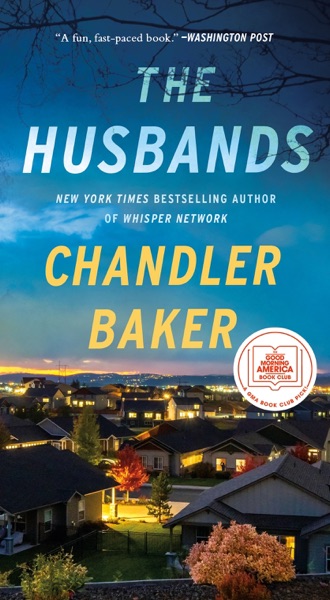
The Husbands
Chandler Baker · 2021
Community Dynasty Ranch, an exclusive suburban development populated by high-achieving women and unusually helpful husbands
Closest Stepford connection A direct gender-reversed response to Levin built around marriage, domestic labor, and a suspiciously efficient neighborhood
Main difference A contemporary legal-domestic thriller that complicates the fantasy instead of simply reversing victim and villain
Best for Readers who want the most direct contemporary Stepford response, especially one grounded in invisible labor and professional ambition.
Know before you start The novel includes pregnancy anxiety, marital conflict, death by fire, medical coercion, manipulation, and gendered workplace discrimination.
Nora Spangler is pregnant, overworked, and pursuing a partnership at her law firm while carrying most of her household's invisible labor. Dynasty Ranch appears to offer the life she has been promised but cannot reach. The women are professionally accomplished. Their husbands remember appointments, manage meals, and treat domestic work as shared responsibility. When a house fire creates a possible wrongful-death case, Nora receives both professional access and a reason to examine how this community manufactures balance.
The obvious gender reversal is only the beginning. Chandler Baker asks why competent partnership looks so implausible that it immediately signals conspiracy. Nora's exhaustion makes the Ranch attractive even after suspicion develops, which prevents the book from becoming a simple morality play. The women have not invented unequal labor; they have responded to it. The horror lies in turning one injustice into permission to reproduce another.
The thriller machinery is busier than Levin's, with legal investigation, workplace pressure, pregnancy, and domestic negotiation all competing for space. Its satire explains itself more openly, and readers may predict the neighborhood's broad secret early. It ranks first because it is the clearest modern conversation with The Stepford Wives rather than a cosmetic imitation. Dynasty Ranch changes who benefits, then refuses to pretend that a reversed hierarchy is equality. It leaves the most useful question behind: if ordinary fairness feels like science fiction, what have we accepted as realism?
Which Unsettling Community Novel Should You Read First?
Start with The Husbands if you want the most explicit conversation with The Stepford Wives. It preserves the affluent development, suspicious spouses, and domestic bargain while making the gender reversal morally complicated. Choose Comfort Me with Apples when you want the same polished efficiency in a single sitting and are willing to let myth replace procedural explanation.
For slow community horror, read Harvest Home. For a bleaker and more plausible account of social compliance, choose The Auctioneer. Gather the Daughters is the most emotionally difficult selection and the strongest choice for readers interested in children raised inside an abusive order rather than newcomers discovering one.
Choose When No One Is Watching for a faster conspiracy thriller, The Association for grotesque bureaucratic escalation, and The Southern Book Club's Guide to Slaying Vampires for friendship and bloody supernatural horror. The School for Good Mothers is best when surveillance and institutional judgment matter more than mystery. Read This Perfect Day to see Levin enlarge the same fear of manufactured contentment to the scale of an entire world.
The Stepford Wives endures because its community does not initially look cruel. It looks convenient. The husbands have solved conflict, the houses are beautiful, and the women who might object can be described as unhappy before they can describe what is happening to them.
The books on this list change the rules, but not the bargain. A community identifies one kind of person as inconvenient and calls that person's removal order, safety, tradition, progress, or love. The Husbands ranks first because it makes the promised convenience tempting without mistaking temptation for justice. The most unsettling perfect community is not the one no sensible person would enter. It is the one that offers exactly the help a sensible person has been denied.