Sarah Waters makes The Little Stranger difficult to classify in exactly the right way. It is a ghost story in which no ghost can be proven, a country-house novel about people who can no longer afford the country house, and a love story narrated by a man whose desire may be another form of possession. Hundreds Hall is decaying, but every character needs that decay to mean something different.
The best books like The Little Stranger therefore use a haunted house as more than a delivery system for apparitions. The building must store class, grief, family mythology, prejudice, or desire. It should exert pressure on the narrator's reliability. Whether the supernatural is finally confirmed matters less than whether the house can be separated from the people who interpret it.
This ranking favors literary ambition, psychological complexity, and buildings that participate in the form of the novel. Several selections are explicitly supernatural; others protect ambiguity. All are slow or structurally unusual enough to disappoint a reader seeking only rapid scares. They are ranked by how closely the haunting becomes an argument about memory, intimacy, and the dangerous wish to belong inside a particular house.
10
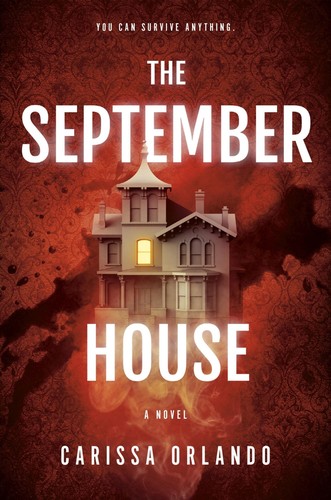
The September House
Carissa Orlando · 2023
House A beautiful Victorian home whose hauntings follow a reliable calendar
Closest Little Stranger connection Domestic denial makes the narrator's account more revealing than any individual apparition
Main difference Graphic, frequently funny horror in which the ghosts are never seriously in doubt
Best for Readers who want a modern, accessible haunted-house novel with dark humor and a serious account of domestic abuse underneath it.
Know before you start The book includes domestic violence, murder, suicide, child death, alcoholism, blood, and graphic supernatural attacks.
Margaret accepts that blood runs down the walls every September. She knows which ghosts are harmless, which former housekeeper is useful, and why the basement door must remain closed. The rules are inconvenient but manageable. When her husband Hal disappears and their adult daughter Katherine arrives to investigate, Margaret's determination to describe the house as perfect becomes harder to separate from older habits of accommodation.
Carissa Orlando turns the traditional unreliable narrator sideways. Margaret is not mistaken about the supernatural. She is unreliable about what a person should endure in order to preserve a home and marriage. Her practical relationship with the dead creates comedy, but it also reveals the mental labor required to convert chronic danger into routine. The haunted house and the abusive household begin to share a vocabulary.
The novel announces its ghosts and ultimately explains its central violence, leaving little of Waters's permanent ambiguity. Its climax is loud and cathartic, and the symbolism is deliberately legible. It ranks tenth because the tonal resemblance is limited. Yet Margaret and Dr. Faraday share a profound error: both have invested so much identity in a house that every new injury becomes a reason to revise the story rather than leave the building.
9
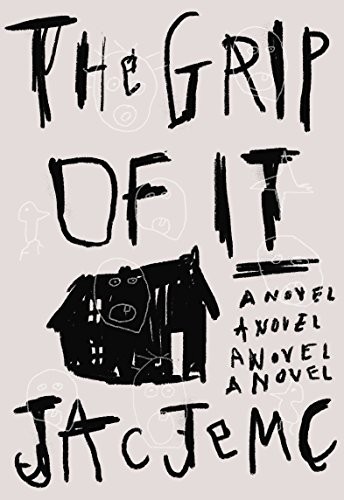
The Grip of It
Jac Jemc · 2017
House A suburban property whose stains, spaces, and sounds refuse stable explanation
Closest Little Stranger connection A limited account of haunting is inseparable from the deterioration of a relationship
Main difference Compressed, surreal, and divided between two narrators rather than anchored in social realism
Best for Readers who like short literary horror, fractured marriages, alternating viewpoints, and unresolved architectural wrongness.
Know before you start The novel includes addiction, bodily bruising, animal harm, psychological deterioration, infestation, and ambiguous violence.
Julie and James move to a new house hoping that relocation will repair damage caused by James's gambling. Instead, the building supplies new forms of uncertainty. Bruises appear on Julie's body. Marks spread across the walls. A hidden room and an unsettling neighbor suggest explanations without completing them. The couple alternate narration, but two perspectives do not create objective truth.
Jac Jemc uses repetition and short scenes to produce the feeling of being unable to remember whether a detail is new. Julie and James describe the same marriage from slightly different distances, and the house occupies the disagreement. A rational explanation can account for one incident at a time. It cannot account for the pattern without requiring the reader to decide how much fear itself is shaping perception.
The novel is intentionally withholding. Readers may find its symbols more evocative than cumulative and its ending less a solution than a final contraction. It has little of the historical and class texture that gives Hundreds Hall its weight. It ranks ninth because the house never becomes fully distinct from marital damage. The grip in the title belongs equally to property, compulsion, resentment, and the story a couple tells about starting again.
8
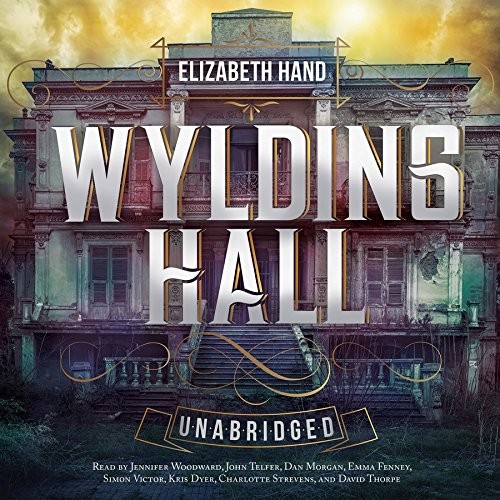
Wylding Hall
Elizabeth Hand · 2015
House A remote English manor where a folk-rock band records an era-defining album
Closest Little Stranger connection Testimony circles an English house whose social and architectural history cannot be reconstructed cleanly
Main difference An oral-history novella about music, memory, and a disappearance
Best for Readers who want folk music, documentary structure, uncanny photographs, and a ghost story that grows in the gaps between witnesses.
Know before you start The story includes bereavement, drug use, suicide references, a missing person, and unsettling child and animal imagery.
In the early 1970s, the members of Windhollow Faire retreat to Wylding Hall after the death of their lead singer. They rehearse, record, wander the house, and produce the album that will establish their reputation. Then replacement singer Julian Blake disappears. Decades later, musicians, a photographer, a manager, and others recount the summer for a documentary that cannot resolve what the surviving photographs and memories imply.
Elizabeth Hand's oral-history structure makes haunting a problem of collaboration. No single speaker possesses the story, yet each has helped create the band's mythology. Small disagreements about rooms, weather, relationships, and Julian's behavior accumulate until the reader must consider whether Wylding Hall changed people or merely gave their later guilt an architecture.
The novella is brief and cool, offering flashes rather than the prolonged domestic attrition of The Little Stranger. Its characters occupy the house temporarily and arrive with cultural freedom the Ayres family cannot imagine. It ranks eighth because its form is exceptionally well matched to the haunting. A legendary album and a haunted house are both objects experienced through layers of reproduction; the original event recedes as the testimony becomes more convincing.
7
The House Next Door
Anne Rivers Siddons · 1978
House A modern Atlanta home that destroys successive owners
Closest Little Stranger connection An apparently reliable observer becomes socially isolated by insisting that a prestigious house is dangerous
Main difference Affluent suburban horror about a new building rather than an inherited estate in decline
Best for Readers who want domestic catastrophe, affluent Southern social observation, and one of the most influential modern haunted-house novels.
Know before you start The book includes miscarriage, suicide, alcoholism, family violence, homophobia, death, and dated attitudes toward disability and mental illness.
Colquitt Kennedy and her husband Walter are initially irritated when construction begins on the empty lot beside their comfortable Atlanta home. The new house is beautiful, contemporary, and admired. Then the families who occupy it suffer intimate disasters. Colquitt observes enough repetition to believe the architecture itself is selecting each household's weakness, but warning anyone requires her to make an accusation respectable society has no language to receive.
Anne Rivers Siddons is especially sharp about reputation. Colquitt and Walter have money, friends, and social standing, but those protections depend on performing good judgment. Publicly declaring a neighboring house evil risks converting concern into gossip and the Kennedys into the neighborhood problem. The house can therefore defend itself with the community's preference for a tasteful explanation.
The novel's episodic structure repeats the cycle across several owners, and its psychology reflects the period in ways that can feel cruel or dated. The supernatural conclusion is more definite than Waters's. It ranks seventh because Colquitt's social predicament is so close to Dr. Faraday's narrative authority in reverse. He uses respectability to dismiss haunting; she must spend respectability in order to name it.
6
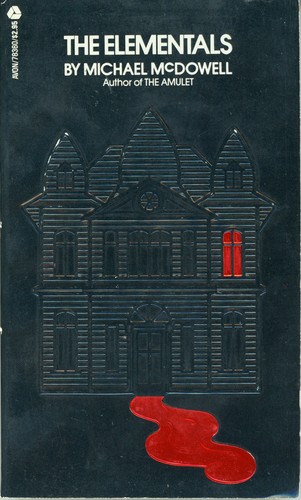
The Elementals
Michael McDowell · 1981
House One of three Victorian summer homes at Beldame, slowly disappearing beneath Gulf Coast sand
Closest Little Stranger connection A family's relationship with property allows an old supernatural danger to become part of inherited normality
Main difference Southern Gothic creature horror with eccentric humor and vivid physical manifestations
Best for Readers who want Southern Gothic families, isolated beaches, devouring sand, and a haunted house that becomes physically monstrous.
Know before you start Expect child peril, death, corpses, fire, body horror, racist language, and graphic supernatural violence.
The Savage and McCray families travel to Beldame after a funeral. Their two habitable houses stand on an isolated Alabama spit; the third is filling with sand despite closed doors and intact walls. The adults understand that the third house is dangerous, but their knowledge has become ritual rather than explanation. Young India McCray sees the property with fewer inherited evasions and attracts the attention of what lives there.
Michael McDowell makes family intimacy and supernatural avoidance feel like the same custom. Beldame is beloved not because it is safe but because generations have agreed on which dangers not to mention. The heat, food, sand, and dark rooms give the setting a physical density that allows impossible events to seem like another regional condition.
The elementals are more visible and predatory than anything in Hundreds Hall. The novel is also funnier, stranger, and less interested in whether psychology could explain what occurs. Some racial characterization reflects both the setting and the limitations of the era. It ranks sixth because the families' accommodation with the house is so persuasive. Like the Ayreses, they have inherited a property that defines them, and survival depends on recognizing that inheritance is not the same as ownership.
5
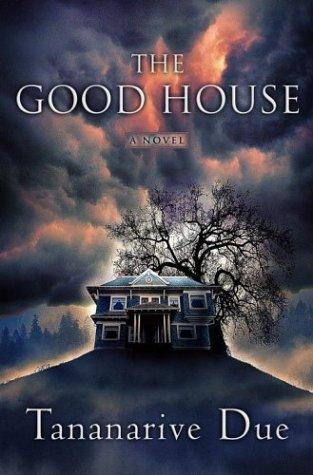
The Good House
Tananarive Due · 2003
House The Toussaint family home in Sacajawea, Washington
Closest Little Stranger connection A family property stores generational trauma while grief distorts the owner's understanding of what happened there
Main difference A wide-ranging supernatural saga grounded in Vodou cosmology and explicit spiritual conflict
Best for Readers who want an expansive family haunting, Black history, spiritual warfare, grief, and substantial emotional resolution.
Know before you start The book includes suicide, lynching, racism, sexual assault allegations, addiction, child death, animal harm, and graphic violence.
Angela Toussaint returns to the house where her teenage son Corey died two years earlier. She intends to decide whether to sell the property inherited from her grandmother Marie. Instead, violent incidents across Sacajawea begin to connect with Marie's spiritual history, a power Angela never learned to understand, and the possibility that Corey's death was part of a much older attack on the family.
Tananarive Due gives the house several histories at once. It is a refuge created by a Black woman who survived racist violence, a source of pride, a site of maternal failure, and a spiritual battleground. Angela's grief initially makes the supernatural difficult to see because accepting it would change her last memories of her son. Knowledge arrives through family practice she once regarded as superstition, making recovery an act of cultural as well as personal reconnection.
The novel is long, moves across time, and ultimately confirms a cosmology far more clearly than The Little Stranger. Romance and a large supernatural confrontation broaden the scale beyond one building. It ranks fifth because the Good House possesses genuine moral complexity. The property is neither simply cursed nor simply home. It is what an ancestor protected, what an heir neglected, and the place where both love and error remain active.
4
White Is for Witching
Helen Oyeyemi · 2009
House A Dover bed-and-breakfast inhabited by generations of the Silver family
Closest Little Stranger connection The house narrates, inherits prejudice, and cannot be separated from the damaged family member it claims to protect
Main difference Experimental, polyphonic Gothic fiction in which the building's xenophobia is explicit
Best for Readers who want formally adventurous Gothic fiction about inheritance, race, queerness, appetite, and a house with its own point of view.
Know before you start The novel includes an eating disorder, racism and xenophobia, maternal death, self-harm, mental illness, and an unresolved disappearance.
After the death of her mother, Miranda Silver returns to the family house at 29 Barton Road with her twin Eliot and father Luc. Miranda's pica worsens, the women in her maternal line seem increasingly present, and the house develops a voice distinct from the humans describing her disappearance. At university, Miranda falls in love with Ore, a Black woman whom the Silver House regards as an intrusion.
Helen Oyeyemi makes the haunted house a participant rather than a setting. Its possessiveness is entangled with Englishness, inheritance, and racial exclusion. To say that the house loves Miranda is not to say it wants her well. It wants her home, continuous with the women before her, and unavailable to relationships that might interrupt the pattern.
The novel's shifting pronouns, chronology, and narrators demand attention. It protects ambiguity at the level of individual events while making its political meaning unusually direct. Readers seeking a stable sequence of scares may find it elusive. It ranks fourth because Barton Road performs the deepest function of Hundreds Hall: the house offers identity to a vulnerable person and charges that person with preserving everything destructive inside the offer.
3
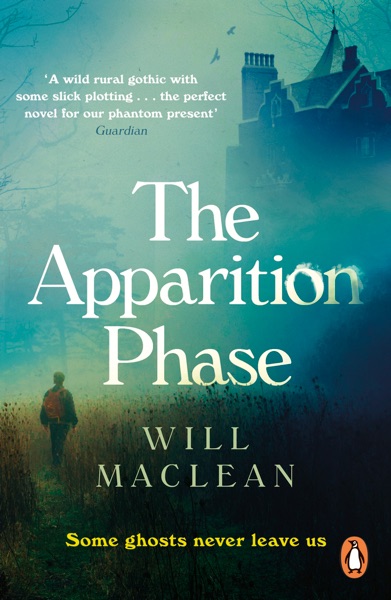
The Apparition Phase
Will Maclean · 2020
House A purportedly haunted English country house investigated during the 1970s
Closest Little Stranger connection A retrospective narrator links a country-house haunting to guilt, class performance, and the unreliability of memory
Main difference A lifelong ghost story beginning with children who deliberately manufacture evidence
Best for Readers who enjoy ghost photography, 1970s occult research, retrospective narration, and mysteries that become sadder as they clarify.
Know before you start The novel includes child injury, disappearance, grief, institutional care, suicide references, and psychological manipulation.
Twins Tim and Abi are fascinated by the supernatural. They fake a ghost photograph to frighten a schoolmate, but the prank produces consequences neither intended. Years later, Tim becomes involved with a group investigating a country house whose alleged activity attracts believers, performers, and people who need the haunting to validate private theories. The false photograph remains the moral and perceptual template for everything that follows.
Will Maclean is interested in how a ghost story acquires authority. Cameras, witnesses, architectural research, séance performance, and personal trauma all produce evidence that may be sincere without being accurate. Tim narrates from later life, and his careful tone cannot remove the suspicion that he has spent decades arranging a story around an absence.
The novel contains more narrative turns than The Little Stranger and a more explicit interest in paranormal investigation culture. Its middle can feel deliberately diffuse as the group tests the house. It ranks third because it understands that fraud does not disprove haunting; it contaminates the categories through which haunting could be known. Hundreds Hall and Tim's country house both become screens onto which class, grief, and desire project an image no witness can fully own.
2
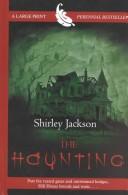
The Haunting of Hill House
Shirley Jackson · 1959
House Hill House, an isolated mansion built without architectural or emotional balance
Closest Little Stranger connection A psychologically vulnerable visitor may be haunted by the house, haunting it, or interpreting her own exclusion as invitation
Main difference A concentrated classic organized around a paranormal study and a small temporary group
Best for Readers who want the foundational literary haunted-house novel, social unease, precise prose, and ambiguity that survives rereading.
Know before you start The book includes psychological manipulation, maternal resentment, mental deterioration, suicide, and period treatment of mental illness.
Dr. Montague invites several people to Hill House to investigate its reputation. Eleanor Vance arrives after years spent caring for her mother and with almost no independent life to return to. Theodora, Luke, and the doctor offer companionship, but Eleanor's sensitivity to every shift in attention makes the group unstable before doors begin closing and writing appears on the walls.
Shirley Jackson never requires the reader to choose cleanly between supernatural agency and Eleanor's mind. Hill House is objectively badly made and associated with earlier suffering. Eleanor is also desperate for belonging and uniquely prepared to mistake possession for welcome. The famous unease comes from watching house and guest become explanations for each other.
The novel is shorter, more stylized, and less historically grounded than Waters's postwar social portrait. Class appears through Eleanor's insecurity and Luke's inheritance, but it is not the central system. It ranks second because it supplies the essential psychological architecture for The Little Stranger. Both books ask whether a house can select a person and whether selection is meaningfully different from that person's desire to be chosen.
1
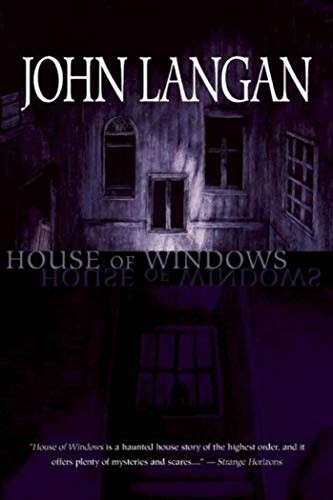
House of Windows
John Langan · 2009
House Belvedere House in upstate New York, inherited through a fractured family
Closest Little Stranger connection A composed narrator recounts a marriage, a house, and a disappearance while desire and guilt compromise every explanation
Main difference An academic, post-9/11 ghost story built as one long nested testimony
Best for Readers who want the closest match in narrative ambiguity, intellectual density, marital unease, guilt, and architecture that behaves like memory.
Know before you start The novel includes a teacher-student relationship, adultery, family estrangement, wartime death, parental grief, curses, and disturbing supernatural imagery.
At a gathering of academics, Veronica Croydon tells an unnamed horror writer what happened to her missing husband Roger. Their relationship began when she was his graduate student and he left his first wife. Roger's son Ted never accepted the marriage. After a violent confrontation, Roger cursed him; Ted later died while serving in Afghanistan. Grief and guilt draw Roger back toward Belvedere House, the family home associated with his son.
John Langan lets Veronica control almost the entire novel. She is intelligent, observant, and fully aware that her marriage will be judged. That awareness makes her account persuasive and suspect at once. Roger's scholarly interests, Ted's death, earlier images connected to the house, and rooms that seem to open across incompatible spaces turn the haunting into an argument Roger is having with guilt—and Veronica is having with the version of Roger she loved.
The book is dense with literary reference and digression. Readers who dislike frame narratives or academic characters may find its deliberate pace frustrating, and its supernatural images eventually become more explicit than Waters's. It ranks first because it reproduces the most important experience of The Little Stranger: listening to a highly articulate person explain a haunted house while gradually realizing that the explanation is also a defense of desire. Belvedere House does not merely contain the marriage. It exposes what the marriage required its occupants not to know.
Which Literary Haunted-House Novel Should You Read First?
Choose House of Windows if Dr. Faraday's narration was the most compelling part of The Little Stranger. It offers another articulate account in which marriage, status, and desire shape the evidence. Choose The Haunting of Hill House if you want the essential shorter classic and the purest version of a lonely person longing to be chosen by a building.
Read The Apparition Phase for country-house investigation and retrospective guilt, or White Is for Witching for the most formally ambitious and politically explicit house. The Good House is the richest family saga, while The Elementals supplies Southern atmosphere and unmistakable creatures.
Choose Wylding Hall for a brief oral history, The Grip of It for marital uncertainty, and The September House for humor, graphic ghosts, and a contemporary examination of denial. The House Next Door is the best bridge between social realism and a traditional malevolent-building story.
A literary haunted house does not become literary by withholding the ghost. It becomes literary when the question of haunting cannot be separated from the language, status, and needs of the person reporting it. The building concentrates a conflict that already existed and gives that conflict doors, corridors, and a history no single occupant controls.
House of Windows ranks first because Veronica's testimony makes belief an intimate decision. To accept her ghost story is also to judge her marriage, Roger's grief, and the curse he spoke against his son. Like Hundreds Hall, Belvedere House is most frightening when it seems to be doing exactly what one of its occupants secretly asked it to do.