Most recommendations for The Girl with the Dragon Tattoo begin and end with "Nordic noir." That is understandable, but incomplete. Stieg Larsson's novel is not memorable merely because it is cold, Swedish, and violent. It combines a decades-old disappearance, investigative journalism, corporate corruption, family history, sexual violence, and one of crime fiction's most distinctive outsiders. Mikael Blomkvist supplies method and access; Lisbeth Salander supplies the dangerous intelligence that respectable institutions repeatedly underestimate.
A useful read-alike therefore needs more than snow. The books on this list reproduce different parts of Larsson's machinery: damaged investigators, closed communities, crimes concealed by wealth, reluctant partnerships, systemic injustice, and research that turns into physical danger. Several are Scandinavian. Others prove that the same combination can work in Missouri, Cambridge, or Central Africa.
The ranking considers resemblance, quality, investigative satisfaction, and whether the recommendation offers something beyond imitation. Number one predates Larsson and feels like an ancestor to Lisbeth Salander: a brilliant, abrasive woman whose specialized knowledge leads from one suspicious death into a much larger institutional secret.
10
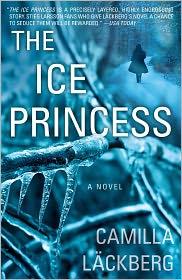
The Ice Princess
Camilla Läckberg · 2003 in Sweden · Erica Falck and Patrik Hedström, Book 1
Closest connection A suspicious death, an old family secret, and an investigation inside a small Swedish community
Main difference More domestic drama and romantic development, with less political anger or technical investigation
Best for Readers whose favorite part of The Girl with the Dragon Tattoo was the cold-case investigation inside a wealthy family.
Know before you start The case involves child abuse and long-concealed family trauma, despite the more domestic surface.
Writer Erica Falck returns to the coastal town of Fjällbacka after her parents' deaths and discovers that her childhood friend Alex has apparently died by suicide in a freezing bathtub. The scene does not withstand scrutiny. Erica begins asking questions while local detective Patrik Hedström conducts the official investigation, and a respectable family's history becomes more relevant than its polished present.
The immediate resemblance to Larsson is structural. A death in the present opens a sealed room in the past; a writer and a police investigator approach the same community from different positions; wealth and reputation help determine which stories are repeated and which are buried. Läckberg is particularly interested in how everyone in a small town possesses an incomplete piece of everyone else's life.
The tone is gentler and more conventional. Erica and Patrik's attraction matters, domestic subplots expand across the series, and the police station contains broader comic characterization than Millennium. Readers seeking Lisbeth's fury or Blomkvist's journalism may find the book comparatively cozy. Readers who liked the Vanger family mystery—the winter setting, genealogies, photographs, and old grievances—will recognize the appeal immediately.
9

Faceless Killers
Henning Mankell · 1991 in Sweden; English translation published in 1997 · Kurt Wallander, Book 1
Closest connection Nordic noir as social diagnosis, with a brutal crime exposing wider political tensions
Main difference A methodical police procedural led by a weary middle-aged detective rather than outsider investigators
Best for Readers who want foundational Swedish crime fiction and care more about social unease than hacking or conspiracy spectacle.
Know before you start Racist language, xenophobic violence, torture, and the murder of elderly victims are central to the case.
An elderly farmer is murdered at an isolated Skåne farmhouse, and his wife is left dying with a noose around her neck. Her final word appears to identify the killers as foreign. When that information leaks, the investigation becomes entangled with anti-immigrant hostility and the threat of retaliatory violence. Inspector Kurt Wallander must solve the original crime while preventing the clue from becoming permission for another one.
Henning Mankell established much of the international language of modern Nordic noir before Larsson appeared. The detective's exhaustion is inseparable from his worry that the social contract around him is failing. Crime is not a sealed contest between brilliant hunter and aberrant killer. It reveals what a country fears, denies, and is willing to blame on outsiders.
The novel is slower and procedurally repetitive compared with Larsson's switches between Blomkvist and Salander. Its handling of immigration is meant to examine prejudice, but the plot can also reproduce the very associations it questions. Wallander's private life is intentionally drab. Those limitations make it a less exhilarating read-alike and an essential historical one. Larsson's political crime fiction grows in soil Mankell had already disturbed.
8

The Boy in the Suitcase
Lene Kaaberbøl and Agnete Friis · 2008 in Denmark; English translation published in 2011 · Nina Borg, Book 1
Closest connection A stubborn female outsider confronting violence that crosses respectable borders
Main difference A breathless trafficking thriller rather than a cold-case or financial investigation
Best for Readers who want a fast Scandinavian thriller with a difficult heroine and an urgent rescue at its center.
Know before you start The novel concerns child abduction and trafficking and places a small child in sustained danger.
Nina Borg is a Red Cross nurse whose need to help other people has damaged her own family life. An estranged friend gives her the key to a locker in Copenhagen Central Station. Inside the suitcase stored there, Nina finds a drugged three-year-old boy. She does not know his name, his language, or who intends to collect him. She knows only that taking him to the wrong authority may return him to the people who packed him away.
Nina resembles Lisbeth less in skill than in refusal. Both women continue after sensible people would transfer responsibility to an institution. Both understand that official systems may be indifferent, compromised, or simply too slow for the person currently in danger. The novel moves through several viewpoints, gradually revealing the transaction that brought the child to Denmark.
The plotting depends on Nina making impulsive choices, and her compulsive rescue instinct can look like self-importance when her husband and children bear the cost. The villains are more immediately criminal than Larsson's network of finance, media, and inherited power. What the book shares is moral velocity: once Nina sees a vulnerable person treated as an object, neutrality becomes impossible.
7

Case Histories
Kate Atkinson · 2004 · Jackson Brodie, Book 1
Closest connection Cold cases, family secrets, multiple investigative threads, and the long afterlife of violence
Main difference More literary, compassionate, and structurally fragmented, with little institutional conspiracy
Best for Readers who liked the Harriet Vanger investigation but want richer family characterization and less thriller machinery.
Know before you start The novel includes child disappearance, sexual abuse, domestic violence, and grief, though its tone is not unrelentingly bleak.
Former police officer Jackson Brodie now works as a private investigator in Cambridge. Three families bring him old pain: a little girl who vanished from a garden, a young woman murdered at her father's office, and a child lost after her mother killed her husband. The cases appear separate. Atkinson is less interested in forcing them into one ingenious mechanism than in showing how unresolved loss reorganizes a family for decades.
Like Blomkvist, Jackson is hired because official investigation has ended without satisfying the people left behind. He reads files, interviews survivors, notices contradictions, and becomes personally endangered. The book also shares Larsson's refusal to treat violence against women as a single dramatic event. Harm continues through shame, silence, memory, and the assumptions that once made a victim easy to overlook.
Readers expecting a clean procedural may be frustrated. Important information arrives through shifting viewpoints, coincidence is visible, and the emotional resolution can matter more than the detective's deduction. There is no Lisbeth equivalent and no technological edge. Case Histories belongs here because it offers a more humane version of the cold-case novel: the mystery asks not only what happened, but what twenty or thirty years of not knowing have done.
6
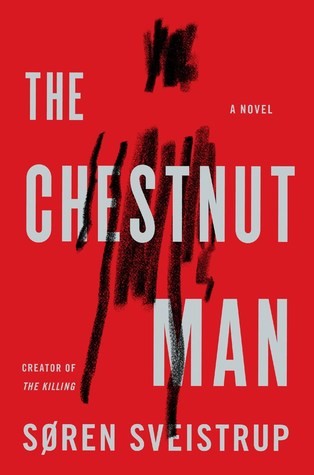
The Chestnut Man
Søren Sveistrup · 2018 in Denmark; English translation published in 2019 · Standalone novel
Closest connection Graphic Scandinavian crime, an uneasy investigative partnership, and a case touching political power
Main difference A high-speed serial-killer procedural rather than journalism, hacking, or a historical family mystery
Best for Readers who want the darkest, most propulsive option on the list and do not require a hacker protagonist.
Know before you start This is extremely graphic and includes mutilation, child abuse, murdered parents, and threatened children.
A killer in Copenhagen leaves handmade figures constructed from chestnuts and matchsticks at scenes of extreme violence. Forensics discovers the fingerprint of a government minister's daughter on one figure, although the girl was kidnapped and presumed murdered a year earlier. Detectives Naia Thulin and Mark Hess must determine whether the clue exposes a failed investigation, a manipulation, or something worse.
Søren Sveistrup, creator of The Killing, knows how to braid police procedure with political pressure. Thulin wants a more prestigious cybercrime position; Hess has returned under a cloud. Neither receives the partner they wanted. Their irritation gradually becomes functional trust as the case expands beyond the obvious suspect.
The novel provides the compulsive plotting and brutality many readers remember from Larsson, but it has less interest in finance, ideology, or journalism. Its killer's design can feel overengineered, and violence against women is displayed with a severity some readers will find exploitative rather than critical. As pure dark-scandi momentum, it is difficult to beat. Every answer produces another deadline.
5

Sharp Objects
Gillian Flynn · 2006 · Standalone novel
Closest connection A damaged female investigator, journalism, violence against girls, and a powerful family controlling a town's story
Main difference Southern Gothic psychological suspense confined to one reporter's intimate family history
Best for Readers who want a female journalist, a toxic family, and psychological darkness more than Nordic atmosphere.
Know before you start Self-harm, child murder, abuse, disordered eating, substance misuse, and medical abuse are central.
Chicago reporter Camille Preaker is sent to Wind Gap, Missouri, to cover the murder of one girl and disappearance of another. Reporting means returning to the mother she avoids, the half-sister she barely knows, and the Victorian house where every room reinforces an old hierarchy. Camille gathers quotes and police information while her own history begins contaminating the assignment.
This is the closest match for readers who want journalism performed by someone society has already labeled damaged. Camille is not a hacker or fighter. Her instrument is attention: to language, gendered expectations, adolescent cruelty, and the stories a company town tells about its ruling family. Like Lisbeth, she carries trauma on her body and is repeatedly misread by people who prefer a simpler category.
Flynn's focus is narrower than Larsson's and, in some ways, more punishing. There is no reliable partner equivalent to Blomkvist sharing the investigative burden. The novel's women are capable of extreme cruelty, a corrective to sentimental ideas about female innocence that can become its own emphatic design. Its final turns are effective, but the deeper horror lies in Camille realizing how thoroughly her professional instincts and private wounds have become entangled.
4
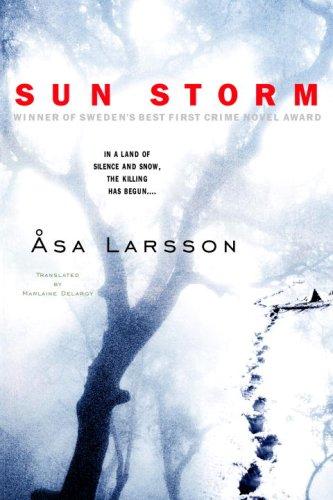
Sun Storm
Åsa Larsson · 2003 in Sweden; English translation published in 2006 · Rebecka Martinsson, Book 1
Closest connection A professionally skilled woman returns north to investigate murder inside a protected institution
Main difference Religious power and personal history replace investigative journalism and corporate finance
Best for Readers who want another Swedish series led by a complicated professional woman and rooted in the far north.
Know before you start The book was published in the UK as The Savage Altar and includes religious abuse, sexual exploitation, and violence toward children and animals.
Tax attorney Rebecka Martinsson has built a career in Stockholm far from Kiruna, the northern city where she grew up. When charismatic religious celebrity Viktor Strandgård is murdered in a church and his sister Sanna becomes a suspect, Rebecka returns to help. The church community that once shaped her life is wealthy, disciplined, and practiced at describing control as faith.
Åsa Larsson shares Stieg Larsson's interest in the professional uses of intelligence. Rebecka's legal and financial experience matters; so does her knowledge of Kiruna's relationships and the religious institution's internal language. Police officer Anna-Maria Mella supplies an official investigation while Rebecka confronts the past she tried to turn into geography.
The solution uses thriller escalation more heavily than its excellent opening promises, and some villains become less interesting as their monstrosity becomes clearer. Rebecka's vulnerability is also different from Lisbeth's aggressive self-possession. Yet the setting, female perspectives, institutional secrecy, and anger at adults who exploit belief make Sun Storm one of the most natural post-Dragon Tattoo choices.
3
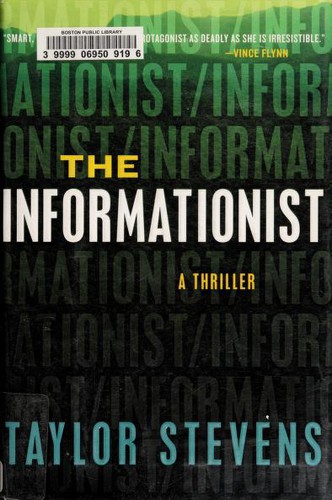
The Informationist
Taylor Stevens · 2011 · Vanessa Michael Munroe, Book 1
Closest connection A brilliant, dangerous outsider who obtains information for powerful clients and refuses ordinary gender expectations
Main difference International action thriller rather than Nordic cold-case mystery
Best for Readers who primarily want another Lisbeth-like protagonist: intelligent, androgynous, traumatized, and extremely capable.
Know before you start The novel includes sexual violence, child abuse, torture, trafficking, and extensive physical violence.
Vanessa Michael Munroe makes a living collecting information that governments and corporations cannot obtain through normal channels. Raised in Cameroon, multilingual and comfortable crossing both borders and gender presentation, Munroe is hired by an oil billionaire to locate his daughter, missing in Central Africa for four years. The assignment sends her back toward the place and people that formed her capacity for violence.
Munroe is the clearest Lisbeth Salander read-alike on the list. She is hypercompetent, traumatized, physically dangerous, and valuable to men who do not fully understand what they have hired. Information is her commodity. She studies language, rumor, routes, hierarchy, and the difference between the official map and the territory controlled by private interests.
Taylor Stevens delivers action more readily than procedural patience, and Munroe's abilities can approach superhuman competence. The depiction of Central Africa is filtered through thriller danger and a protagonist whose past can make the region feel like one continuous traumatic landscape. Those are substantial caveats. Readers seeking another unconventional woman who weaponizes research, however, will understand the comparison before the first major confrontation.
2
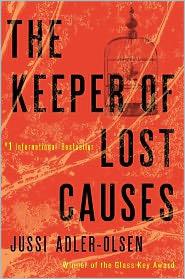
The Keeper of Lost Causes
Jussi Adler-Olsen · 2007 in Denmark; English translation published in 2011 · Department Q, Book 1
Closest connection A long-buried disappearance investigated by a prickly partnership after the official system has moved on
Main difference Police cold-case suspense with dark humor instead of journalism, hacking, or family archives
Best for Readers who loved Blomkvist reopening Harriet Vanger's disappearance and want a long Scandinavian series afterward.
Know before you start The UK title is Mercy. The novel depicts prolonged imprisonment, psychological torture, and the aftermath of police trauma.
Copenhagen detective Carl Mørck survives a shooting that kills one colleague and paralyzes another. His superiors move him into a basement and give him Department Q, a new cold-case unit intended partly to remove him from everyone else's working day. His only staff member, Assad, has been assigned as a cleaner and assistant. Together they reopen the disappearance of politician Merete Lynggaard, presumed dead after vanishing from a ferry years earlier.
Carl and Assad reproduce the pleasure of mismatched intelligence. Carl has experience, bitterness, and institutional authority; Assad has persistence, practical ingenuity, and a history he does not volunteer. Their investigation alternates with Merete's captivity, giving the reader urgency even when the detectives do not understand what remains at stake.
The characterization sometimes relies on broad humor, and women outside Merete receive less depth than the central men. Because readers see the captive, the question is less whether she died than whether Department Q will reach her in time. That shift makes the novel suspense rather than a pure whodunit. It ranks second because the neglected-case structure is so satisfying: a bureaucratic dumping ground becomes dangerous the moment its occupants take the forgotten person seriously.
1

Smilla's Sense of Snow
Peter Høeg · 1992 in Denmark; English translation published in 1993 · Standalone novel
Closest connection An abrasive, gifted outsider investigates a suspicious death and uncovers a corporate-scientific conspiracy tied to systemic abuse
Main difference More literary, philosophical, and concerned with Greenlandic-Danish colonial identity
Best for Readers who want the strongest combination of outsider heroine, Nordic setting, institutional corruption, and literary ambition.
Know before you start The book is published as Miss Smilla's Feeling for Snow in some markets and includes child death, colonial exploitation, animal harm, and an elaborate final conspiracy.
Smilla Jaspersen's six-year-old neighbor Isaiah falls from the roof of their Copenhagen apartment building. Authorities treat the death as an accident. Smilla reads the child's tracks in the snow and knows he ran toward the edge in fear. Her knowledge of ice begins an investigation that moves through medical records, shipping interests, scientific research, and eventually toward Greenland.
Smilla feels like a precursor to Lisbeth Salander. She is mathematically gifted, socially difficult, physically fearless, and contemptuous of comforting explanations. Her Greenlandic and Danish background leaves her inside and outside both cultures, able to see how institutions classify the people whose knowledge they exploit. A tradesman from the apartment building becomes her imperfect investigative partner, but Smilla remains the force setting the direction.
The novel's final movement grows baroque, and its scientific conspiracy is less controlled than the death investigation that begins it. Long reflections on mathematics, ice, language, and colonial history will slow readers seeking Larsson's clean thriller propulsion. Smilla's depiction also raises questions about a Danish male author ventriloquizing Greenlandic female identity.
It ranks first because the similarities are structural and moral rather than merely atmospheric. Specialized knowledge turns an underestimated woman into a threat. A dead child whom the system considers easy to dismiss becomes the entrance to institutional wrongdoing. The investigation advances because Smilla refuses the most efficient social command in any conspiracy: accept the official explanation and go home.