Netflix's 2025 adaptation of The Eternaut begins with one of science fiction's most frightening weather reports. A luminous snow falls on Buenos Aires and kills anyone it touches. Juan Salvo survives because he is indoors with family and friends, but survival immediately becomes plural: seal the house, improvise protective clothing, listen for other people, share knowledge, and decide how far obligation extends beyond the front door.
That collective emphasis distinguishes Héctor Germán Oesterheld and Francisco Solano López's graphic novel from stories built around a uniquely gifted savior. The hero is a group that continually changes. Neighbors become engineers, scouts, nurses, fighters, and witnesses. The invasion is terrifying not only because its hierarchy remains hidden, but because ordinary people must create a counter-organization before they even understand what is attacking them.
The novels in this ranking feature alien occupations, ecological collapse, epidemics, and transformations that may not consider themselves disasters. Each asks how a community forms under pressure and what it costs to keep the group from becoming another instrument of domination. The list favors ordinary expertise, communal improvisation, layered threats, and apocalypses experienced from streets, shelters, kitchens, and temporary camps rather than from a command center safely above them.
10
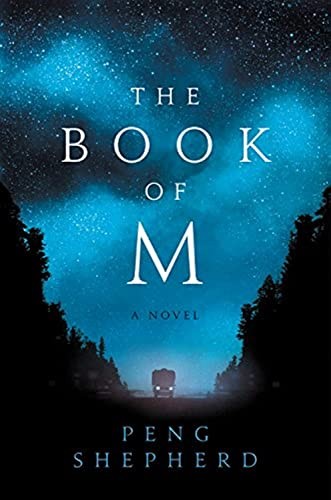
The Book of M
Peng Shepherd · 2018
Catastrophe People's shadows disappear, followed by memories—and forgotten things begin altering reality
Closest Eternaut connection Small groups improvise shelter and movement while the rules of a spreading disaster remain unstable
Main difference A lyrical memory plague with magical transformations rather than an organized invasion
Best for Readers who want emotional post-apocalyptic fiction, separated partners, shifting reality, and communities built around memory.
Know before you start The novel includes pandemic loss, memory deterioration, pregnancy, death, violence, body transformation, and prolonged grief.
Ory and Max survive the early phase of the Forgetting by hiding in an abandoned hotel. When Max loses her shadow, she leaves to protect Ory from what her disappearing memories may do. Their separation opens the novel into multiple journeys: survivors gather in defended communities, rumors offer direction, and people attempt to preserve practical knowledge while reality itself becomes vulnerable to what sufferers misremember.
Peng Shepherd understands that civilization depends on shared memory as much as infrastructure. A person can forget the function of a tool; a community can also lose agreement about what a place or word means. The novel's groups preserve stories, names, recordings, and expertise, but every archive competes with the emotional temptation to forget pain or remake what was lost.
The threat has no strategic intelligence comparable to The Eternaut's nested invaders, and the story's romantic quest sometimes takes priority over collective organization. Its rules intentionally become dreamlike. It ranks tenth because the apocalypse is more metaphysical than political. It earns inclusion through its shelters, migrations, and moving communities: survival means carrying other people's reality when they can no longer hold it themselves.
9
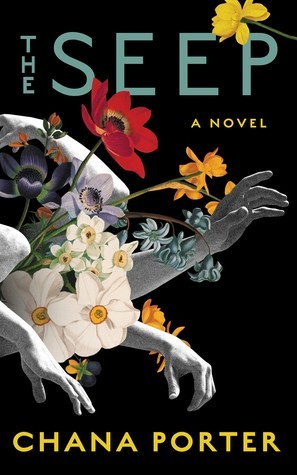
The Seep
Chana Porter · 2020
Catastrophe An alien presence peacefully assimilates with humanity and remakes society through radical connection
Closest Eternaut connection Invasion arrives as an environment and a social system rather than one identifiable alien antagonist
Main difference A queer post-scarcity story about refusing utopia, not surviving extermination
Best for Readers who want philosophical first contact, queer speculative fiction, post-scarcity strangeness, and a skeptical view of imposed harmony.
Know before you start The story includes bereavement, substance use, body alteration, discussion of suicide, parental abandonment, and surreal identity change.
The Seep enters Earth's water and consciousness, dissolving many of the structures that made the old world violent. Bodies can be changed, resources are abundant, and people can experience profound connection. Trina FastHorse Goldberg-Oneka, a trans woman and doctor, remains suspicious of a collective happiness that treats every desire as solvable. When her wife chooses rebirth as an infant, Trina's grief becomes a refusal to call transformation harmless simply because it is voluntary.
Chana Porter offers the gentlest invasion on this list and one of the most unsettling. The Seep rarely coerces in an obvious way. Its presence changes the emotional vocabulary in which consent is expressed. Community becomes easy enough that dissent appears antisocial, while pain is treated as a malfunction to be transcended. Trina insists that grief can be evidence of love rather than a defect in need of alien correction.
The novel is short, comic, and surreal, with almost none of the tactical survival that defines The Eternaut. It ranks ninth because readers seeking siege suspense will not find it. Its relevance lies in the deeper political question: if an occupier can satisfy most people, what obligations remain to the person who says no? Collective life is still dangerous when the snow feels warm.
8
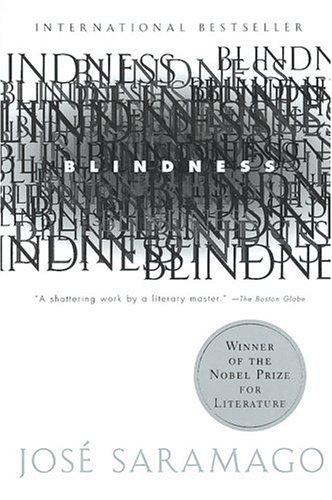
Blindness
José Saramago · 1995 in Portuguese; 1997 in English
Catastrophe An epidemic of sudden white blindness spreads through an unnamed city
Closest Eternaut connection Ordinary urban residents form a survival group while authorities fail and the disaster strips public space of safety
Main difference An allegorical epidemic novel with no alien intelligence and almost no conventional names
Best for Readers who want literary apocalypse, moral allegory, group survival, and an uncompromising examination of social breakdown.
Know before you start The book includes epidemic panic, extreme sanitation conditions, starvation, sexual assault, murder, animal death, and mass suffering.
A man waiting at a traffic light loses his sight. The blindness spreads to the people around him, and the government confines early cases inside an abandoned institution under armed guard. Only the doctor's wife retains her vision, a fact she conceals while joining her husband in quarantine. As sanitation, food distribution, and authority collapse, a small group must create mutual obligations inside conditions designed to make solidarity difficult.
José Saramago's long sentences and shifting dialogue make individual voices flow into a collective field. Characters are identified by descriptions rather than names, yet they do not become interchangeable. The doctor's wife can see, but sight does not grant command without cost. The group's survival depends on distributing labor, protecting the vulnerable, and deciding whether moral rules persist when official society has abandoned them.
The novel's darkest quarantine sequence includes sexual violence and is exceptionally difficult to read. Its allegorical method leaves medical cause and practical recovery largely unexplained. It ranks eighth because the catastrophe does not unfold as layered invasion. It remains a powerful match for the adaptation's street-level perspective: the city becomes alien through one changed condition, and heroism consists of keeping a group human enough to leave together.
7
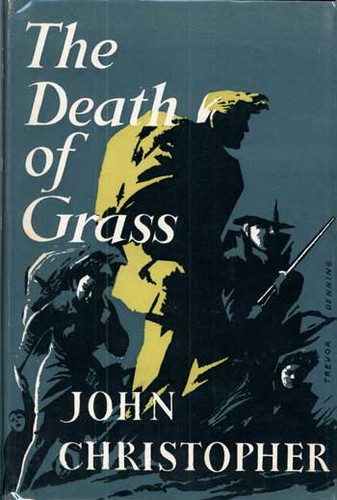
The Death of Grass
John Christopher · 1956
Catastrophe A virus destroys grasses, threatening wheat, rice, livestock feed, and the world's food supply
Closest Eternaut connection Families and strangers form a mobile unit, improvise equipment, and discover that official reassurance is part of the danger
Main difference A brutal road novel about ecological collapse rather than occupation
Best for Readers who want fast ecological catastrophe, a cross-country escape, escalating moral compromise, and unsentimental group dynamics.
Know before you start The story includes mass starvation, government violence, murder, sexual threat, child peril, and severe period sexism.
John Custance initially treats reports of crop disease in Asia as distant news. When the virus defeats attempted containment and Britain faces starvation, he gathers family and allies to reach his brother's defensible valley in the north. The route closes behind them as government plans, roadblocks, and frightened populations transform familiar England into competing zones of survival.
John Christopher is interested in how quickly a group develops structure. Skills, weapons, vehicles, and willingness to act determine who gains influence. The travelers need one another, but every addition raises questions about food and command. John repeatedly makes decisions that preserve the group while changing the man who expects to lead it home.
The novel is concise and frighteningly practical, though its assumptions about gender and authority are strongly marked by the 1950s. Its moral universe becomes harsh enough that some readers will find the group's adaptation indistinguishable from surrender. It ranks seventh because the threat itself has no hierarchy to resist. The connection is the collapse of distance: a disaster seen in reports suddenly reaches the street, and survival begins with the realization that waiting for instructions may be fatal.
6
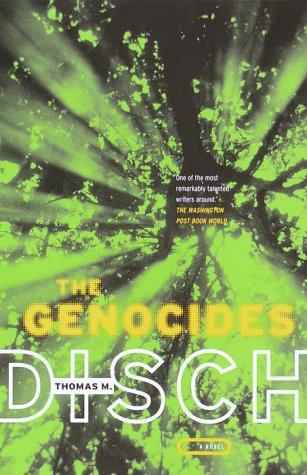
The Genocides
Thomas M. Disch · 1965
Catastrophe Enormous alien plants cover Earth while humanity appears to matter only as an infestation
Closest Eternaut connection Survivors face an extraterrestrial system whose visible agents are merely tools of a larger, indifferent hierarchy
Main difference A merciless anti-survival novel that denies humanity any special strategic importance
Best for Readers who want bleak New Wave science fiction, alien ecology, failed community, and an apocalypse without human exceptionalism.
Know before you start The book includes starvation, coercive religion, sexual violence, child death, murder, body horror, and an exceptionally nihilistic tone.
Alien growth consumes farmland and dominates the landscape. In an isolated American community, Anderson attempts to preserve a severe religious and agricultural order while the remaining food, space, and hope disappear. The survivors eventually move beneath the plants, entering a biological environment whose scale makes human plans seem less like resistance than temporary burrowing.
Thomas M. Disch removes the comforting assumption that invasion means rivalry. The alien owners do not need to hate humanity or negotiate with it. Their plants transform Earth for an unknown purpose, and the mechanisms maintaining that crop treat people as pests. The remaining community still produces hierarchy, jealousy, faith, and violence, even when none of those structures register to the force remaking the planet.
The novel is deliberately cruel and contains little of The Eternaut's sustaining belief in collective heroism. Its characters can be difficult to like, and the ending offers no conventional reward for endurance. It ranks sixth because its layered alien ecology is one of the closest conceptual matches here. The visible monster is not the true enemy; it is one component in a system so large that discovering the next level brings less mastery, not more.
5
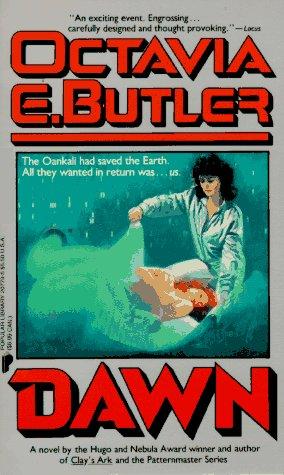
Dawn
Octavia E. Butler · 1987
Catastrophe The alien Oankali rescue the remnants of humanity after nuclear war and demand biological partnership as the price of return
Closest Eternaut connection One survivor must organize ordinary people under alien control while the true terms of occupation emerge gradually
Main difference A confined first-contact novel centered on consent, genetics, and enforced transformation
Best for Readers who want complex aliens, morally difficult first contact, group formation, and science fiction about consent and hierarchy.
Know before you start The novel includes nuclear extinction, coercive reproduction, attempted rape, murder, racism, confinement, and disturbing questions of consent.
Lilith Iyapo wakes alone in a cell centuries after nuclear war. The Oankali have repaired Earth and healed the surviving humans aboard their ship. They intend to return people to the planet, but not unchanged: their species lives through genetic trade, and they consider humanity's combination of intelligence and hierarchy both valuable and terminally dangerous. Lilith is selected to awaken and train a group that will distrust her because the aliens have made her necessary.
Octavia E. Butler turns leadership into compromised translation. Lilith needs Oankali knowledge to keep humans alive, but every ability they give her can look like evidence of collaboration. The human group recreates fear, prejudice, attraction, and competition inside an environment where rebellion may itself be anticipated. No position is clean. Refusal has moral force, while refusal without power may leave others exposed.
Most of the novel occurs within the alien ship, and its threat is intimate rather than spectacular. The Oankali sincerely see their plan as rescue, which makes them unlike the invaders in The Eternaut and more disturbing in another register. It ranks fifth because it offers the richest examination of collective resistance under conditions an occupier designed. The group must become capable of survival without knowing whether capability is another form of consent.
4
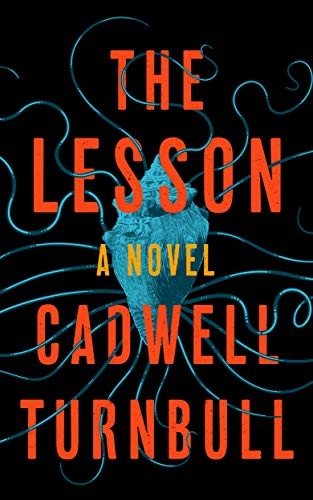
The Lesson
Cadwell Turnbull · 2019
Catastrophe The alien Ynaa occupy the U.S. Virgin Islands and impose a tense coexistence backed by overwhelming force
Closest Eternaut connection Occupation is experienced through families, neighborhoods, rumors, and ordinary people rather than national leaders
Main difference A multigenerational social novel about colonial history and contact, not a survival march through ruins
Best for Readers who want community-centered first contact, Caribbean setting, colonial analysis, family stories, and morally complex occupation.
Know before you start The story includes racist violence, police violence, alien retaliation, child endangerment, death, grief, and colonial trauma.
The Ynaa arrive and establish themselves on St. Thomas, presenting advanced knowledge and maintaining a presence the island cannot meaningfully refuse. Years later, human and alien lives touch through school, work, friendship, violence, and family memory. A single incident can produce disproportionate punishment because the occupiers' restraint remains discretionary. The island's history ensures that no claim of benevolent arrival can sound politically innocent.
Cadwell Turnbull distributes perspective across a community. No protagonist can explain the Ynaa or represent the island. People disagree about accommodation, resistance, opportunity, and danger because occupation creates different bargains for each household. The science-fiction premise therefore reveals rather than replaces existing questions about empire, tourism, race, and who is expected to remain calm when power behaves unpredictably.
The novel is episodic, and readers seeking a linear campaign against the aliens may find its social accumulation quieter than expected. It ranks fourth because the invaders are visible from the beginning and the book's goal is not tactical suspense. Its collective viewpoint is the crucial match. Like Oesterheld's Buenos Aires, Turnbull's St. Thomas is not generic disaster scenery. The place has history before the aliens arrive, and that history determines how survival can be imagined.
3
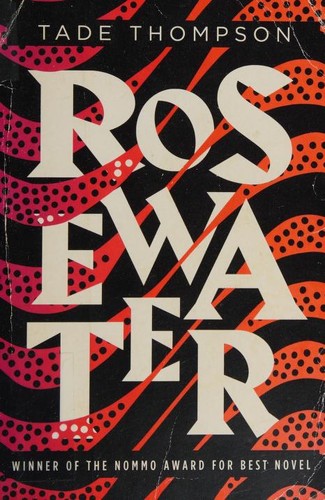
Rosewater
Tade Thompson · 2016; revised edition 2018
Catastrophe An alien biodome in Nigeria creates healing events, psychic change, and a city built around uncertain contact
Closest Eternaut connection Alien influence operates through atmosphere, altered bodies, hidden agents, and a population adapting before it understands the plan
Main difference A nonlinear biopunk mystery centered on a morally compromised psychic
Best for Readers who want Africanfuturist science fiction, alien ecology, psychic noir, urban worldbuilding, and a mystery embedded in first contact.
Know before you start The novel includes sexual violence, coercive mind-reading, death, body horror, exploitation, political repression, and nonlinear storytelling.
Rosewater grows around an alien structure whose annual opening can heal illness and produce stranger effects. Kaaro is a sensitive able to enter the xenosphere, a shared psychic space associated with the alien presence. He works reluctantly for a government agency while other sensitives begin dying. His investigation moves through the city's history and his own, revealing how thoroughly alien biology has entered ordinary Nigerian life.
Tade Thompson makes first contact infrastructural. The biodome affects medicine, religion, policing, employment, migration, and urban identity. People sell access, form beliefs, and develop routines around an object no authority can remove. Kaaro's psychic ability gives him unusual information, but not heroic purity. His selfishness and history of using other people's minds make him an unstable guide to a genuinely collective transformation.
The timeline shifts, terminology arrives before explanation, and Kaaro can be difficult company. Its noir voice differs from the earnest solidarity of The Eternaut. It ranks third because the layered alien strategy is an exceptional match. The visible dome, miraculous healing, sensitive network, and hidden biological project continually revise the scale of what invasion means. By the time the plan becomes legible, the city has already learned to call it normal.
2
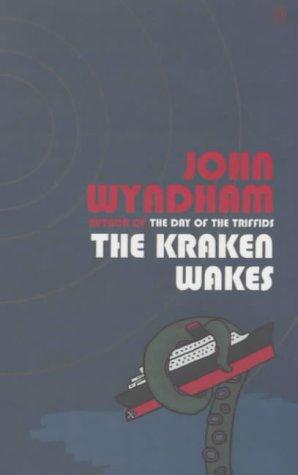
The Kraken Wakes
John Wyndham · 1953
Catastrophe Alien objects descend into the deepest oceans, followed by attacks, coastal destruction, and catastrophic sea-level rise
Closest Eternaut connection An invasion unfolds in phases while civilians, scientists, media, and governments repeatedly misunderstand the level of threat
Main difference A documentary-style global catastrophe narrated by two journalists over many years
Best for Readers who want classic British catastrophe fiction, hidden aliens, media response, mass evacuation, and escalation across distinct phases.
Know before you start The book includes drowning, mass displacement, wartime destruction, social collapse, death, and period gender and geopolitical attitudes.
Mike and Phyllis Watson work for the English broadcasting service and witness strange objects falling into the ocean. Because the visitors occupy depths humans can barely reach, each side encounters the other through machines, missing ships, weapons, and inference. Official explanations trail events. What begins as a remote maritime curiosity escalates through attacks and environmental transformation until entire populations must move.
John Wyndham's great device is incremental normalization. Governments minimize one phase using the categories of the previous phase. News organizations need language before facts are stable. Citizens become tired of warnings precisely when preparation matters most. The Watsons are not military saviors; they observe, communicate, flee, and adapt, giving the catastrophe a civilian scale even when its geography becomes global.
The reporting frame creates emotional distance, and its 1950s marriage and politics can feel dated. The invaders remain intentionally unknowable. It ranks second because no other novel matches The Eternaut's escalating discovery so closely. Initial phenomena prove to be entry, visible attackers prove to be instruments, and survival depends on accepting that the enemy has changed the environment rather than merely entered it.
1
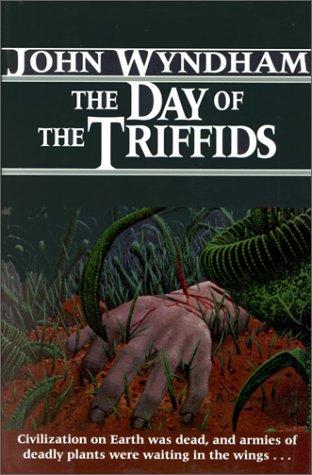
The Day of the Triffids
John Wyndham · 1951
Catastrophe A global event blinds most of humanity while mobile, venomous plants exploit the collapse
Closest Eternaut connection A sudden worldwide disaster spares small indoor groups, turns familiar streets lethal, and forces survivors to build collective defenses
Main difference The catastrophe combines human technological error and opportunistic biology rather than a confirmed alien occupation
Best for Readers who want the strongest overall match, classic catastrophe fiction, hostile biology, urban survival, and competing models of community.
Know before you start The novel includes mass blindness, suicide, sexual coercion in social planning, child peril, plague, violence, and dated gender roles.
Bill Masen wakes in a hospital with his eyes bandaged after treatment for a triffid sting. The night before, most of the world watched a spectacular celestial display. When he removes the bandages, he discovers a population suddenly blind and a city losing every system that made dense life possible. Sighted survivors gather, disagree about obligation, and attempt to establish communities while triffids—bioengineered or mysteriously introduced plants capable of movement and lethal attack—spread into abandoned space.
Wyndham refuses the fantasy that good people naturally agree after catastrophe. One group proposes devoting itself to immediate rescue; another argues that long-term survival requires harsh selection and new social arrangements. Bill's practical knowledge of triffids matters, but it does not make him sufficient. Food, childcare, defense, agriculture, and education require a community whose values will shape whatever survives.
Some sexual and social assumptions are unmistakably postwar British, and the origin of the celestial event remains suggestive rather than fully resolved. It ranks first because its opening movement is the closest prose-fiction experience to The Eternaut: a changed sky, a protected witness, a deadly street, improvised groups, and a secondary threat made dominant by collapse. The hero is not the man who wakes able to see. It is the difficult project of teaching people to see together.
Which Collective-Apocalypse Novel Should You Read First?
Choose The Day of the Triffids for the closest complete match: a sudden atmospheric event, lethal streets, practical improvisation, and survivors debating what kind of community to build. Choose The Kraken Wakes when the adaptation's layered invasion interested you most. Its threat changes phases until environmental collapse reveals how incomplete every earlier explanation was.
Read Rosewater for the most inventive contemporary alien ecology, or The Lesson for an occupation understood through a specific place and many community perspectives. Dawn is the best choice for readers interested in compromised leadership and resistance inside an alien-controlled environment.
Choose The Genocides for maximum bleakness, The Death of Grass for a fast and brutal journey, and Blindness for literary social collapse. The Book of M offers emotional, reality-altering apocalypse, while The Seep is the necessary inverse: an invasion almost everyone experiences as improvement.
The most enduring apocalypse stories are arguments about the pronoun we. Disaster creates groups, but it does not decide who belongs in them, who leads, whose risk counts, or what survival is meant to preserve. A sealed room can protect a family while the same sealed door abandons a neighbor.
The Day of the Triffids ranks first because it transforms individual advantage into collective responsibility. Sight is valuable only when organized with other skills, and the safest community may still be morally intolerable. Like The Eternaut, it makes ordinary cooperation more dramatic than exceptional destiny. The world ends quickly; deciding who will rebuild it takes the rest of the book.