Frederick Forsyth's The Day of the Jackal builds suspense from a paradox: the reader knows the assassination did not happen, yet every procedural detail makes success feel newly possible. The 2024 Peacock and Sky adaptation updated the weapons, surveillance, family life, and international scale while preserving the essential duel. An assassin creates identities and opportunities; an investigator tries to understand a person designed to leave no stable shape behind.
The best political manhunt thrillers do more than place a professional killer and a determined pursuer on opposite sides of a map. They make preparation dramatic. Passports, train schedules, firing positions, dead drops, institutional rivalries, and bureaucratic delays become the real action. The assassin's competence creates admiration the story must complicate, while the investigator's authority is weakened by the same governments demanding a result.
This ranking includes hired killers, framed marksmen, hunted intelligence officers, and men who stumble into assassination plots large enough to erase them. Some books remain close to the Jackal's cool realism; others introduce satire or psychological manipulation. The list rewards credible pursuit, political stakes, tradecraft, and the tightening pleasure of two intelligent people changing plans in response to someone they have not yet met.
10
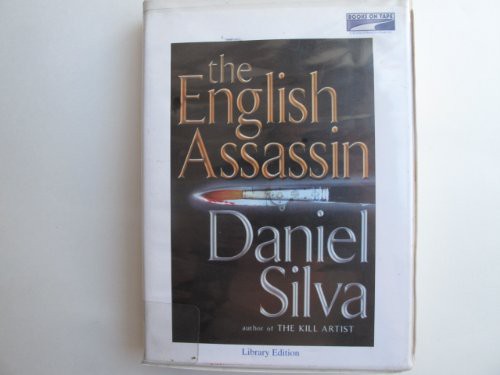
The English Assassin
Daniel Silva · 2002
Pursuit Israeli operative Gabriel Allon becomes entangled in a murder and a conspiracy reaching back to wartime Europe
Closest Jackal connection A highly trained protagonist moving across borders while professional enemies anticipate his route
Main difference An art-and-espionage mystery with historical crimes at its center
Best for Readers who want international espionage, art history, wartime secrets, and a recurring operative with unusual civilian skills.
Know before you start The novel includes Holocaust history, assassination, torture, terrorism, antisemitism, and spoilers for earlier events in the series.
Gabriel Allon travels to Zurich on what appears to be a restoration assignment and finds his client dead. The murdered banker was connected to secrets that prosperous postwar institutions would prefer to leave buried. Gabriel's attempt to understand the killing draws him through Switzerland and Europe, places where neutrality, private wealth, and old intelligence relationships have allowed the past to remain operational.
Daniel Silva writes movement with professional restraint. Gabriel notices doors, vehicles, faces, and surveillance because his survival depends on seeing the ordinary detail that has been arranged for him. Like the Jackal, he has a second vocation requiring patience and exact hands. Art restoration is not simply cultivated decoration; it gives Silva a protagonist trained to identify later additions and recover what someone wanted covered.
This is the second Gabriel Allon novel and carries some ongoing personal history. Its conspiracy is backward-looking, and the story's moral sympathies are much clearer than Forsyth's clinical duel. It ranks tenth because the manhunt expands into a series adventure rather than remaining one pure line of pursuit. It still offers elegant European locations, compromised officials, and professionals whose politeness never makes them less dangerous.
9
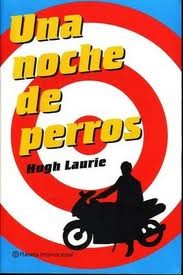
The Gun Seller
Hugh Laurie · 1996
Pursuit A former soldier refuses a contract killing and is pulled into the weapons conspiracy behind it
Closest Jackal connection An assassination proposal, false identities, surveillance, and a professional who understands how violence is purchased
Main difference A comic first-person thriller that continually mocks the genre it executes
Best for Readers who want espionage tradecraft with jokes, a charming unreliable professional, and satire of the international arms business.
Know before you start Expect gun violence, torture, sexual humor, period stereotypes, and a deliberately flippant response to danger.
Thomas Lang is offered money to kill an American businessman. Instead of accepting, he attempts to warn the intended victim, an act of decency that opens a much larger and more dangerous arrangement. Intelligence services, arms interests, and respectable intermediaries all have uses for him. Lang responds with improvisation, physical competence, and a narration determined to make a joke before anyone else can define the situation.
Hugh Laurie's satire works because the thriller underneath it is sound. Lang recognizes tails, manipulates expectations, survives violence, and understands that official explanations are often products being sold. The jokes target masculine competence even while the plot relies on it. A gun, after all, is only the final item in a supply chain of demonstrations, threats, budgets, and political appetite.
The voice will divide readers. Its digressions and irony deliberately interrupt suspense, and the villains belong to a more flamboyant tradition than the Jackal's handlers. It ranks ninth because emotional and comic display replace procedural austerity. For viewers who enjoyed the new series whenever the hunt exposed the business surrounding assassination, however, the novel is a clever change of temperature.
8
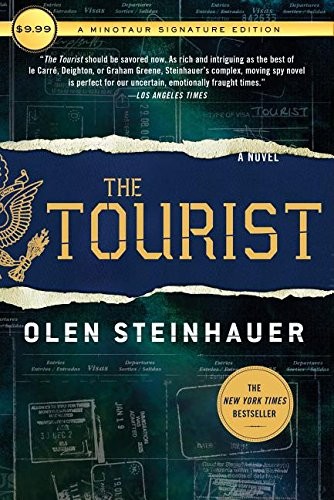
The Tourist
Olen Steinhauer · 2009
Pursuit A semi-retired CIA field operative investigates a captured assassin and finds his own service turning opaque
Closest Jackal connection Rootless professionals, constructed identities, and agencies racing to locate people who survive by leaving no home behind
Main difference A morally layered post-9/11 spy novel more interested in betrayal than one assassination clock
Best for Readers who want contemporary intelligence fiction, damaged professionals, agency politics, and morally ambiguous international movement.
Know before you start The book includes assassination, torture, terrorism, family endangerment, suicide, and a deliberately complex conspiracy.
Milo Weaver was a Tourist, one of the CIA's unofficial field officers who crossed borders without the stability of an ordinary identity. He has moved to a desk and attempted family life when the arrest of a long-pursued assassin draws him back into old cases. The investigation suggests that the line between hunter and asset, colleague and target, was never as secure as his service required him to believe.
Olen Steinhauer makes exhaustion part of tradecraft. Milo's competence does not free him from airports, bad information, institutional vanity, or the accumulated psychological cost of improvising a self for every assignment. The novel's most effective chases are also arguments over who possesses the authority to name someone loyal. An agency can construct an identity and then use its inconsistencies as evidence against the person wearing it.
The plot is intricate and occasionally easier to admire than to follow. Its focus drifts among family, bureaucracy, and international intrigue, so the pursuit never has Forsyth's severe simplicity. It ranks eighth because the target keeps changing. Yet it is one of the strongest modern answers to the adaptation's interest in what an assassin or operative takes home after the passport is burned.
7
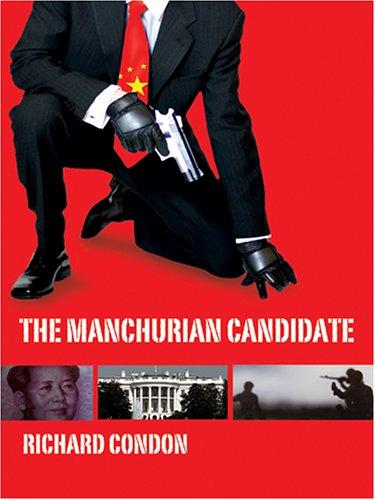
The Manchurian Candidate
Richard Condon · 1959
Pursuit A veteran tries to understand recurring nightmares before a conditioned assassin reaches his political target
Closest Jackal connection A meticulously prepared political killing and an investigator working against disbelief, secrecy, and time
Main difference A savage Cold War satire about brainwashing and American ambition
Best for Readers who want classic political paranoia, psychological manipulation, black comedy, and a conspiracy operating in full public view.
Know before you start The story includes brainwashing, suicide, incestuous abuse, murder, racism, misogyny, and extreme Cold War caricature.
Raymond Shaw returns from the Korean War as a decorated hero, accompanied by a story of battlefield valor confirmed by members of his platoon. Major Bennett Marco cannot reconcile that public narrative with the nightmares haunting him. His investigation reveals that Shaw has been psychologically conditioned and placed within reach of American power, where his formidable mother has ambitions far more dangerous than maternal pride.
Richard Condon transforms assassination into programming. The killer's route does not depend on forged papers because the conspiracy has manufactured an apparently authentic citizen. Political theater supplies camouflage: patriotism, medals, anti-Communist performance, and family connection allow the weapon to approach the target openly. Marco's hunt is therefore for a mechanism hidden inside a person he is also trying to save.
The novel is grotesque, heightened, and rooted in Cold War fears rather than procedural realism. Its treatment of psychiatry and international conspiracy is intentionally feverish. It ranks seventh because there is no balanced professional duel; Shaw's agency has been violated. Still, its countdown, political target, and collision between public ceremony and private control remain among the genre's most influential arrangements.
6
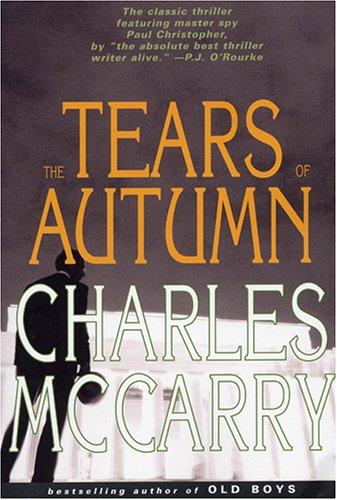
The Tears of Autumn
Charles McCarry · 1974
Pursuit Intelligence officer Paul Christopher follows his own theory of President Kennedy's assassination after his agency rejects it
Closest Jackal connection Patient reconstruction of a political murder through travel, sources, inference, and the habits of professionals
Main difference A melancholy speculative explanation of a historical assassination rather than an attempt to prevent one
Best for Readers who prefer literate old-school espionage, quiet tradecraft, political inference, and a haunted intelligence officer.
Know before you start The novel fictionalizes the Kennedy assassination and includes war, torture, political murder, racism, and period sexual attitudes.
Paul Christopher responds to the murder of John F. Kennedy by asking which international actors might see the killing as payment rather than isolated fanaticism. His theory leads toward the consequences of American policy in Vietnam and places him outside the comfort of his own service. To continue, he must rely on personal networks and the precise judgments that official intelligence often discourages when a conclusion is politically unusable.
Charles McCarry, who had intelligence experience, writes tradecraft without exhibition. Meetings require emotional as well as operational preparation. A source's history determines what can be asked, and an analyst must distinguish a coherent pattern from the desire to impose one. The novel's sadness comes from Christopher's understanding that discovering a truth does not guarantee any institution will want to possess it.
Readers should treat the central theory as fiction, not historical evidence. The book's pace is measured and its women are sometimes viewed through the conventions of its era. It ranks sixth because much of the hunt occurs after the irreversible event. Yet it shares Forsyth's confidence that geopolitics becomes suspenseful when translated into a sequence of practical questions: who knew, who moved, and who benefited enough to kill again?
5
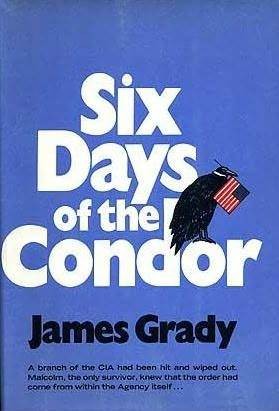
Six Days of the Condor
James Grady · 1974
Pursuit A CIA researcher returns from lunch to find his office murdered and becomes the target of his own organization
Closest Jackal connection A small head start, professional pursuers, improvised identities, and an urban hunt governed by information
Main difference The quarry is an analyst forced to learn field survival while running
Best for Readers who want a short, influential conspiracy thriller, urban evasion, and an ordinary intelligence employee thinking his way out.
Know before you start The book includes mass murder, kidnapping, coercive sexual material, surveillance, gun violence, and dated gender politics.
Ronald Malcolm reads spy novels for a minor CIA unit, searching published fiction for ideas and accidental intelligence. A routine decision to leave by an unofficial exit saves his life when gunmen kill everyone at the office. Malcolm—code name Condor—contacts the agency and discovers that the expected rescue may be another trap. His expertise is theoretical, but theory is all he has while trained people attempt to close the distance.
James Grady uses a superb reversal: the man who consumes imaginary tradecraft must decide which conventions remain useful when he enters the genre. Phones, predictable procedures, and agency knowledge become hazards. Because his pursuers know what a frightened employee should do, survival requires behaving like the fictional professionals he has studied without convincing himself he has become one.
The novel is leaner and stranger than its famous film adaptation, and an abduction at the center of the story is treated in a way many modern readers will find troubling. It ranks fifth because the political conspiracy is less developed than the survival premise. As a pure manhunt, however, it is exceptionally efficient. Every safe contact narrows Malcolm's world, and every hour alive forces the institution to become more explicit about wanting him dead.
4
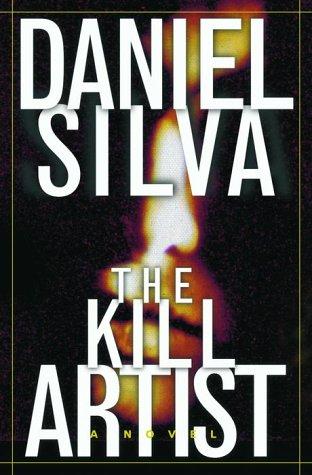
The Kill Artist
Daniel Silva · 2000
Pursuit Retired Israeli operative Gabriel Allon is recalled to hunt the Palestinian terrorist who destroyed his family
Closest Jackal connection An elite assassin and an elite hunter study routes, habits, legends, and the political pressure surrounding a target
Main difference Personal grief and the Israeli--Palestinian conflict make the pursuit openly emotional
Best for Readers who want a recurring spy hero, European settings, art restoration, personal stakes, and a hunter facing his professional equal.
Know before you start The book includes terrorism, assassination, bombing, child death, severe trauma, torture, and politically sensitive material.
Gabriel Allon has withdrawn into art restoration after an operation led to devastating retaliation against his wife and child. His former superior brings him back when Tariq, a terrorist and professional killer from Gabriel's past, resurfaces. The hunt moves through Europe and into a political landscape where each side maintains histories the other cannot accept as background.
Silva gives Gabriel and Tariq the intimacy of adversaries shaped by the same long conflict. Each understands how institutions use operatives and how a public act of violence can be timed to alter negotiation. Surveillance and disguise remain practical skills, but grief repeatedly distorts the clean logic both professionals claim to value. The closer Gabriel gets, the less the assignment can be separated from revenge.
The novel begins a long-running series, and some political framing reflects the period and Silva's chosen perspective. Its plot uses more personal coincidence than Forsyth would permit. It ranks fourth because the hunt is nevertheless strong, international, and genuinely reciprocal. Like the television adaptation, it refuses to pretend that an assassin's private life remains outside the operational perimeter.
3
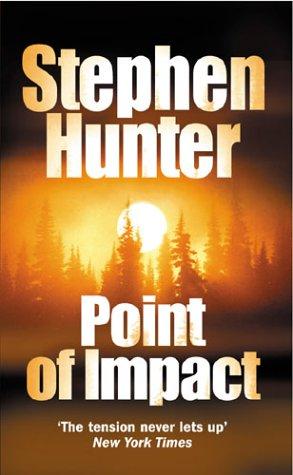
Point of Impact
Stephen Hunter · 1993
Pursuit Former Marine sniper Bob Lee Swagger is framed for an assassination and hunted nationwide
Closest Jackal connection Ballistics, firing positions, route planning, institutional pressure, and the forensic reconstruction of a shot
Main difference The supposed assassin is an innocent target who turns the manhunt back on its designers
Best for Readers who want sniper procedure, a framed expert, conspiracy, wilderness evasion, and a satisfying reversal of the hunt.
Know before you start Expect extensive gun detail, war memories, assassination, torture, racism, sexual threat, and graphic violence.
Bob Lee Swagger has retreated from the world when a shadowy group appeals to his expertise. They claim a threat against a public figure requires him to assess how a sniper would make the shot. Swagger recognizes too late that the consultation has prepared him to take the blame. Wounded and pursued, he must survive long enough to understand the operation and demonstrate how a perfect frame contains technical errors only another marksman would notice.
Stephen Hunter turns precision shooting into a branch of detection. Distance, wind, ammunition, body position, and landscape are evidence. The book admires professional skill without pretending institutions reward it honestly. Swagger's enemies depend on public familiarity with the lone-gunman story, while the machinery behind that story includes officials who can manufacture records and direct the hunt.
The novel is long, violent, and intensely interested in firearms. Its revenge structure eventually leaves the cooler territory of investigation for elaborate confrontation. It ranks third because no other selection matches the Jackal's material attention to how a shot becomes possible. The key change is exhilarating: this time the man whose methods create the chase is also the man running from it.
2
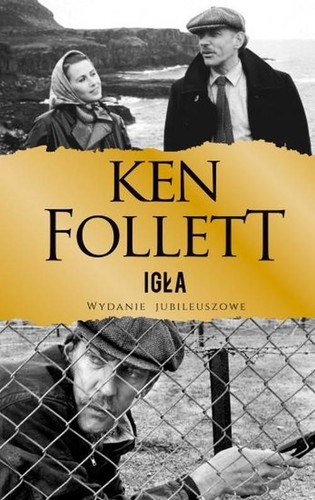
Eye of the Needle
Ken Follett · 1978
Pursuit British intelligence races to stop a German agent carrying evidence that could expose the deception behind D-Day
Closest Jackal connection A solitary, disciplined operative crosses a country while investigators reconstruct his identity and route
Main difference Wartime espionage in which the fugitive's intelligence matters more than a single assassination target
Best for Readers who want the strongest historical counterpart to the Jackal: one enemy agent, one vital secret, and a nation closing around him.
Know before you start The novel includes wartime violence, murder, sexual material, disability-related despair, domestic unhappiness, and animal death.
Henry Faber, code-named the Needle, is a deeply embedded German spy in wartime Britain. He discovers evidence that the apparent Allied invasion force facing Calais is a deception and attempts to deliver that knowledge to Germany. British intelligence gradually connects old reports and fresh deaths, recognizing that one man may compromise the coming invasion. Weather and circumstance strand Faber on an isolated island with a woman whose unhappy domestic life makes her both vulnerable and unexpectedly formidable.
Ken Follett's plot works because information has physical weight. Photographs must be carried. A radio needs time and conditions. An island can delay both escape and pursuit. Faber's professionalism resembles the Jackal's: he removes witnesses, adapts quickly, and relies on the authorities' inability to assemble scattered facts soon enough. The investigators become dangerous only when they stop treating each incident as local.
The island relationship introduces melodrama and sexual tension absent from Forsyth's purer procedural design. Some characterization and gender assumptions show the novel's age. It ranks second because the chase is almost perfectly constructed. The reader understands the strategic consequence of every mile, while the fate of an invasion narrows to whether one practiced man can reach a transmitter before the state learns his real name.
1
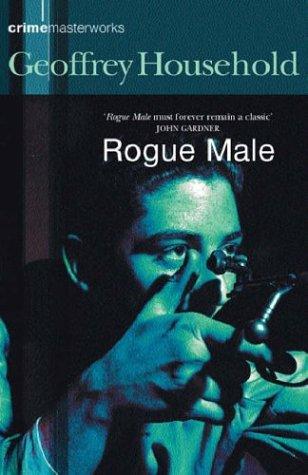
Rogue Male
Geoffrey Household · 1939
Pursuit An unnamed English sportsman escapes after attempting to place a dictator in his rifle sights and is hunted home
Closest Jackal connection Political assassination, patient fieldcraft, an anonymous professional quarry, and a national search conducted through quiet pressure
Main difference The attempted assassin becomes the hunted man and spends much of the novel underground
Best for Readers who want a concise classic, rural survival, relentless pursuit, and the closest ancestor to Forsyth's procedural suspense.
Know before you start The book includes torture, attempted political assassination, animal death, antisemitic persecution in context, and period class attitudes.
The narrator claims he intended only a sporting stalk: enter a European dictatorship, reach a position from which its leader could be shot, and prove to himself that the approach was possible. Captured before firing, tortured, and left for dead, he escapes to England. The regime's agents follow. Unable to use official protection without admitting what he did, he disappears into the rural landscape and constructs a hidden refuge while his pursuers methodically remove every alternative.
Geoffrey Household makes concealment tactile. Food, drainage, soil, tracks, a watch, and the behavior of an animal can determine whether the burrow remains invisible. The protagonist's class confidence and self-deception matter as much as his outdoor skill. His insistence that the stalk was theoretical becomes less convincing as danger forces him to identify the political and personal motive he refuses to name.
The novel is compact, psychologically sharp, and less technologically dated than its premise suggests. Some attitudes reflect 1939, and the unnamed dictator is a transparent fictional equivalent rather than a fully developed political figure. It ranks first because it is the essential inversion of The Day of the Jackal. Forsyth shows an assassin entering a country that does not yet know him; Household shows the same kind of man trying to vanish inside the country that should know him best.
Which Political Manhunt Thriller Should You Read First?
Choose Rogue Male for the clearest literary ancestor and the most satisfying reversal of the Jackal premise. Choose Eye of the Needle when you want the same national-scale pursuit, methodical investigator, and solitary enemy professional in a historical setting. Point of Impact is the best modern action option and the strongest match for viewers fascinated by the practical problem of the shot itself.
Read Six Days of the Condor for a short conspiracy chase, The Tourist for contemporary agency politics, or The Kill Artist for a more emotional duel between experienced operatives. The Tears of Autumn offers the quietest and most reflective intelligence work.
Choose The Manchurian Candidate for political paranoia, The Gun Seller for comic relief that still respects tradecraft, and The English Assassin when art, wartime secrets, and a recurring series hero sound more appealing than one self-contained pursuit.
A political manhunt converts power into distance. The state may possess police, borders, files, and public authority, but it still has to identify one person before that person reaches one room. The fugitive may have forged papers and professional discipline, but every meal, call, injury, and acquaintance makes anonymity harder to maintain.
Rogue Male ranks first because it reveals what the best pursuit novels know: the hunter and quarry are not stable roles. Preparation creates vulnerability, and the person most confident in his ability to observe may be least willing to examine his own motive. The chase becomes memorable when crossing the map also strips away the identity each professional planned to use.