Jane Austen's Sense and Sensibility is a love story constrained by accounting. After their father's death, Elinor and Marianne Dashwood lose the financial security of Norland and enter a social world where income determines privacy, mobility, and the freedom to marry badly. The sisters differ in temperament, but both must learn that a romantic choice is never entirely private when women have so few independent ways to support themselves. Focus Features' new film adaptation, starring Daisy Edgar-Jones and Esmé Creed-Miles, arrives in theaters on October 16, 2026.
Novels about sisters often promise affection or rivalry. The closest books to Austen make those emotions economic. One sister's marriage changes the household budget. A reputation affects everyone's prospects. Beauty, education, and obedience become resources families distribute unequally. Even sincere love is forced to negotiate with inheritance, class, community expectations, and the fear of becoming a burden.
This ranking favors novels in which sisterhood, money, and marriage exert pressure at the same time. Several selections leave Regency England entirely, because Austen's structure travels remarkably well: a family declines or changes, daughters are assessed by a social market, and sisters respond through restraint, rebellion, imitation, or strategic compromise.
10
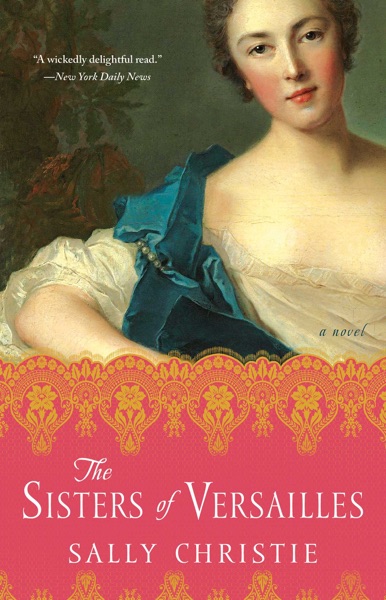
The Sisters of Versailles
Sally Christie · 2015
Family pressure Five noble sisters compete for security and influence near the court of Louis XV
Closest Sense and Sensibility connection Marriage, reputation, and family loyalty become negotiations over a woman's future
Main difference A bawdy historical court novel based on the real Nesle sisters
Best for Readers who want accessible historical fiction, royal mistresses, sister rivalry, letters, and court gossip.
Know before you start The novel includes sexual content, infidelity, pregnancy loss, coercive court politics, illness, and broad characterization based on historical figures.
Louise, Pauline, Diane, Hortense, and Marie-Anne de Nesle grow up with limited fortunes and very different appetites. Four will eventually become mistresses of Louis XV. Told through letters and shifting viewpoints, the novel follows the sisters as court access promises money and status while converting intimacy into rivalry.
Christie makes the marriage market explicit by placing another market beside it. A respectable match offers one kind of security; royal favor offers another, less stable form. The sisters' personalities influence their choices, but economic circumstances determine which choices are available enough to feel like personality. Affection survives in flashes beneath resentment and strategic self-presentation.
It ranks tenth because Versailles favors scandal and pace over Austen's fine moral calibration. The novel still captures a central Dashwood problem: sisters can love one another and remain competitors inside a system that distributes safety through male attention. Personal betrayal is difficult to separate from the structure rewarding it.
9

Sisters of Fortune
Esther Chehebar · 2025
Family pressure Three sisters navigate dating and adulthood within Brooklyn's close-knit Syrian Jewish community
Closest Sense and Sensibility connection Courtship is both personal desire and a communal judgment about family, tradition, and suitability
Main difference A warm contemporary debut with modern careers, dating, and immigrant-family expectations
Best for Readers who want a recent family comedy, Brooklyn, Syrian Jewish culture, dating, food, and affectionate generational conflict.
Know before you start The book includes family pressure around marriage, religious and cultural expectations, sibling conflict, and discussion of gender roles.
Nina, Fortune, and Lucy Cohen occupy different positions within the same loving, exasperating family. Their mother understands romance through the practical urgency of marriage, while the sisters pursue ambitions and relationships that do not always fit the community's approved path. Every date arrives with an audience of relatives, matchmakers, and inherited assumptions.
Chehebar's social world resembles Austen's not because it is old-fashioned but because information moves quickly. A potential match carries family history. A decision about work or partnership becomes a comment on everyone who helped raise the woman making it. The community offers real support while making independence feel like ingratitude.
The novel ranks ninth because its lighter tone and contemporary scope produce less material danger than the Dashwoods' loss of income. It is among the most direct thematic matches on the list. Sisters compare themselves, protect one another, and discover that "marrying well" can mean stability, love, cultural continuity, or surrender depending on who is speaking.
8

The Grammarians
Cathleen Schine · 2019
Family pressure Identical twins build adult identities from the language obsession they once shared completely
Closest Sense and Sensibility connection Sisters who appear complementary discover that difference can become competition
Main difference A contemporary literary comedy focused on words and vocation more than courtship
Best for Readers who want witty literary fiction, identical twins, language disputes, New York family life, and affectionate intellectual rivalry.
Know before you start The novel includes sibling estrangement, marriage strain, illness, grief, and extensive wordplay that may feel leisurely to plot-driven readers.
Laurel and Daphne Wolfe grow up with a private language and a shared copy of Webster's Second, treating words as the substance of intimacy. In adulthood, Laurel becomes a kindergarten teacher and poet while Daphne writes a popular newspaper column about grammar. Their similar gifts lead them toward incompatible ideas about who has the right to use their common inheritance.
Schine traces the moment a sister's success stops feeling collective. Careers, partners, and children give each twin a household from which to assess the other. Money is not a crisis in the Dashwood sense, but professional recognition becomes a form of property. Each woman believes the other has taken something that began between them.
It ranks eighth because marriage remains secondary and the social stakes are deliberately modest. The emotional architecture is Austen-like: one sister values discipline, another expressive freedom, and both mistake temperament for moral authority. Their conflict reveals how easily complementary roles become cages when a family repeats them long enough.
7
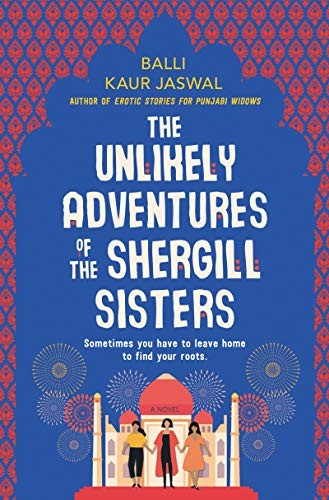
The Unlikely Adventures of the Shergill Sisters
Balli Kaur Jaswal · 2019
Family pressure Three estranged British Punjabi sisters travel through India to fulfill their mother's final wishes
Closest Sense and Sensibility connection Different temperaments become family roles that conceal what each sister cannot comfortably admit
Main difference A contemporary road novel about grief, heritage, and adult secrets
Best for Readers who want a funny and moving sister novel, travel in India, family secrets, grief, and British Punjabi identity.
Know before you start The book includes parental death, miscarriage, marital coercion, infidelity, sexual harassment, sibling estrangement, and cultural conflict.
Rajni, Jezmeen, and Shirina Shergill reunite after their mother's death to carry out a pilgrimage she planned for them. Rajni manages, Jezmeen performs, and Shirina tries to preserve peace. The trip through India forces conflicts about marriage, career, motherhood, and cultural duty into spaces from which none of them can politely withdraw.
Jaswal understands competence as a family assignment. The reliable sister receives more responsibilities precisely because she appears able to carry them. The dramatic sister's real pain becomes easier to dismiss, while the agreeable sister hides choices that might disrupt everyone's image of her. Their mother's itinerary is both manipulation and a final act of care.
The novel ranks seventh because money is a background pressure rather than the organizing crisis. It earns its place through sisterly correction. Like Elinor and Marianne, the Shergills must learn that knowing a sibling's habitual response is not the same as knowing her interior life. Love improves only after interpretation becomes less automatic.
6

The Most Fun We Ever Had
Claire Lombardo · 2019
Family pressure Four adult daughters measure their lives against their parents' unusually enduring marriage
Closest Sense and Sensibility connection Sisters interpret love through comparison, money, secrecy, and the roles assigned within a family
Main difference A large contemporary American saga spanning decades and multiple marriages
Best for Readers who want a long immersive family saga, four complicated sisters, marriage, parenthood, and secrets accumulating across decades.
Know before you start The novel includes addiction, bereavement, infidelity, adoption, abortion, mental-health struggles, illness, and frequent family conflict.
Marilyn and David Sorenson fall in love in the 1970s and raise four daughters in suburban Chicago. By 2016, Wendy, Violet, Liza, and Grace are each in some form of crisis. The return of a child placed for adoption years earlier disturbs the arrangements through which the sisters have managed jealousy, grief, and the intimidating example of their parents' happiness.
Lombardo treats a good marriage as its own kind of inheritance. The daughters have received material stability and abundant love, yet the family ideal becomes a standard against which ordinary relationships appear deficient. Money softens consequences without eliminating them. It can hide addiction, support avoidance, and allow private distress to remain private longer.
It ranks sixth because the sprawl and emotional abundance are far removed from Austen's compression. The novel shares her interest in how sisters become unreliable judges of one another. Every Sorenson daughter carries an account of who is sensible, selfish, fragile, or favored; every account contains enough truth to become unfair.
5
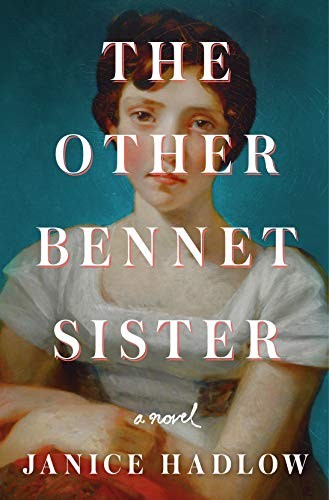
The Other Bennet Sister
Janice Hadlow · 2020
Family pressure Mary Bennet must find a life after her prettier sisters' marriages reorganize the family
Closest Sense and Sensibility connection A financially vulnerable woman learns to distinguish genuine compatibility from the need to be chosen
Main difference A direct continuation of Austen's world centered on a neglected character from Pride and Prejudice
Best for Austen readers who want a sympathetic Mary Bennet, slow emotional development, Regency households, and practical attention to unmarried women's lives.
Know before you start The book is long and deliberately paced, with family cruelty, grief, financial dependence, humiliating courtship, and close imitation of period fiction.
Mary Bennet has grown up understanding herself as the plain, pedantic sister. After the marriages that conclude Pride and Prejudice, she moves among relatives and acquaintances whose homes remind her that an unmarried woman possesses little independent claim to space. Reading and music, once used defensively, gradually become parts of a self not organized entirely around family ridicule.
Hadlow takes Austen's economic premises seriously. Mary is not endangered because she lacks romance; she is endangered because her future depends on the goodwill of married siblings and male heirs. That dependence makes attention feel disproportionately valuable. A poor match can resemble rescue long before it resembles love.
The novel ranks fifth because its style necessarily imitates and extends Austen rather than creating a wholly independent social world. It is an excellent choice for readers who want the Dashwoods' material concerns foregrounded. Mary's growth resembles Elinor's and Marianne's combined: she must value her own judgment while becoming less attached to the performance of superior feeling.
4

The Vanishing Half
Brit Bennett · 2020
Family pressure Twin sisters take radically different paths after leaving the Black town where they were raised
Closest Sense and Sensibility connection A sister's choice of partner and social identity transforms the material future available to the entire family
Main difference A multigenerational American novel centered on race, passing, and identity
Best for Readers who want literary family drama, twins, passing, motherhood, identity, and consequences unfolding across generations.
Know before you start The novel includes racism, colorism, domestic violence, transphobia, abandonment, family separation, grief, and deception within marriage.
Desiree and Stella Vignes flee Mallard, Louisiana, as teenagers. Desiree later returns with her dark-skinned daughter after escaping an abusive marriage. Stella disappears into a white life, marrying a man who does not know she is Black. Their separation shapes the lives of their daughters, who eventually encounter one another without initially understanding the family history between them.
Bennett makes passing both intimate betrayal and economic strategy. Stella's marriage provides safety, status, and a house in a world that would exclude her if it recognized her. Those benefits require continuous performance and separation from the sister who knows the self beneath it. Desiree's return offers communal recognition without protection from colorism or judgment.
It ranks fourth because it most powerfully expands the question of a "good match." Marriage can alter not only income but race as society perceives it, changing where a woman may live and what her child can inherit. Like Austen, Bennett refuses to isolate romantic choice from the market assigning value to women before they choose.
3

Little Women
Louisa May Alcott · 1868--1869
Family pressure Four sisters come of age in a household where affection is abundant and money is continually scarce
Closest Sense and Sensibility connection Sisters with contrasting temperaments confront marriage as love, work, sacrifice, and financial reality
Main difference An American domestic coming-of-age novel with a stronger emphasis on vocation and childhood
Best for Readers who want a classic family novel, four iconic sisters, writing and art, courtship, and domestic life shaped by limited means.
Know before you start The book includes illness, death, war anxiety, poverty, moralizing passages, period gender expectations, and nineteenth-century racial language in some editions.
Meg, Jo, Beth, and Amy March grow up during and after the American Civil War while their father is away and their mother holds the household together. Meg desires domestic stability, Jo resists conventional femininity through writing, Beth finds meaning close to home, and Amy combines artistic ambition with clear-eyed social judgment.
Alcott shares Austen's refusal to make poverty picturesque, even when the March household is warm. Clothes, travel, education, and artistic training cost money. Marriage can expand a woman's life or endanger the work through which she understands herself. Amy's practicality is not a failure of romance; it is recognition that unpaid aspiration is easier to celebrate when someone else covers the bill.
The novel ranks third because sisterhood shapes every stage rather than serving as one strand among many. Its moral instruction can be more explicit than Austen's, and modern readers may resist some resolutions. Yet few books more fully show sisters negotiating the unequal distribution of beauty, talent, health, duty, and opportunity inside a loving family.
We reviewed this: read our full review of Little Women →
2

The Shuttle
Frances Hodgson Burnett · 1907
Family pressure Two wealthy American sisters encounter the dangers of marriages between heiresses and impoverished English aristocrats
Closest Sense and Sensibility connection Property law, distance, and social convention determine whether marriage offers security or captivity
Main difference An Edwardian transatlantic melodrama with an openly villainous husband
Best for Readers who want an overlooked classic, American heiresses, English estates, sisterly rescue, and marriage treated as an economic institution.
Know before you start The novel includes domestic abuse, coercive control, child neglect, xenophobic period attitudes, class stereotypes, illness, and an idealized reformer heroine.
Rosalie Vanderpoel marries Sir Nigel Anstruthers and leaves New York for his neglected English estate. Isolated from her family, she is gradually deprived of money, confidence, and contact. Years later, her much younger sister Bettina crosses the Atlantic, recognizes the abuse concealed by aristocratic manners, and begins restoring both Rosalie and the estate.
Burnett makes the economic exchange behind international marriage impossible to ignore. English titles need American money; American families desire European prestige. Rosalie's fortune does not protect her once legal authority and geographic isolation place its use in her husband's hands. Bettina succeeds because she understands money as practical power rather than proof of vulgarity.
It ranks second because it takes the Dashwood sisters' vulnerability and imagines a woman with wealth who is still structurally dispossessed by marriage. The prose is more expansive and the moral alignments much clearer than Austen's. Its best insight remains subtle: rescue begins when one sister refuses the respectable story everyone has agreed to tell about the other's life.
1
The Makioka Sisters
Jun'ichirō Tanizaki · Serialized 1943--1948; complete book edition 1948; first English translation 1957
Family pressure Four sisters in a declining Osaka merchant family try to preserve status while arranging a suitable marriage
Closest Sense and Sensibility connection Financial decline, family reputation, and contrasting temperaments make courtship a collective problem
Main difference A spacious Japanese family chronicle set before the Second World War
Best for Readers who want a major family classic, subtle social observation, four complex sisters, marriage negotiations, and immersive domestic detail.
Know before you start The pace is deliberately slow and the novel includes illness, pregnancy loss, class prejudice, family control, wartime background, and historical Japanese social conventions.
The once-prominent Makioka family has lost much of its wealth and standing. The married older sisters, Tsuruko and Sachiko, take responsibility for arranging a match for the shy third sister, Yukiko. The youngest, Taeko, pursues work and relationships with an independence that repeatedly complicates the family's reputation and Yukiko's marriage negotiations.
Tanizaki observes the social process with extraordinary patience. Prospective husbands arrive with family histories, employment, health questions, and reports assembled through intermediaries. A match may fail because of temperament, timing, rumor, or a detail that no participant can openly name. Yukiko's apparent passivity becomes its own form of influence, while Taeko's action exposes how little room the system allows a woman to experiment without affecting her sisters.
It ranks first because it recreates the full pressure system of Sense and Sensibility without imitating Austen's plot. A declining family tries to preserve dignity; sisters embody different responses to modernity; marriage remains emotional, economic, and communal at once. The novel's greatness lies in treating every tea, letter, storm, illness, and delayed answer as part of the material from which a family's future is made.
Which Sisters-Money-and-Marriage Novel Should You Read First?
Choose The Makioka Sisters for the closest structural match to Sense and Sensibility. Both novels place sisters inside a declining family where courtship is a collective financial project and temperament affects everyone's prospects. The Shuttle is the best choice if you want marriage law, property, and sisterly rescue pushed into sharper melodrama.
Read Little Women for another foundational classic about sisters and limited means. The Vanishing Half is the strongest contemporary literary choice, expanding the consequences of marriage through race and passing. Austen readers who want to remain explicitly in her world should begin with The Other Bennet Sister.
For a large modern family saga, choose The Most Fun We Ever Had. Sisters of Fortune offers the freshest direct courtship comparison, while The Unlikely Adventures of the Shergill Sisters focuses on adult sisters correcting old assumptions. The Grammarians is best for readers more interested in rivalry and shared identity than romance.
Sister novels become especially revealing when affection has a budget. One woman can marry for love only because another provides housing. A scandal changes multiple futures. The daughter praised for sense performs labor the family stops noticing, while the daughter associated with feeling may be denied the seriousness of her pain. Money does not cheapen these relationships; it reveals the work required to sustain them.
The Makioka Sisters ranks first because its social world is as complete and quietly coercive as Austen's. No single villain prevents Yukiko or Taeko from choosing freely. Family pride, declining capital, gender, rumor, and genuine concern combine until pressure becomes indistinguishable from love. That is the durable intelligence of Sense and Sensibility: marriage is never just the ending of one person's story when an entire household must live inside the result.