Ben Aaronovitch's Rivers of London series works because Peter Grant never stops being both a police officer and an apprentice. Magic gives him new evidence, not permission to abandon procedure. London supplies gods, ghosts, architecture, jazz, bureaucracy, and several thousand years of jurisdictional complications. The jokes matter, but so do forms, interviews, chain of command, and the question of which agency is expected to pay for the damage.
Many urban-fantasy lists answer that combination with American private investigators. This ranking stays closer to home. Every selection is set primarily in Britain and organizes supernatural trouble around investigation, public service, journalism, an agency, or a recurring professional role. Some are police procedurals. Others use exorcists, civil servants, museum staff, or ghost hunters. All understand that a hidden magical Britain would quickly develop offices, rival departments, local customs, and paperwork.
The ranking considers investigative structure, sense of place, ensemble chemistry, humor, and the quality of the series commitment. It also treats tone honestly. Several of the closest conceptual matches are much darker than Aaronovitch; several of the funniest are less procedural. Series status is noted because a recommendation feels different when it leads to a completed arc, an ongoing sequence, or three excellent books that stop before every problem is resolved.
10

Dr. Ribero's Agency of the Supernatural
Lucy Banks
Start with The Case of the Green-Dressed Ghost (2017)
Series shape Five published cases beginning with Kester Lanner's recruitment into a small family agency
Closest Rivers connection An inexperienced young man discovers a hidden British profession and learns supernatural fieldwork from an eccentric team
Main difference Lighter, more compact, and centered on private ghost hunters rather than police
Best for Readers who want a friendly supernatural agency, a reluctant recruit, found-family energy, and cases that do not become relentlessly grim.
Know before you start The books include bereavement, dangerous hauntings, demonic threats, family secrets, and occasional violence, but the overall tone remains accessible.
Kester Lanner follows his dying mother's request to contact the mysterious Dr. Ribero and discovers an agency that handles hauntings the ordinary world does not know exist. Kester also learns that he can open doors into the spirit world, a rare ability that makes him useful before he is competent. The first case places that gift inside a team whose members bring different talents and varying degrees of professionalism.
Lucy Banks captures the apprenticeship appeal of early Rivers of London. Kester enters a workplace with established rules, awkward colleagues, inadequate resources, and dangers everyone else treats as part of the job. The cases combine ghosts, family history, and procedural errands without requiring a massive mythology before the characters become likable.
The series is smaller in scale and softer in execution. Its humor is more overtly whimsical, the mysteries are less architecturally tied to place, and Kester lacks Peter's scientific habit of testing magic. Later volumes deepen the agency's internal story, but readers seeking Aaronovitch's density may find the books slight. It ranks tenth because it offers the easiest, warmest version of the premise: join the odd office, meet the ghosts, and learn why the staff have somehow kept doing this for years.
9
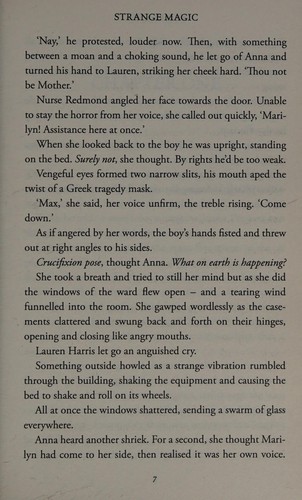
The Essex Witch Museum Mysteries
Syd Moore
Start with Strange Magic (2017)
Series shape A continuing sequence of novels and story collections rooted in Essex witch-trial history
Closest Rivers connection Local history becomes evidence as skeptical investigators encounter supernatural consequences in a specific English region
Main difference Amateur investigation, stronger folk-history emphasis, and a smaller geographic canvas
Best for Readers who enjoy witch-trial history, museums, skeptical heroines, regional folklore, and a developing investigative partnership.
Know before you start The series discusses historical executions, misogyny, possession, child danger, murder, and the persecution of accused witches.
Rosie Strange inherits the Essex Witch Museum from a grandfather she barely knew and initially intends to sell it. Curator Sam Stone complicates that plan. Their first investigation begins with a request involving the remains of a woman executed for witchcraft and a child believed to be possessed. Skepticism, historical research, and the practical burden of the museum pull Rosie into cases she would prefer to classify as someone else's problem.
Syd Moore's greatest advantage is regional commitment. Essex is not generic countryside between supernatural incidents. Witch trials, stereotypes about Essex women, local archives, and specific landscapes supply both mystery and argument. Rosie and Sam's developing partnership gives the series continuity while each case uncovers a different way the past has been simplified for present use.
The novels sit closer to paranormal cozy mystery than police procedural. Humor and romance sometimes take priority over rigorous detection, and the supernatural rules are less systematized than Aaronovitch's Newtonian magic. It ranks ninth because the museum is such a good institutional equivalent to the Folly: an underfunded repository of dangerous history whose staff discover that preservation and investigation are the same job.
8
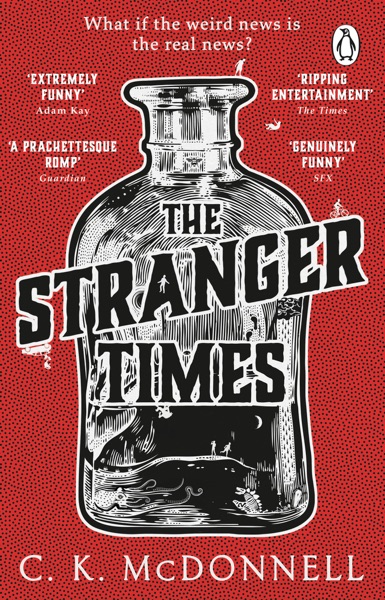
The Stranger Times
C. K. McDonnell
Start with The Stranger Times (2021)
Series shape An ongoing comic-fantasy sequence about the staff of a Manchester paranormal newspaper
Closest Rivers connection A funny workplace ensemble investigates hidden supernatural events in a vividly realized British city
Main difference Journalism replaces policing, and absurdist comedy is much more prominent
Best for Readers who want maximum British humor, a chaotic newspaper office, strong ensemble affection, and demons treated as breaking news.
Know before you start The series includes addiction, suicide references, abusive relationships, murder, demonic violence, and extensive profanity beneath the comic tone.
Newly separated Hannah Willis needs work and becomes assistant editor at The Stranger Times, a Manchester paper devoted to stories its own staff often regard as nonsense. Editor Vincent Banecroft is foul-tempered, self-destructive, and capable of turning routine publication into an emergency. When events force the staff to investigate rather than merely print the unbelievable, the newspaper discovers that some of its worst submissions were warnings.
C. K. McDonnell builds the series around office chemistry. Reporters, production staff, occult sources, police contacts, and recurring supernatural factions create the pleasure of returning to a workplace whose dysfunction has become loyalty. Manchester receives enough rain, streets, music, and institutional oddity to feel like a participant rather than a substitute for London.
The books are broader and louder than Rivers of London. Banecroft's insults, farcical set pieces, and the escalating mythology frequently overwhelm the mechanics of a particular mystery. Readers who value Peter's methodical experiments may want more procedural weight. It ranks eighth because the tonal match is otherwise strong. Both series know that the best defense against the supernatural may be a group of underpaid people who complain about one another all day and still show up when something impossible threatens a colleague.
7
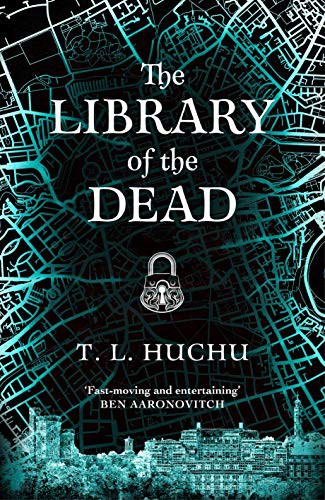
Edinburgh Nights
T. L. Huchu
Start with The Library of the Dead (2021)
Series shape A completed five-book arc following ghostalker Ropa Moyo through an alternate near-future Edinburgh
Closest Rivers connection A young, funny, financially practical protagonist learns an institutional magical world by solving local supernatural mysteries
Main difference Dystopian alternate Britain, a teenage lead, and a more direct magic-school trajectory
Best for Readers who want a completed series, a resourceful young heroine, ghosts, libraries, family responsibility, and Scottish urban fantasy.
Know before you start The books include child abduction, poverty, colonial history, murder, cults, family death, and escalating magical violence.
Ropa Moyo carries messages between Edinburgh's dead and living for a fee. She supports her family, travels with a Zimbabwean musical instrument, and has little interest in unpaid heroism. When ghosts report that children are disappearing and returning changed, Ropa investigates despite the poor business case. Her work opens a route into libraries, magical institutions, and hierarchies that regard informal talent with suspicion.
T. L. Huchu gives Ropa the quality that makes Peter Grant work: curiosity shaped by material reality. She asks what magic can do, but also who has access, who charges for it, and why official institutions failed before a freelance teenager became involved. Edinburgh's geography, Scottish history, colonial legacy, and Ropa's Zimbabwean heritage prevent the hidden world from belonging to one tradition.
The sequence is shelved for younger readers in some markets but crosses comfortably into adult fantasy. Its post-catastrophe setting creates a greater distance from contemporary Britain, and later books develop magical education more heavily than case procedure. It ranks seventh because the complete arc rewards commitment. Readers who want another apprentice with a distinctive voice and a city that refuses to become scenery should begin here.
6
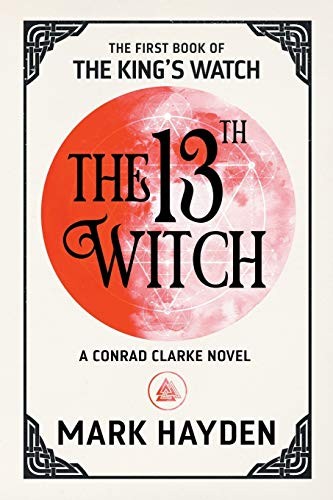
The King's Watch
Mark Hayden
Start with The 13th Witch (2018)
Series shape A long independent-publishing sequence of novels and shorter cases about Britain's hidden magical defense
Closest Rivers connection A recruit joins a small official service that polices wild magic across recognizable British locations
Main difference Mythic action, military experience, and a more openly heroic protagonist
Best for Readers who want many installments, an official magical service, British travel, gods, witches, and a protagonist with military instincts.
Know before you start The series includes violence, organized crime, war memories, death, divine coercion, and a steadily expanding cast and mythology.
Conrad Clarke is a former RAF pilot with a complicated past when Odin offers him a job. The King's Watch protects England from uncontrolled magic, and Conrad's first assignment involves a missing witch, divine interference, and a crash course in a world where folklore can use a mobile phone. His skills are practical rather than scholarly, and the organization expects improvisation from the start.
Mark Hayden's series offers one of the clearest Folly-like institutional premises outside traditional publishing. Assignments move through different English regions, and recurring Watch personnel create an accumulating sense of rank, duty, favors, and internal politics. Humor comes from Conrad's willingness to negotiate, cheat, and continue talking after discretion has failed.
The production is more variable than a major-publisher sequence, and the books lean toward adventure and power growth rather than police detection. Conrad's competence and mythic connections make him less vulnerable than early Peter Grant. It ranks sixth because the long continuity is a genuine strength for readers wanting a new shelf-filling commitment. This is the recommendation for someone who likes the Folly as an organization and wonders what its national, more militarized cousin might look like.
5
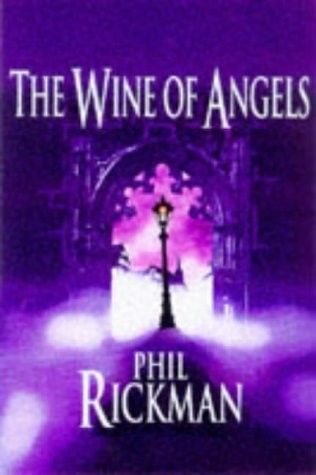
Merrily Watkins
Phil Rickman
Start with The Wine of Angels (1998)
Series shape Fifteen substantial novels following an Anglican priest and diocesan deliverance consultant
Closest Rivers connection Official responsibility, careful interviews, local history, and recurring cases that remain partly supernatural and partly criminal
Main difference Rural border country, slower pacing, theological uncertainty, and very little comic fantasy
Best for Readers who want mature characters, rural British atmosphere, church procedure, folklore, and crime mysteries with genuine supernatural ambiguity.
Know before you start The series includes murder, suicide, abuse, religious extremism, harm involving children, and recurring discussion of mental illness and possession.
Merrily Watkins arrives in a Herefordshire village as a newly appointed vicar and widowed mother to teenage Jane. Her work gradually develops into the Church of England's ministry of deliverance: the modern institutional language for exorcism and related spiritual disturbances. A possible haunting therefore requires pastoral care, historical inquiry, discretion, and the ability to recognize when a human crime is using supernatural belief as cover.
Phil Rickman treats procedure seriously. Merrily cannot simply declare a ghost or demon. She must listen to frightened people, negotiate diocesan politics, consider psychological and criminal explanations, and understand the local story well enough to know what belief is doing inside it. Herefordshire and the Welsh border supply music, archaeology, folklore, and contested sacred landscapes across the series.
The books are long, atmospheric, and often deliberately slow. Merrily is not a magician, and supernatural certainty remains limited. Readers seeking Peter Grant's jokes and action may find the tonal distance considerable. It ranks fifth because the investigative ethic is remarkably close. Both protagonists occupy small official roles that modern institutions would prefer not to explain, and both discover that taking witnesses seriously does not require accepting the first explanation offered.
4
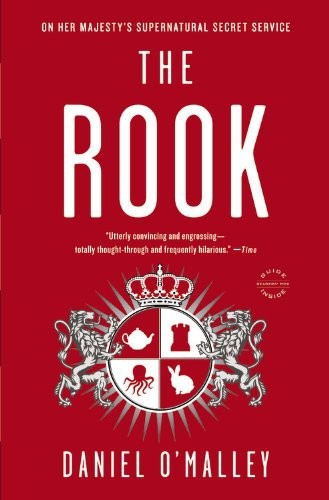
The Checquy Files
Daniel O'Malley
Start with The Rook (2012)
Series shape An ongoing sequence of largely self-contained novels about Britain's supernatural civil service
Closest Rivers connection Hidden government bureaucracy manages supernatural citizens, threats, budgets, and institutional rivalries
Main difference Espionage, body-based powers, and national-scale conspiracies rather than street-level policing and learned magic
Best for Readers who want secret agencies, office politics, inventive powers, female leads, conspiracies, and bureaucratic comedy.
Know before you start The books include amnesia, body horror, experimentation, mass violence, betrayal, and graphic supernatural combat.
Myfanwy Thomas wakes in a London park surrounded by bodies wearing latex gloves and with no memory of who she is. Letters from her former self explain that she is a senior official in the Checquy, the secret organization protecting Britain from supernatural danger, and that someone inside it arranged the attack. Myfanwy must impersonate herself while using files, office relationships, and extraordinary abilities to identify the traitor.
Daniel O'Malley understands that bureaucracy is not the opposite of wonder. It is what wonder produces after several centuries of incidents, recruitment, liability, and interdepartmental hostility. The Checquy's ranks, archives, foreign counterparts, and bizarrely gifted personnel provide comic scale, while each novel can shift viewpoint and period without abandoning the institution.
The powers are extravagant, the action is larger, and London is less intimately mapped than in Aaronovitch. Continuity exists, but the series is not one detective's sequential career in the same way. It ranks fourth because the institutional imagination is irresistible. Readers who enjoy the Folly's forms, acronyms, and negotiations may discover that a fully staffed supernatural civil service is even funnier—and considerably more dangerous.
3
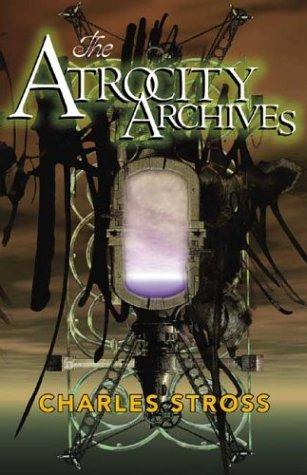
The Laundry Files
Charles Stross
Start with The Atrocity Archives (2004)
Series shape A completed main sequence, plus novellas and the connected New Management books, capped by The Regicide Report in 2026
Closest Rivers connection A sarcastic British civil servant applies technical reasoning and institutional procedure to occult threats
Main difference Lovecraftian espionage grows steadily darker and more apocalyptic
Best for Readers who want a long completed commitment, occult espionage, computer science, workplace satire, and consequences that eventually transform Britain.
Know before you start The series includes cosmic horror, mass casualties, workplace abuse, body transformation, fascism, sexual threat, and an increasingly bleak political arc.
Bob Howard discovers that certain mathematical computations can contact other dimensions and is forcibly recruited by the Laundry, Britain's secret occult intelligence service. His job combines information technology, fieldwork, security policy, and managers who can make an extradimensional entity feel less immediate than an expense claim. Early cases parody spy fiction while building a rigorous premise: computation is magic, and sufficiently careless code can summon something hungry.
Charles Stross gives bureaucracy a protective purpose without romanticizing it. The Laundry is frustrating because the dangers are real, secrecy is necessary, and institutions remain institutions even at the edge of apocalypse. Bob advances, viewpoints broaden, and the comic workplace series gradually becomes an account of what happens when the predicted catastrophe stops being a forecast.
That tonal change is the essential caveat. Later books are far darker than Rivers of London, and the sequence's technical jokes, spy pastiche, and complex reading order require attention. It ranks third because the overlap in method is profound. Peter experiments with magic like a scientist; Bob treats magic as a dangerous branch of computer science. Both understand that knowing the rule does not exempt anyone from filing the incident report.
2
Felix Castor
Mike Carey
Start with The Devil You Know (2006)
Series shape Five novels followed by the 2023 novella The Ghost in Bone
Closest Rivers connection A dryly funny London investigator handles ghosts, demons, crime, and the practical consequences of a changed supernatural ecology
Main difference Noir exorcism, fewer institutional safeguards, and a much darker moral atmosphere
Best for Readers who want London noir, an exorcist detective, morally difficult ghosts, continuing mythology, and a sharp first-person voice.
Know before you start The series includes sexual violence, trafficking, addiction, demonic possession, child harm, murder, and a storyline that remains emotionally severe.
Felix Castor is an exorcist who would prefer to leave the profession. In a world where the dead have begun manifesting more frequently, his ability to bind and remove spirits through music remains marketable. A haunting at an archive draws him back into work and connects a ghost's apparent violence to human exploitation, demonic interest, and choices Felix has already made badly.
Mike Carey gives supernatural London weight without making it charming. Ghosts are people after death, which means exorcising one may be closer to forced removal than pest control. Felix investigates for money and conscience while relying on allies whose dangers he cannot neatly contain. Each case enlarges a continuing conflict and makes earlier compromises harder to dismiss.
The humor is dry, but the books include sexual violence, addiction, trafficking, and genuine noir fatalism. Felix is older, more compromised, and far less protected by an institution than Peter. It ranks second because the city, voice, and investigative blend are exceptionally close. Readers who want another London saturated with the dead—and can accept that every joke casts a longer shadow—should move this near the top of the list.
1
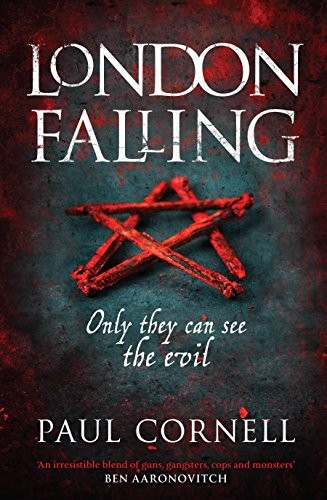
Shadow Police
Paul Cornell
Start with London Falling (2012)
Series shape Three novels; the sequence stops with major possibilities still open
Closest Rivers connection A London police unit gains supernatural sight while investigating crime and must invent procedure for magic on the job
Main difference Much darker, ensemble-led, and abruptly limited to three books
Best for Readers who want the closest police-procedural premise, a strong ensemble, London folklore, and are comfortable with significantly darker horror.
Know before you start The books include child murder, torture, police corruption, addiction, suicide, graphic violence, and an unfinished larger trajectory.
Detective Inspector James Quill and his team are pursuing an organized-crime figure when an operation exposes them to London's hidden supernatural layer. They can suddenly see what ordinary policing has allowed to remain invisible. No experienced wizard joins the unit to explain the rules. The officers must apply surveillance, interviews, evidence, and institutional leverage to threats shaped by folklore and the city's history.
Paul Cornell offers the closest conceptual match to the Folly while refusing its comfort. The team members bring different skills, beliefs, and vulnerabilities; acquiring the Sight does not make them powerful. It makes them responsible for evidence most colleagues cannot perceive. London is territorial, old, and predatory, with football, policing, wealth, and legend occupying the same streets.
The series is brutal, and its violence involving children makes the first book especially difficult. Humor exists but never restores Aaronovitch's warmth. The largest practical warning is that three books do not complete every arc. It ranks first because no other British series reproduces the procedural discovery so exactly. If Rivers of London asks what happens when one constable sees a ghost, Shadow Police asks what happens when an entire investigation team sees the machinery behind the crime—and realizes there is no department ready to take the case.
Which British Supernatural Mystery Series Should You Read First?
Start with Shadow Police if you want the closest premise and can tolerate a much darker tone plus an incomplete larger arc. Begin with Felix Castor if London, first-person voice, and recurring occult cases matter more than police procedure. Both are immediate matches, but neither offers the comfort of Peter Grant's Folly.
Choose The Laundry Files for a long, completed bureaucratic epic and The Checquy Files for exuberant powers and secret-agency comedy. Merrily Watkins is the best option for patient adult mysteries, rural history, and spiritual ambiguity.
For a lighter commitment, try Dr. Ribero's Agency or the Essex Witch Museum Mysteries. Choose The Stranger Times for the funniest workplace ensemble, the King's Watch for many action-oriented installments, and Edinburgh Nights when you want a completed coming-of-age arc in a transformed Scottish city.
The distinctive pleasure of Rivers of London is not simply magic in Britain. It is magic forced into contact with a profession. A witness still needs interviewing, an unexplained death still produces jurisdiction, and a goddess may be powerful without being exempt from negotiation.
Shadow Police ranks first because it begins with the same collision at team scale. Its officers do not leave policing behind when London becomes supernatural; they discover how much of the city policing had failed to see. The series is darker and shorter, but its central insight is exact. A hidden world does not need another chosen one. It needs investigators who can recognize evidence and colleagues willing to believe the report.