Many books can provide an old house, a secret marriage, or a woman who may be imagining the danger around her. Rebecca remains difficult to imitate because Daphne du Maurier makes those elements depend on one another. Manderley is a home, a class system, a performance, and a memory palace built for a dead woman. The unnamed narrator does not merely fear Rebecca. She fears that everyone else possesses a more convincing version of womanhood than she does.
The best read-alikes therefore do more than open a locked room and let the curtains move. They place an outsider inside a house whose customs she does not understand. They make love inseparable from money, property, inheritance, or status. Most importantly, they preserve uncertainty. A haunting may be supernatural, psychological, or socially manufactured; a seductive person may be victim, villain, or the object onto which a narrator has projected every fear.
This ranking considers atmosphere, psychological depth, the importance of place, and the quality of each novel's conversation with du Maurier. Some selections are direct reimaginings. Others change the century, country, or narrator while preserving the more important pressure: a person wants entry into a beautiful world and discovers that belonging may be the most dangerous wish of all.
10
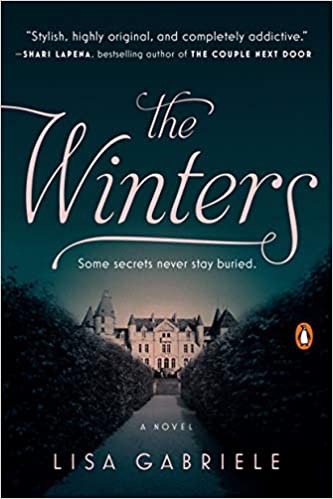
The Winters
Lisa Gabriele · 2018
Setting Asherley, a secluded mansion off the coast of Long Island
Closest Rebecca connection An unnamed young woman, a wealthy widower, a dead first wife, and an estate arranged around the predecessor's memory
Main difference A contemporary domestic thriller that knowingly rewrites the original plot and gives its heroine more overt agency
Best for Readers who want a direct, fast, contemporary reimagining and enjoy recognizing altered versions of familiar scenes.
Know before you start The novel includes coercive relationships, manipulation, family violence, and threats involving a teenager.
An unnamed woman working on a Caribbean island meets Max Winter, a rich, charismatic senator still associated with the glamorous wife he lost. Their courtship is rapid enough to feel like rescue. Max brings his new fiancée to Asherley, where she meets Dani, his hostile teenage daughter. Rebekah Winter has been dead for two years, but her clothes, reputation, and influence remain more established in the house than the newcomer is.
Lisa Gabriele makes no attempt to conceal the source design. Names, relationships, and situations deliberately echo du Maurier, which creates a peculiar kind of suspense: readers who know Rebecca anticipate familiar turns while looking for the place where the new book will refuse them. Dani is the strongest alteration. The dead woman's child can preserve, weaponize, and question her mother's story in ways Manderley's adult servants cannot.
The modern setting also changes what vulnerability means. This narrator has access to information and language unavailable to her 1930s counterpart, so the book must create danger through emotional isolation, reputation, and a powerful man's control of the story. Its reversals arrive more loudly, and some characterization serves the final twist too visibly. The Winters ranks tenth because it is the most literal read-alike here, not the deepest. It is an accessible bridge from classic Gothic suspense to the modern domestic thriller.
9
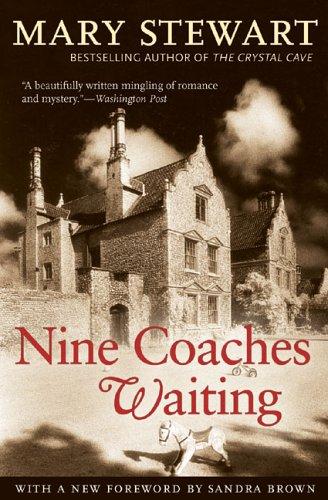
Nine Coaches Waiting
Mary Stewart · 1958
Setting Château Valmy in the French Alps
Closest Rebecca connection A young orphan enters a wealthy household, falls under its glamour, and senses danger behind beautiful manners
Main difference Romantic suspense with a more capable heroine, a child to protect, and a clearer external plot
Best for Readers who want classic romantic suspense, an intelligent governess, and danger in a glamorous continental setting.
Know before you start A child faces sustained danger, and the plot includes attempted murder, class prejudice, and period attitudes toward gender and disability.
Linda Martin accepts a position as governess to nine-year-old Philippe de Valmy, heir to a magnificent Alpine estate. She hides her French birth and fluency because the family specifically requested an English governess. That small deception makes Linda both observant and vulnerable. She understands conversations others believe are private, but revealing why she understands them might cost her the job and home she badly needs.
Mary Stewart shares du Maurier's eye for the emotional effect of wealth. Château Valmy is not merely picturesque. Its scale and confidence make Linda aware of how little authority she possesses within it. The family is charming enough to complicate suspicion, and romance increases rather than removes the danger because attraction cannot be separated from the household Linda may need to resist.
Linda, however, is far less passive than the second Mrs. de Winter. Her orphaned childhood has taught her practical independence, and her loyalty to Philippe gives her a purpose outside romance. Once the threat sharpens, the novel becomes a race to protect a child rather than an inward study of marital insecurity. The plotting and some gender assumptions show their age, but the book remains unusually brisk. It captures the pleasure of a beautiful European estate without ever allowing beauty to become proof of safety.
8
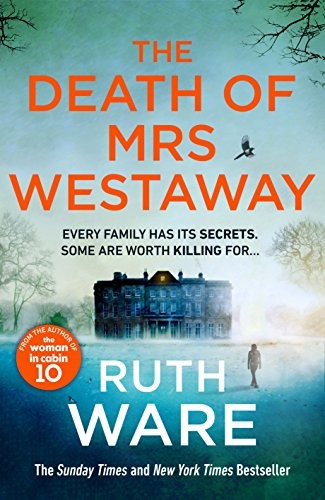
The Death of Mrs. Westaway
Ruth Ware · 2018
Setting Brighton and a decaying Cornish country estate
Closest Rebecca connection A poor, orphaned young woman enters a hostile old house where money, identity, and a formidable housekeeper control her position
Main difference An inheritance puzzle with no central romance and a faster, more conventional thriller structure
Best for Readers who want old-fashioned Gothic atmosphere delivered with the pace and clue structure of a modern psychological thriller.
Know before you start The story includes predatory debt collection, family abuse, confinement, murder, and discussion of suicide.
Harriet "Hal" Westaway reads tarot cards on Brighton pier and is running out of ways to manage her debts. A solicitor's letter announces that she has inherited money from a grandmother she does not recognize. Hal quickly concludes that the letter was intended for someone else. She also knows that the cold-reading skills she uses professionally might allow her to appear convincing long enough to claim part of the estate.
The deception brings her to a funeral and a Cornish house whose damp, neglected rooms seem designed to expose an impostor. Mrs. Warren, the severe housekeeper, protects the household's routines without making Hal feel welcome inside them. Photographs, wills, old bedrooms, and conflicting family recollections gradually turn an apparent clerical error into a question about who Hal is and why the wrong name reached the right address.
Ruth Ware handles Gothic props with evident affection, but she organizes them around an explicit mystery. Hal knows she is lying, actively searches for evidence, and has a practical reason to endure the family's suspicions. The result lacks the erotic and marital unease that makes Rebecca so disorienting. It offers instead a satisfying variation on the poor outsider at the rich family's table. The house tells Hal she does not belong; the mystery asks whether that judgment is itself one more family lie.
7
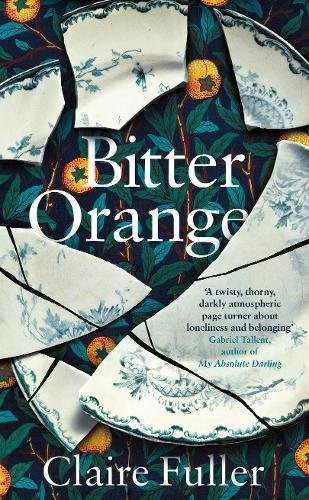
Bitter Orange
Claire Fuller · 2018
Setting Lyntons, a dilapidated English country house, during the summer of 1969
Closest Rebecca connection A lonely outsider becomes obsessed with a more glamorous woman while a great house distorts intimacy and memory
Main difference Literary psychological suspense centered on friendship, voyeurism, and self-invention rather than marriage
Best for Readers who prefer literary atmosphere, morally compromised narrators, and obsession more than conventional thriller twists.
Know before you start The novel includes voyeurism, manipulation, heavy drinking, sexual material, violence, and animal harm.
Frances Jellico arrives at Lyntons after years spent caring for her mother. She has been hired to survey the ruined estate's garden architecture while its absent owner decides what can be preserved. In the rooms below her live Cara and Peter, a seductive, apparently carefree couple who invite Frances into dinners, drinking, and stories that make her former life feel painfully small.
A hole beneath Frances's floorboards allows her to watch the rooms below. The detail gives the novel its method: Frances is always close to intimacy without being certain she participates in it. Cara's stories are vivid and changeable, Peter's position at the estate is less clear than it first appears, and Frances tells the summer from much later in life. The reader must judge not only which memories are true but what loneliness has done to the person arranging them.
Claire Fuller reproduces Rebecca's fascination with the woman who seems to know how to inhabit the world without apology. Cara is not a dead predecessor, but Frances turns her into an ideal and a threat with similar force. The novel is slow, humid, and deliberately uncomfortable. Readers looking for a neat murder puzzle may find its revelations muted. Readers interested in desire, class performance, and the stories people invent to enter someone else's life will find Lyntons difficult to leave.
6
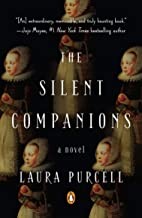
The Silent Companions
Laura Purcell · 2017
Setting The Bridge, a crumbling English estate, primarily in 1865
Closest Rebecca connection A newly arrived woman confronts a hostile household, her husband's secrets, and a house that refuses to accept her version of events
Main difference Full supernatural horror with grotesque wooden figures and a far more explicit body count
Best for Readers who want Rebecca's unwelcome-woman premise turned into a genuinely frightening historical ghost story.
Know before you start Expect pregnancy peril, infant and child death, institutional abuse, fire, blood, and graphic supernatural violence.
Newly widowed and pregnant, Elsie Bainbridge travels to her late husband's family estate for his funeral. The Bridge offers none of the comfort its name promises. The servants resent her, the neighboring village distrusts the house, and Rupert died before Elsie could understand the family into which she married. In a locked room she discovers a painted wooden figure—a "silent companion"—that resembles a living person with disturbing precision.
The figures are unnerving because they imitate domestic presence. A companion can appear at the edge of a room without footsteps, then seem closer when no one admits moving it. An old diary reveals that the estate's hostility predates Elsie, while a later institutional frame asks whether her account will ever be believed. Like du Maurier's narrator, Elsie discovers that the house already possesses a story for her. Unlike the narrator, she must defend herself against something that may physically move through it.
Laura Purcell exchanges psychological suggestion for escalating horror. The Gothic question is not whether a marriage concealed danger—it plainly did—but how much agency belongs to the house, the objects, and the damaged people interpreting them. The multiple timelines occasionally slow one another, and the suffering can become relentless. Still, few novels make household decoration feel so predatory. Manderley watches through servants and portraits; The Bridge manufactures eyes of its own.
5

Mexican Gothic
Silvia Moreno-Garcia · 2020
Setting High Place, an isolated mansion in 1950s Mexico
Closest Rebecca connection A young woman enters an English family's remote estate and investigates what an unequal marriage is doing to another woman
Main difference Colonial body horror with a confident heroine and an unmistakably supernatural explanation
Best for Readers who want lush atmosphere, a charismatic heroine, and Gothic suspense that develops into imaginative body horror.
Know before you start The story includes eugenics, incest, sexual harassment and assault, racism, colonial exploitation, illness, and graphic body horror.
Noemí Taboada receives a frantic letter from her newly married cousin Catalina, who claims that her husband and his family are poisoning her. Noemí travels from Mexico City to High Place, the Doyles' decaying mansion near an old silver mine. The English family treats her fashion, independence, and skepticism as frivolity. They also control Catalina's medical care, correspondence, and access to anyone outside the house.
Silvia Moreno-Garcia reverses the position of du Maurier's heroine. Noemí is not a shy bride hoping to be accepted. She is an investigator whose social confidence helps her detect how the Doyles use manners as a border. Yet High Place attacks the certainty she brings with her. Dreams, illness, family history, and the damp house begin to occupy the same mental space, making escape difficult even before the family openly resists it.
The novel also makes the English country house foreign. Its transplanted architecture and decaying mine embody extraction, racial hierarchy, and a family's determination to reproduce itself without change. The eventual explanation is extravagant and much more physical than anything in Rebecca. Readers who prefer permanent ambiguity may find the reveal too complete. It earns fifth place because the excess has a purpose: the house is not merely haunted by colonial appetite. It has made that appetite biological.
4
The Thirteenth Tale
Diane Setterfield · 2006
Setting Vida Winter's Yorkshire home and the ruined Angelfield estate
Closest Rebecca connection A bookish outsider reconstructs the truth about a great house, an unknowable woman, and identities preserved through storytelling
Main difference A self-conscious tribute to the Gothic canon built around biography, twins, and family history rather than romance
Best for Readers who love books about books, buried family histories, unreliable testimony, and affectionate engagement with classic Gothic fiction.
Know before you start The novel includes incest, child abuse and neglect, self-harm, fire, violence, and disturbing treatment of mental illness.
Margaret Lea works in her father's antiquarian bookshop and writes occasional biographies of people safely contained by the past. Famous novelist Vida Winter invites Margaret to write her life story before she dies. The offer is suspicious because Vida has spent decades giving interviewers different invented biographies. She now promises the truth, but truth arrives as a long tale about Angelfield, a ruined house, a destructive family, and twin girls whose identities resist separation.
The arrangement gives The Thirteenth Tale two mysteries. Margaret must determine what happened at Angelfield and why Vida has selected her to hear it. Books do not merely decorate the novel. Margaret uses the Gothic fiction she knows to interpret people who have already converted their lives into narrative. The pleasure comes from recognizing Jane Eyre, The Woman in White, and Rebecca while noticing how Vida uses the reader's familiarity as camouflage.
Diane Setterfield writes in a lush, deliberately old-fashioned register. The revelations are engineered for emotional symmetry, and the accumulation of twins, fires, forbidden rooms, damaged children, and disputed identities can feel less like realism than a Gothic cabinet filled to capacity. That abundance is either the novel's weakness or its invitation. It ranks fourth because it understands a crucial feature of Rebecca: the dead do not control the living by facts alone. They control them through the best available story.
3

The Hacienda
Isabel Cañas · 2022
Setting Hacienda San Isidro after the Mexican War of Independence
Closest Rebecca connection A financially vulnerable woman marries into an estate where the first wife's death and her husband's secrets make the house dangerous
Main difference An overt haunting, dual viewpoints, and a critique of colonial and racial power in newly independent Mexico
Best for Readers who want the closest historical-supernatural variation on Rebecca and welcome romance alongside the haunting.
Know before you start The novel includes murder, possession, blood, colonial and racial violence, domestic abuse, and religious conflict.
After her family's ruin during the war, Beatriz accepts a marriage proposal from Don Rodolfo Solórzano. Security matters more than love. Hacienda San Isidro appears to offer the home and status she has lost, despite rumors about Rodolfo's first wife's death. Once he returns to the capital, Beatriz discovers that the estate's servants avoid the house, her sister-in-law resists every change, and the darkness inside San Isidro behaves like intention rather than atmosphere.
Beatriz turns to Andrés, a priest whose knowledge extends beyond approved Catholic ritual. Their viewpoints reveal different forms of precarity. Beatriz possesses the title of mistress without the household's loyalty; Andrés holds spiritual authority that becomes dangerous when it exposes the abilities he conceals. The haunting cannot be separated from land, family legitimacy, caste, or the violence through which wealth survived political change.
Isabel Cañas begins near Rebecca's plot and then allows the house to speak more literally. That choice creates striking scenes and a more direct romance, but it reduces the uncertainty du Maurier protects. The prose occasionally announces danger so insistently that dread has little room to develop quietly. The novel ranks third because it performs a meaningful relocation. San Isidro is not Manderley with Mexican wallpaper. Its history changes who is permitted to own a house, whom the household will recognize, and what a marriage can repair.
2
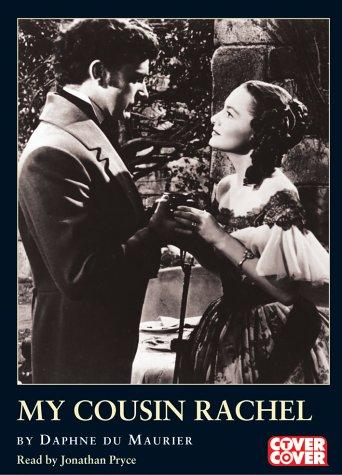
My Cousin Rachel
Daphne du Maurier · 1951
Setting A country estate on the Cornish coast
Closest Rebecca connection Sexual obsession, a great house, a dead spouse, and permanent uncertainty about whether a fascinating woman is victim or murderer
Main difference A young male narrator judges an older widow, reversing the gender and power arrangement of Rebecca
Best for Readers who value Rebecca's psychological uncertainty above its ghostly atmosphere and do not need every suspicion resolved.
Know before you start The novel includes misogyny, obsessive behavior, coercion, suspected poisoning, pregnancy loss, and a deliberately unresolved moral judgment.
Philip Ashley has been raised by his older cousin Ambrose in an almost entirely male household. While traveling in Italy, Ambrose marries their widowed cousin Rachel. His letters gradually change from happiness to fear, then stop with his death. Philip expects to hate the woman he suspects of destroying his guardian. When Rachel arrives in Cornwall, hatred becomes fascination before he has learned enough to trust either response.
The brilliance of the novel lies in the limit of Philip's viewpoint. His ignorance about women does not make him neutral; it makes him dangerously certain. Rachel can appear generous, manipulative, warm, extravagant, persecuted, or calculating depending on which fact Philip has just learned and what he wants from her. Evidence of poisoning exists beside plausible illness. Financial concern exists beside male panic about a woman controlling property. Desire turns every observation into a verdict before the case is complete.
Du Maurier returns to the emotional territory of Rebecca without repeating its arrangement. Rachel occupies the place of alluring woman and suspected threat, while Philip combines the insecurity of the unnamed narrator with Maxim's entitlement to judge. The book is less dominated by its house than Rebecca, and its pace is measured. It ranks second because no external imitation can reproduce du Maurier's particular ambiguity quite so well. The final question is not only what Rachel did. It is what Philip's need to decide allowed him to do.
1

The Little Stranger
Sarah Waters · 2009
Setting Hundreds Hall in rural Warwickshire, primarily in 1948
Closest Rebecca connection An unnamed first-person narrator becomes consumed by a declining estate while class desire and possible haunting corrupt every relationship
Main difference Postwar social change replaces the dead first wife, and the narrator is a middle-class male doctor attached to the family from outside
Best for Readers who want literary Gothic suspense, class analysis, an unreliable narrator, and a haunting that remains debatable after the final page.
Know before you start The novel includes suicide, mental illness, war trauma, animal harm, fire, class resentment, and a deliberately slow build.
Dr. Faraday first sees Hundreds Hall as a child during an Edwardian fête. His mother once worked there as a maid, and the house represents a world his parents' sacrifices were meant to help him approach. Thirty years later, he returns as a country doctor. The Ayres family remains at Hundreds, but the estate is decaying, money is disappearing, and the postwar order has made its old scale impossible to maintain.
Faraday treats the family as strange events begin to accumulate: marks appear where they should not, a bell rings in an empty room, fire and injury acquire explanations that never quite account for their emotional timing. He offers medical and psychological interpretations while becoming increasingly involved with Caroline Ayres. His professional authority makes him seem reliable. His lifelong hunger for the house makes that reliability impossible to take for granted.
Sarah Waters understands that a country house is a class relationship made architectural. Hundreds is crushing the Ayres family, yet Faraday experiences its decline as a personal insult. His concern for Caroline cannot be cleanly separated from his desire to secure a place in the house that once excluded his mother. The novel never forces a choice between ghost story, poltergeist story, family collapse, and the consequences of one man's repressed appetite. Every explanation leaves a remainder.
The pace is slow enough that readers expecting a conventional thriller may wonder when the plot will begin. It has already begun in Faraday's descriptions: what he notices, excuses, covets, and fails to hear. The Little Stranger ranks first because it does not copy Rebecca, Maxim, or Manderley. It identifies the deeper design. A narrator tells us that a house is destroying people while quietly revealing how much he wants the house to choose him instead.
Which Gothic Suspense Novel Should You Read First?
Choose The Little Stranger if Manderley was the real main character for you and you enjoy ambiguity, class tension, and slow psychological pressure. Choose My Cousin Rachel if the most compelling feature of Rebecca was never knowing whether a captivating woman had been loved, misjudged, or feared into villainy.
For the closest plot resemblance, begin with The Winters or The Hacienda. The Winters is the faster modern domestic thriller; The Hacienda supplies the richer historical and supernatural transformation. Choose Mexican Gothic for body horror and a bold heroine, or The Silent Companions when you want the house to be genuinely terrifying.
Readers who prefer literary obsession should start with Bitter Orange. Readers who want an accessible mystery should choose The Death of Mrs. Westaway. Nine Coaches Waiting offers the classic romantic-suspense route, while The Thirteenth Tale is the best choice for anyone who wants an entire library of Gothic references inside one family secret.
The weakest imitation of Rebecca supplies an older husband, a grand house, and a dead first wife. The strongest asks why the newcomer cannot trust her place among them. Money disguises gratitude as love, class makes household rules appear natural, and memory keeps an absent woman socially powerful.
The Little Stranger ranks first because Waters removes the glamorous predecessor and finds the machinery still working. Hundreds Hall represents the arrival and refinement Dr. Faraday's family was denied. The house may be haunted, but his desire is certain. The most dangerous Gothic house is the one someone still longs to enter.