Netflix's 2025 adaptation of Dept. Q relocates Jussi Adler-Olsen's Danish cold-case series to Edinburgh without losing its defining arrangement. Detective Carl Morck returns to work after a shooting, hostile to sympathy and barely suited to ordinary colleagues. His superiors give him neglected files and a basement. The punishment becomes a unit, and the unit becomes useful because damaged people notice what a functioning institution has learned not to see.
The best books to read after Dept. Q treat a cold case as more than an old puzzle. Time changes evidence, but it also changes power. A witness who was frightened twenty years ago may now be angry. A suspect may have become respectable. A detective reopens the file with knowledge the original investigators lacked and with biases of their own. The question is not simply what happened. It is why the official answer remained convenient for so long.
This ranking favors dark atmosphere, complicated investigators, institutional failure, and cases in which the past remains active. Several books begin series; others are standalones built around one buried crime. Some feature full police teams, while private investigators and forensic specialists fill the gaps elsewhere. All ten understand the peculiar emotional contract of cold-case fiction: solving the crime cannot restore the lost years, but leaving it unsolved keeps taking them.
10
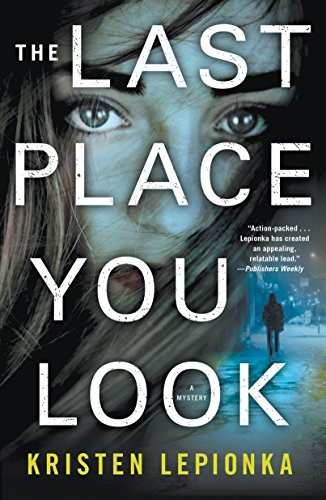
The Last Place You Look
Kristen Lepionka · 2017
Cold case A missing teenage girl connected to a double murder and a man facing execution
Closest Dept. Q connection A difficult investigator takes seriously the discarded possibility that the official case was built wrong
Main difference A private-eye novel with one principal investigator rather than a basement police unit
Best for Readers who want a contemporary queer private investigator, family grief, small-city corruption, and a strong series opener.
Know before you start The book includes alcoholism, bereavement, execution, homophobia, sexual violence, murder, child abuse, and graphic danger.
Ohio private investigator Roxane Weary is grieving her police-officer father and drinking hard enough to turn routine work into risk. She is hired by the sister of Brad Stockton, a man approaching execution for murdering his girlfriend's parents. Brad insists that his girlfriend, Sarah, survived. A recent sighting suggests he may be right, which would transform a solved capital case into a disappearance someone has spent years keeping closed.
Kristen Lepionka gives Roxane the abrasive persistence that makes Carl Morck compelling without treating damage as mystical detective talent. Her grief creates blind spots as often as insight. She presses witnesses whom respectable investigators discounted and follows social connections across class, sexuality, and local authority. The case becomes darker because the town's version of normal life has absorbed the disappearance.
The plot carries more private-eye velocity and romantic complication than Dept. Q. Some developments depend on Roxane taking risks alone when cooperation would be safer. It ranks tenth because the institutional ensemble is small. Yet the novel is an excellent bridge for viewers who liked the series' combination of wounded investigator, buried official error, and the suspicion that a person classified as lost may have been deliberately made invisible.
9
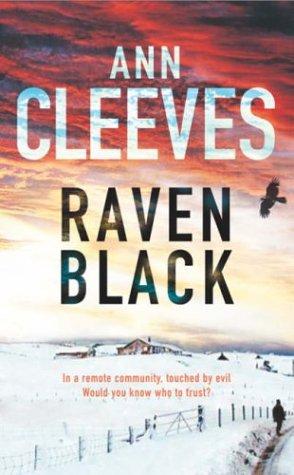
Raven Black
Ann Cleeves · 2006
Cold-case pressure A present murder revives suspicion around an earlier disappearance in a tightly connected island community
Closest Dept. Q connection A patient detective works among people who have already decided which outsider must be guilty
Main difference A Shetland community mystery whose central murder is recent
Best for Readers who want an accessible series opener, wintry island atmosphere, community secrets, and a humane lead detective.
Know before you start The story includes child murder, a missing child, sexual abuse, prejudice toward an intellectually disabled man, and family trauma.
Teenager Catherine Ross is found dead in the snow after New Year's Eve. Suspicion falls quickly on Magnus Tait, an isolated older man already associated in local memory with the unresolved disappearance of a child years earlier. Inspector Jimmy Perez investigates while the islands' long relationships make every interview both evidentiary and personal. The community wants the comfort of repetition: one strange man, two girls, one explanation.
Ann Cleeves uses Shetland's openness as a form of enclosure. Everyone can see across the landscape, but social knowledge arrives filtered through family history and reputation. Perez's calm allows him to hear where certainty has replaced observation. The earlier case matters not simply because it may connect to Catherine's death, but because it established the story residents are prepared to believe now.
The novel is less bleakly comic than Dept. Q, and Perez is far more socially functional than Carl. Its contemporary case occupies more space than the cold one. It ranks ninth because it stretches the premise, but it earns its place through atmosphere and procedural patience. Both stories show police work beginning where a community's preferred suspect has made further thought seem unnecessary.
8
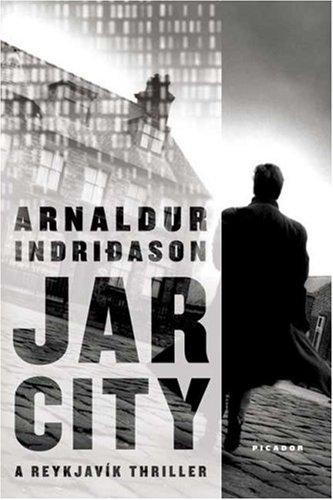
Jar City
Arnaldur Indriðason · 2000 in Icelandic; 2004 in English
Cold case A present-day killing exposes an unpunished sexual assault and the family consequences that followed
Closest Dept. Q connection A solitary, difficult detective digs beneath an apparently minor file that earlier authorities failed to value
Main difference A compact Icelandic police procedural involving genetics and family history
Best for Readers who want Nordic noir, a short police procedural, damaged families, and an investigation rooted in social indifference.
Know before you start The novel includes rape, child death, genetic illness, suicide, family estrangement, and grim descriptions of crime scenes.
Detective Erlendur investigates the murder of an elderly man in Reykjavík. The scene contains a cryptic message, and the victim's past leads toward a rape allegation that received little meaningful response. What looked like a shabby, isolated death expands through medical records, family connections, and Iceland's unusually legible genealogical history.
Arnaldur Indriðason makes institutional neglect cumulative. The original assault was not a puzzle beyond police capacity; it was a crime authorities and society were willing to minimize. Years later, technology can expose biological relationships, but a database cannot supply moral understanding. Erlendur's own estranged family life sharpens his attention to the ways one man's harm can pass into lives he never publicly acknowledged.
The mystery is concise and severe, with little of the workplace comedy that gives Dept. Q relief. Its genetics plot may feel tied to the moment when such databases seemed newly uncanny. It ranks eighth because the past crime is uncovered through a current homicide rather than formally reopened by a cold-case squad. The emotional logic is a strong match: a neglected file becomes the foundation of later violence because an institution treated closure as more important than consequence.
7
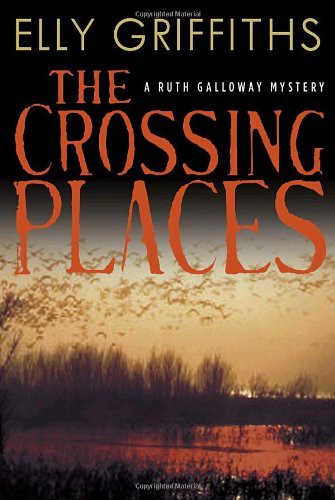
The Crossing Places
Elly Griffiths · 2009
Cold case A child missing for ten years, revisited after bones are discovered on the Norfolk saltmarsh
Closest Dept. Q connection An unconventional specialist gives a stalled investigation a new method and an awkward new partnership
Main difference An archaeological mystery with gentler series rhythms and a strong landscape focus
Best for Readers who want forensic archaeology, coastal atmosphere, an ongoing investigative partnership, and moderate rather than relentless darkness.
Know before you start The story includes child abduction, child death, pregnancy, stalking, murder, pagan imagery, and complicated sexual relationships.
Forensic archaeologist Ruth Galloway lives near the Norfolk coast, comfortable with bones and less comfortable with most social expectations. When human remains are found in the saltmarsh, Detective Chief Inspector Harry Nelson hopes they belong to Lucy Downey, a girl missing for a decade. The bones prove ancient, but Ruth's expertise becomes relevant to letters sent during the original investigation and to a new disappearance.
Elly Griffiths builds the series around productive mismatch. Nelson wants usable answers; Ruth understands that context determines what remains can say. Archaeology becomes an ideal cold-case discipline because it assumes disturbance, partial survival, and the need to reconstruct behavior from what time did not destroy. The marsh itself stores bodies and erases routes, making landscape an accomplice without supernatural explanation.
The book is warmer and more domestic than Dept. Q, and a personal relationship between investigators becomes central to the series. Some readers will identify the solution early. It ranks seventh because its darkness is moderated by recurring-character appeal. Still, viewers who enjoyed watching Akram and Carl develop an investigative language will appreciate a partnership founded on expertise neither person knows how to request politely.
6
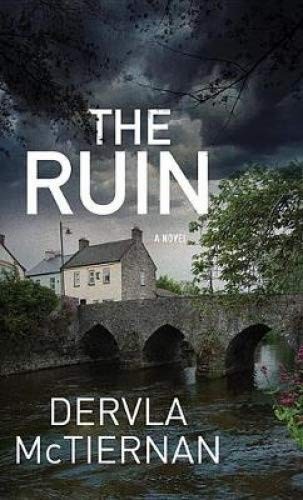
The Ruin
Dervla McTiernan · 2018
Cold case The suspicious death of a young man reconnects Detective Cormac Reilly to two children he found beside their dead mother twenty years earlier
Closest Dept. Q connection A detective is professionally sidelined, handed old work, and forced to question why colleagues resist a neglected case
Main difference An Irish procedural with a more conventional lead and a strong focus on surviving siblings
Best for Readers who want Irish crime fiction, police politics, family survival, and the start of a procedural series.
Know before you start The book includes child neglect, domestic abuse, pregnancy danger, suicide assumptions, murder, institutional corruption, and grief.
As a young officer, Cormac Reilly entered a decaying house and found a teenage girl, her small brother, and their mother dead upstairs. Twenty years later the brother, Jack, is found in a river, and police quickly classify his death as suicide. Jack's pregnant partner does not believe it. His sister returns from abroad, determined and defensive, while Cormac—recently transferred to Galway and given low-status cases—recognizes links no one else seems eager to explore.
Dervla McTiernan makes reassignment politically meaningful. Cormac is experienced, but his new colleagues control access, information, and the informal reputation that determines whether his questions seem diligent or disloyal. The old case matters because children who survived it entered adulthood carrying institutions' decisions about what deserved investigation.
The novel sometimes reveals corruption through familiar procedural shapes, and Cormac is less volatile than Carl Morck. It ranks sixth because its team dynamic develops more slowly. The core match is nevertheless precise: an investigator put out of the way discovers that neglected files are neglected by particular people for particular reasons. Bureaucratic contempt becomes an opening the detective can use.
5

In the Woods
Tana French · 2007
Cold case A detective investigating a child's murder secretly carries the unresolved disappearance of his own two childhood friends
Closest Dept. Q connection Trauma compromises a detective's return to a case whose geography and silences are already inside him
Main difference A psychologically immersive literary procedural that refuses complete consolation
Best for Readers who want literary crime, an intense detective partnership, unreliable self-understanding, and a haunting Irish setting.
Know before you start The story includes child murder, missing children, sexual manipulation, family abuse, severe trauma, and an intentionally unresolved thread.
In 1984, three children entered woods near Dublin; only Adam Ryan emerged, bloodied and unable to explain what happened to the others. Two decades later, using his middle name and concealing his past from most colleagues, Detective Rob Ryan investigates the murder of twelve-year-old Katy Devlin at an archaeological site beside the same woods. His partner Cassie Maddox knows his identity and helps protect a professional boundary that becomes harder to defend.
Tana French makes the detective's damage an obstacle rather than a glamorous credential. Rob wants the new case to restore narrative to the old one, but desire affects his interviews, his partnership, and his judgment. The procedural detail is convincing because the emotional perspective is not. Readers can see his need changing what he believes even when he cannot.
The unresolved elements have frustrated readers since publication, and that discomfort is central rather than accidental. The novel is longer and more interior than the Netflix series. It ranks fifth because its team is essentially a partnership and because closure is deliberately uneven. For viewers drawn to Carl's return after a shooting, it offers the most searching account here of what happens when a detective mistakes proximity to old trauma for readiness to solve it.
4
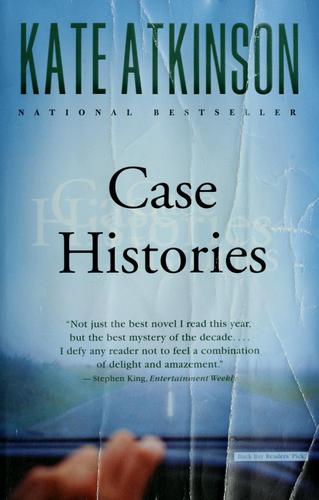
Case Histories
Kate Atkinson · 2004
Cold cases A vanished child, the apparently random murder of a young woman, and an old domestic killing
Closest Dept. Q connection Discarded cases gather around an irritable investigator until separate lives begin touching
Main difference A formally playful literary mystery with coincidence, humor, and multiple family narratives
Best for Readers who want excellent prose, multiple timelines, family secrets, dark humor, and a detective series that behaves like literary fiction.
Know before you start The novel includes child disappearance, child murder, domestic violence, bereavement, sexual abuse, and sudden acts of violence.
Private investigator Jackson Brodie receives three old cases. Sisters want to know what happened to a child who disappeared from a garden decades earlier. A grieving father cannot release the public murder of his daughter. Another client is connected to a killing inside a deeply troubled family. Jackson begins with paperwork and testimony, but Kate Atkinson allows the cases to overlap through memory, chance, and the stubborn afterlife of family roles.
Atkinson is less interested in presenting a perfectly fair puzzle than in showing how violence reorganizes survivors. Each client has lived for years beside an absence that other people regard as finished. Jackson's own history makes him receptive to grief while also giving him familiar methods of avoidance. The novel's dark comedy comes from the friction between catastrophic memory and the ordinary irritations that continue around it.
The connections can feel novelistically neat, and readers expecting a standard police procedural may find the shifting viewpoints initially disorienting. It ranks fourth because its investigative process is more associative than forensic. Yet it captures the basement spirit of Dept. Q beautifully: unwanted stories accumulate, a difficult investigator becomes responsible for them, and solving one case alters the meaning of the others.
3
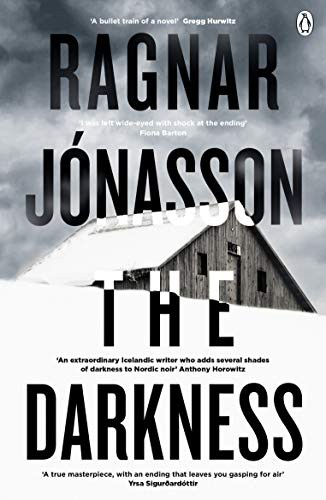
The Darkness
Ragnar Jónasson
First published in English 2018
Cold case The death of a young Russian asylum seeker, dismissed as suicide a year earlier
Closest Dept. Q connection An unwanted detective is given one old file before forced retirement and finds institutional resistance inside the case
Main difference A compressed, extremely bleak Icelandic novel centered on an older woman detective
Best for Readers who want Nordic noir, an older female detective, a short timeline, institutional sexism, and an ending without protection.
Know before you start The book includes refugee exploitation, suicide, child loss, domestic trauma, sexism, isolation, murder, and a devastating ending.
Detective Inspector Hulda Hermannsdóttir is told that a younger man will take her position and that she should leave early. After a career shaped by sexism and isolation, she negotiates for two final weeks and chooses the case of a Russian woman whose body washed ashore. The original inquiry was cursory. Hulda discovers another missing woman and colleagues more concerned with her departure than with what their earlier work failed to see.
Ragnar Jónasson uses the retirement clock as both plot device and institutional verdict. Hulda has less time precisely because the organization has decided she no longer represents its future. Her empathy for a disregarded migrant is inseparable from her recognition of how professional systems decide whose account will be treated as inconvenient. She is perceptive, but resentment and loneliness also shape her choices.
The novel is the first published in a trilogy told in reverse chronological order, a structure worth knowing before continuing. Its conclusion is famously uncompromising. It ranks third because the cast never becomes the odd, sustaining team that defines Dept. Q. As a story about a detective and victim jointly devalued by the same institution, however, it is one of the darkest and most exact matches available.
2
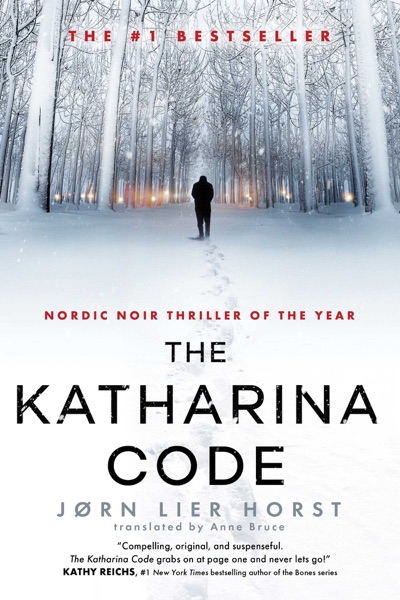
The Katharina Code
Jørn Lier Horst
First published in English 2018
Cold case The disappearance of Katharina Haugen, whose husband found only an encoded message when she vanished twenty-four years earlier
Closest Dept. Q connection A veteran detective reopens a long-dormant file through patient interviewing, team friction, and a second case that changes the first
Main difference A quieter Norwegian procedural led by a notably stable and methodical detective
Best for Readers who want realistic investigative strategy, a decades-old disappearance, moral restraint, and understated Nordic atmosphere.
Know before you start The story includes abduction, murder, long-term family grief, deception of a suspect, and discussion of crimes against young women.
Every year William Wisting reviews the Katharina Haugen file and visits her husband, Martin. The case's details have become ritual: belongings left behind, no body, and a page of numbers no one has decoded. This year Martin disappears before the anniversary visit. Meanwhile, a specialized cold-case investigator arrives with new evidence in another missing-person case and a plan that requires Wisting to use his long relationship with Martin.
Jørn Lier Horst, a former police investigator, understands that cold-case work often advances through changed context rather than miraculous evidence. A familiar statement sounds different beside another file. A relationship becomes an investigative tool, raising ethical questions precisely because it is genuine. The quietness is tense: Wisting knows that pushing too hard may destroy the access on which the operation depends.
The novel is less savage and more professionally orderly than Dept. Q. Wisting's family life complicates him without making him dysfunctional, and the Norwegian series has earlier volumes not all translated in the same sequence. It ranks second because the actual cold-case method is superb. Viewers who liked watching old paper become a living operation will find few closer procedural matches.
1
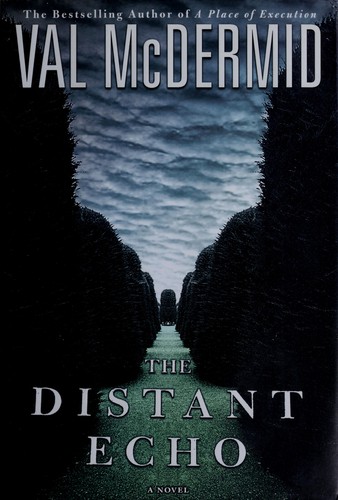
The Distant Echo
Val McDermid · 2003
Cold case The 1978 murder of Rosie Duff, discovered by four students who become suspects, then reopened twenty-five years later
Closest Dept. Q connection A failed original investigation poisons lives for decades before new evidence gives police and suspects another chance
Main difference A standalone Scottish novel that spends substantial time with the men living under suspicion
Best for Readers who want the strongest standalone match, Scottish atmosphere, multiple decades, forensic change, and consequences beyond the solution.
Know before you start The book includes murder, homophobia, sexual material, addiction, false suspicion, stalking, family breakdown, and graphic violence.
Four students in St Andrews find a dying woman in the snow and attempt to help her. Their presence, intoxication, and inconsistencies make them natural suspects in Rosie Duff's murder. With insufficient evidence to charge them and no alternative solution, the case remains open in the worst possible way: public suspicion supplies a verdict the law never reached. Twenty-five years later, a cold-case review uses new forensic possibilities, and the former students begin dying.
Val McDermid gives equal weight to investigation and contamination. The original case enters marriages, careers, friendships, and family stories. When police reopen the file, they are not returning to a preserved scene; they are entering lives formed in response to accusation. New technology promises objectivity, but evidence still has to be collected and interpreted by people inheriting the old theory.
The novel is long, and its two-part structure delays the formal cold-case phase. Some characterization is intentionally abrasive. It ranks first because it provides the fullest account of what an unsolved murder does while sitting in a file. Scottish setting, procedural history, damaged suspects, and institutional error combine into the ideal post-Dept. Q read. The past is not waiting downstairs. It has been living upstairs the entire time.
Which Dark Cold-Case Mystery Should You Read First?
Choose The Distant Echo for the best overall match: Scottish setting, a badly handled old murder, changing forensic methods, and people damaged by living under an unfinished accusation. Choose The Katharina Code when the procedural method itself interests you most. Its interviews, surveillance decisions, and ethical compromises are quiet but exceptionally tense.
Read The Darkness for the bleakest short option, Case Histories for literary play and multiple old files, or In the Woods for the deepest immersion in a detective's trauma. The Ruin is the strongest conventional series opener for readers who want police politics.
Choose The Crossing Places for a warmer long-running partnership, Jar City for compact Icelandic noir, Raven Black for a close island community, and The Last Place You Look for a modern private investigator whose personal life is almost as untidy as the case.
Cold-case fiction begins with an admission: the system had its chance. Evidence may have been unavailable, but attention may also have been withheld. Reopening a file means reopening the judgment that once declared a victim, witness, family, or possibility not worth additional time.
The Distant Echo ranks first because it refuses to isolate the crime from the years after it. Suspicion becomes biography, and an old investigative theory becomes one of the forces shaping present violence. Like Dept. Q, it understands that neglected cases do not remain still. They continue producing consequences until someone is willing to be inconvenienced by them.