Robert Harris's Conclave turns the election of a pope into an unusually elegant locked-room thriller. The doors of the Sistine Chapel close, the world's most connected men surrender their phones, and Cardinal Lomeli must manage an election in which every declaration of humility may conceal a campaign. The 2024 film adaptation preserved the novel's best tension: sacred ritual and ordinary political appetite occupying the same magnificent rooms.
The best books to read after Conclave understand that the Vatican is compelling not because faith disappears inside an institution, but because it does not. Belief, ambition, conscience, history, and bureaucracy become impossible to separate. A priest may pursue the truth while protecting the organization that buried it. A papal candidate may sincerely fear power while making every decision required to obtain it. Even a conspiracy becomes more interesting when its participants think they are defending something holy.
This ranking emphasizes institutional maneuvering, morally complicated clergy, and decisions whose private consequences become public doctrine. Some selections are direct Vatican thrillers. Others move into monasteries, historical Rome, or the life of a church investigator. The list favors novels in which Catholic power is a working system rather than decorative scenery—and in which the most consequential struggle takes place between obedience and judgment.
10
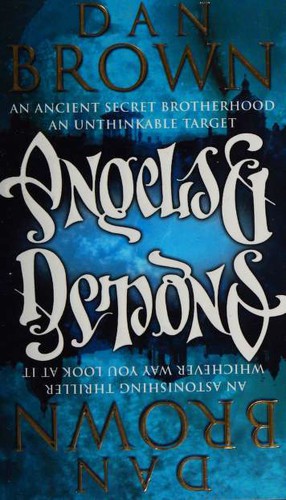
Angels & Demons
Dan Brown · 2000
Vatican pressure point A papal conclave is threatened while four leading candidates disappear
Closest Conclave connection Cardinals, sealed ballots, ancient rivalries, and the uncertainty created by a vacant papacy
Main difference A maximalist race against time built around puzzles, murder, and antimatter
Best for Readers who want the Vatican setting immediately, fast chapters, art-history riddles, and a large ticking-clock plot.
Know before you start Historical claims are freely dramatized, and the novel includes branded bodies, clerical murder, self-injury, explosions, and graphic violence.
Harvard symbologist Robert Langdon is called to Switzerland after a physicist is murdered and branded with an ambigram associated with the Illuminati. The investigation leads to Vatican City on the first night of a conclave. The preferiti—the cardinals thought most likely to be elected—have been kidnapped, a destructive device is hidden somewhere within the tiny state, and a public ritual becomes the stage for a private war between science and religion.
Dan Brown is less interested in committee politics than in converting the Vatican into an enormous puzzle box. Churches become clues, sculpture becomes direction, and archives become dangerous because knowledge has been physically stored behind guarded doors. The book's version of Catholic history is sensationalized, but its understanding of institutional theater is effective. A conclave creates suspense because no one outside can see the deliberation, while everyone outside must interpret smoke, bells, and appearances.
This ranks tenth because its characters largely serve the mechanism. Readers who loved the tact, doubt, and whispered coalition-building of Conclave may find Brown's villains broad and his revelations happily implausible. Yet the novel delivers the most literal follow-up to the film's setting. It asks what happens when an institution designed to withdraw from the world discovers that the whole world is watching the doors.
9
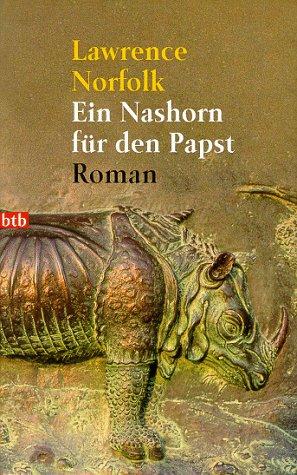
The Pope's Rhinoceros
Lawrence Norfolk · 1996
Vatican pressure point Renaissance Rome, where papal appetite turns theology, patronage, and diplomacy into commerce
Closest Conclave connection Sacred office surrounded by courtiers who translate personal desire into policy
Main difference A sprawling, baroque historical novel rather than a modern political thriller
Best for Readers who want intellectually extravagant historical fiction, corrupt Renaissance institutions, and Rome rendered at overwhelming scale.
Know before you start Expect dense prose, sexual material, religious satire, disease, cruelty, violence, and a structure that rewards patience.
In the early sixteenth century, a group of monks leaves a remote Baltic island and enters a Europe governed by trade, war, rumor, and papal ambition. Their journey becomes entangled with an extravagant plan to obtain a rhinoceros for Pope Leo X. Rome appears less as the stable center of Christianity than as a marketplace where relics, favors, art, bodies, and diplomatic symbols acquire prices.
Lawrence Norfolk writes history as accumulation. The novel crowds its pages with decaying landscapes, maritime schemes, classical echoes, grotesque comedy, and the physical labor required to satisfy a distant ruler's whim. That density makes its Vatican politics feel material. Power is not only a vote or a title; it is the ability to redirect ships, money, craftsmen, and lives toward a spectacle that may briefly improve one faction's position.
The book is demanding, digressive, and deliberately excessive. Its characters can disappear beneath the prose, and the papal court arrives after a long journey. It ranks ninth because it offers little of Conclave's clean procedural momentum. What it shares is a skepticism about the distance between holy symbolism and political use. A rhinoceros can become an argument, an alliance, and an offering, provided enough people agree to carry it.
8
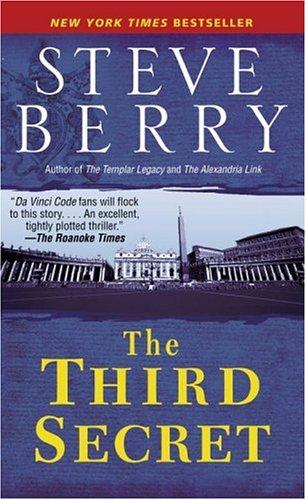
The Third Secret
Steve Berry · 2005
Vatican pressure point A dying pope privately reopens the disputed final secret of Fátima
Closest Conclave connection Succession anxiety, curial factions, and information that could influence the next papacy
Main difference A modern conspiracy thriller driven by prophecy and covert violence
Best for Readers who enjoy religious secrets, archive mysteries, short chapters, and Vatican intrigue with an international chase.
Know before you start The story includes suicide, assassination, clerical corruption, violence, and fictionalized treatment of Catholic apparitions and doctrine.
Papal secretary Colin Michener becomes alarmed when the pope begins making secret visits to the Vatican archives. The pontiff is preoccupied with the third secret associated with the apparitions at Fátima and with the possibility that the Church disclosed only part of its message. Around him, ambitious clerics read his failing health as an opening. What begins as pastoral concern becomes an investigation that crosses borders and exposes competing ideas about what the Church can survive.
Steve Berry's most useful connection to Conclave is his attention to timing. The same fact means something different when a pope is healthy than when he may die tonight. Every cardinal must consider the coming election without appearing to anticipate it. Private access to the pontiff becomes political capital, and an old document becomes dangerous less for what it proves than for who controls its interpretation.
The thriller's theology is arranged for reversals, and its antagonists are much less subtle than Harris's candidates. Action eventually replaces the slow leverage of office. It ranks eighth because prophecy makes the conflict external: there is a secret to recover and a conspiracy to defeat. Still, readers who want another story about a vulnerable papacy and the men already positioning themselves around the vacancy will find its machinery satisfying.
7
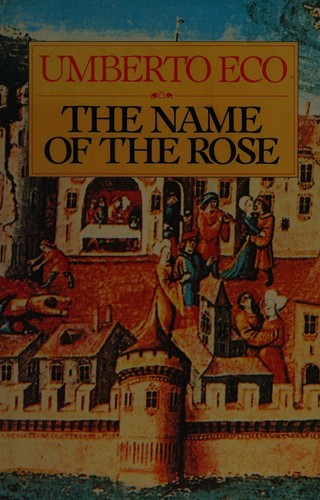
The Name of the Rose
Umberto Eco · 1980 in Italian; 1983 in English
Vatican pressure point A fourteenth-century abbey hosting a theological dispute with immense political consequences
Closest Conclave connection Learned clerics debate doctrine while personal rivalry and institutional survival govern the room
Main difference A medieval murder mystery saturated with semiotics, philosophy, and monastic history
Best for Readers who want an ambitious literary mystery, an extraordinary enclosed setting, and church politics conducted through ideas.
Know before you start Expect long philosophical passages, Latin phrases, religious persecution, torture, sexual material, fire, and multiple deaths.
In 1327, Franciscan friar William of Baskerville and the young novice Adso arrive at an Italian abbey where representatives of rival church factions are preparing to debate apostolic poverty. A monk has died under suspicious circumstances. More deaths follow, leading William into the abbey's labyrinthine library and into conflict with men who understand that control over reading can be a form of rule.
Umberto Eco makes argument physical. Questions about whether Christ owned property connect directly to the wealth and authority of the Church. A prohibited book threatens not through magic but through the possibility that an idea could weaken a system built on particular interpretations. William's rational inquiry therefore takes place inside an institution that values truth while carefully regulating the conditions under which truth may be sought.
The novel's intellectual digressions are not optional decoration. They are the terrain. Readers seeking the clean velocity of Conclave may find theological debates and catalogues of heresies slow, while the mystery's solution resists the perfect order detectives usually promise. It ranks seventh because its politics are medieval and dispersed. Yet no novel on this list better understands that men can debate abstractions with absolute sincerity while knowing that land, legitimacy, and lives depend on the wording.
6
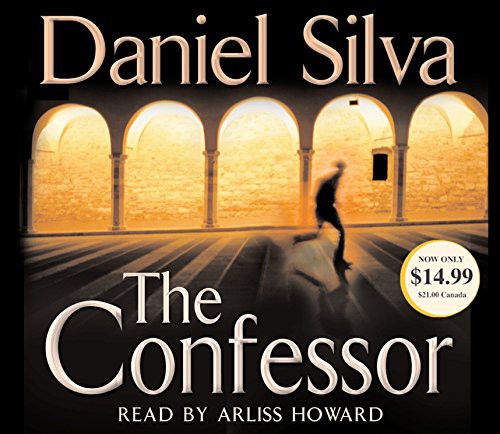
The Confessor
Daniel Silva · 2003
Vatican pressure point The Church's wartime history collides with a reforming pope and forces invested in silence
Closest Conclave connection A papacy divided between protecting the institution and confronting a compromising truth
Main difference An espionage thriller centered on Israeli operative and art restorer Gabriel Allon
Best for Readers who want polished European espionage, historical conspiracy, art, and a morally serious conflict over institutional memory.
Know before you start The novel includes Holocaust history, antisemitism, assassination, terrorism, torture, and substantial series backstory.
When a scholar researching Catholic conduct during the Holocaust is murdered, Gabriel Allon follows the evidence from Europe toward the Vatican. A newly installed pope is preparing to address the Church's past more openly, but disclosure threatens reputations and networks that have survived precisely because archives, loyalties, and violence kept the same story contained.
Daniel Silva excels at parallel institutions. Intelligence services and the Church both preserve secrets, depend on disciplined hierarchies, and justify concealment as a defense against larger dangers. Gabriel's work as an art restorer adds an appropriate metaphor without needing to announce it: the original image can be recovered, but every intervention changes what remains and exposes damage someone once chose to paint over.
The book belongs firmly to an ongoing spy series, although it can be read alone, and its historical claims should be approached as thriller material rather than neutral scholarship. The pursuit and assassination plot eventually outweigh internal Vatican procedure. It ranks sixth because its central institutional dilemma is exactly the one beneath Conclave: whether truth purifies an organization or merely gives its enemies a weapon. The pope's answer is never only personal.
5
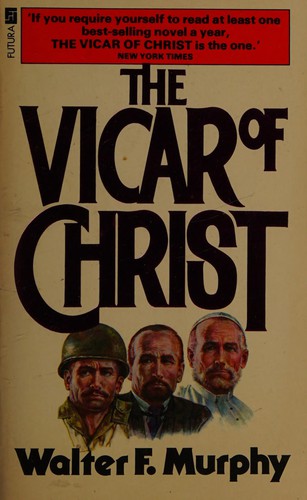
The Vicar of Christ
Walter F. Murphy · 1979
Vatican pressure point An American outsider unexpectedly becomes pope and must convert moral authority into political action
Closest Conclave connection The election is only the beginning; the office immediately tests the character supposedly chosen for it
Main difference A panoramic political novel spanning the military, the Supreme Court, and the papacy
Best for Readers who want a large-scale political life, institutional ethics, papal diplomacy, and an idealist tested by actual authority.
Know before you start The book includes warfare, bereavement, political violence, religious debate, and period attitudes that may feel dated.
Declan Walsh has already lived several public lives before the College of Cardinals considers him. He has been a decorated Marine officer, a legal scholar, and Chief Justice of the United States. After personal loss draws him toward religious life, his improbable path eventually leads to the papacy. The novel then asks whether a man accustomed to command and judgment can use spiritual authority without simplifying the world into orders and verdicts.
Walter F. Murphy is fascinated by institutions that claim a final word. The Court interprets a constitution; the military demands obedience; the papacy joins doctrine to a worldwide diplomatic presence. Walsh carries habits from each system into the next. His greatest strength—an unwillingness to treat responsibility as ceremony—also exposes the limits of individual virtue inside structures built to outlast individuals.
The novel is long, earnest, and willing to spend hundreds of pages before reaching Rome. Its geopolitical imagination belongs to the late Cold War, and readers wanting only conclave maneuvering will need to accept a much wider biography. It ranks fifth because it pursues the question Conclave wisely leaves beyond the final ballot: what happens when a compromise candidate wakes the next morning with no one above him and almost no decision that is merely his own?
4
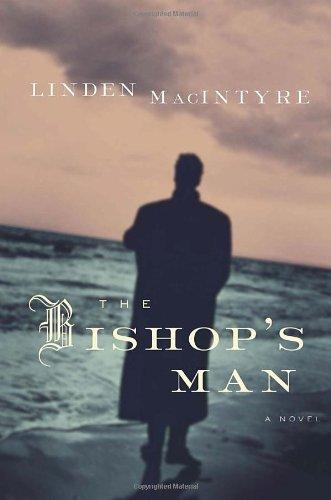
The Bishop's Man
Linden MacIntyre · 2009
Vatican pressure point A diocesan fixer is assigned to contain scandals caused by other priests
Closest Conclave connection Loyalty to the Church becomes inseparable from knowledge of what powerful men have hidden
Main difference An intimate Canadian novel about complicity, abuse, and conscience rather than papal succession
Best for Readers who valued the film's moral ambiguity more than its mystery and want serious literary fiction about institutional responsibility.
Know before you start The novel deals extensively with clerical sexual abuse, suicide, alcoholism, grief, secrecy, and institutional cover-ups.
Father Duncan MacAskill has spent years as the bishop's discreet troubleshooter. When a priest creates a problem, Duncan gathers facts, manages people, and helps move the danger away from public view. Sent back to a remote Nova Scotia parish, he encounters old relationships and a community whose memory makes professional compartmentalization impossible. The secrets he handled as assignments begin returning as moral claims.
Linden MacIntyre's great subject is the language by which decent people make accommodation sound like duty. Duncan is not a melodramatic conspirator. He is useful, intelligent, lonely, and practiced at accepting the bishop's definition of the immediate good. The novel examines how institutional harm persists through small acts performed by people who tell themselves they are preventing something worse.
There is little pageantry here, and Rome remains distant. The scale is a parish, a coastline, and one priest's damaged interior life. It ranks fourth because it strips Conclave's central tension of ceremony. What does obedience mean when the superior asking for it has mistaken reputation for the Church itself? Few novels show more clearly how hierarchy recruits conscience rather than simply defeating it.
3
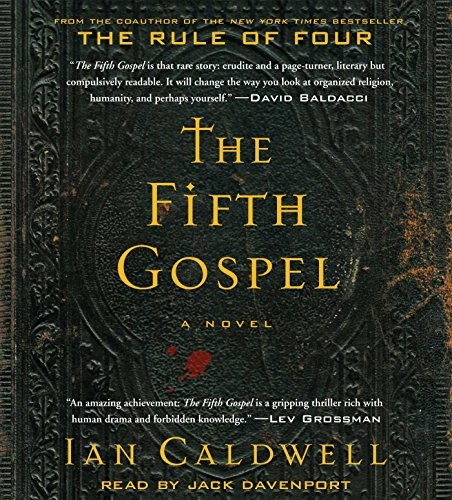
The Fifth Gospel
Ian Caldwell · 2015
Vatican pressure point A murder inside Vatican life connects a controversial exhibit, the Shroud of Turin, and Catholic division
Closest Conclave connection Insular clerical society, guarded information, and a protagonist forced to investigate people he must continue living among
Main difference A family-centered theological mystery narrated by a Greek Catholic priest
Best for Readers who want a thoughtful Vatican mystery, theological detail, family conflict, and an insider's sense of clerical daily life.
Know before you start Expect dense religious history, murder, bereavement, marital conflict, institutional pressure, and a measured pace.
Father Alex Andreou is raising his son inside Vatican City while serving as a priest in the Greek Catholic Church, whose clergy may marry. His brother Simon is a Roman Catholic priest. When a friend preparing an exhibit about the Shroud of Turin is killed, the brothers become entangled in an investigation touching scripture, church history, and the fragile boundary between Catholic traditions.
Ian Caldwell is exceptionally good at rendering Vatican City as a neighborhood rather than a monument. Priests have apartments, routines, friendships, resentments, and family complications within a state organized around religious office. That domestic scale makes secrecy believable. An investigation does not simply uncover suspects; it changes whom Alex can trust at work, at home, and within a faith that structures both.
The novel moves deliberately and spends more time explaining texts, rites, and the Shroud than a conventional thriller would risk. Its emotional center is brotherhood and fatherhood, not the solution alone. It ranks third because it offers the closest tonal companion to Conclave: intelligent, enclosed, reverent without being credulous, and alert to the way doctrine becomes personal when the people interpreting it must share a table afterward.
2
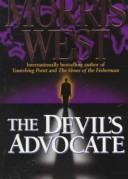
The Devil's Advocate
Morris West · 1959
Vatican pressure point A dying priest is sent to test whether a revered Italian resistance figure deserves sainthood
Closest Conclave connection A church official must distinguish holiness from the stories institutions and communities need to believe
Main difference A quiet moral investigation in postwar Calabria rather than an election thriller
Best for Readers who want moral seriousness, a precise church investigation, postwar Italian atmosphere, and a protagonist confronting death.
Know before you start The story includes terminal illness, wartime violence, execution, sexual judgment, poverty, and period Catholic attitudes.
Monsignor Blaise Meredith has spent his career within the Vatican's administrative machinery. Diagnosed with terminal cancer, he is assigned one final investigation: examine the proposed canonization of Giacomo Nerone, a man executed during the final phase of the Second World War and remembered locally as a martyr. Meredith's formal role is to argue against easy sanctity, but the village contains people whose lives cannot be reduced to testimony for or against a cause.
Morris West understands procedure as a form of mercy. The investigator's skepticism is not necessarily hostility to faith; it can protect faith from appetite, public pressure, and consoling falsehood. Meredith must decide what evidence means when witnesses are compromised by love, shame, poverty, and memory. His approaching death removes the ordinary career incentives while making every judgment more intimate.
The novel lacks the polished suspense mechanism of Conclave. It is somber, compassionate, and interested in spiritual condition more than surprise. It ranks second because Cardinal Lomeli and Monsignor Meredith share a rare fictional burden: both must supervise a process that claims to discover God's will while knowing exactly how much human need enters the result. Their integrity lies not in certainty, but in refusing to manufacture it.
1
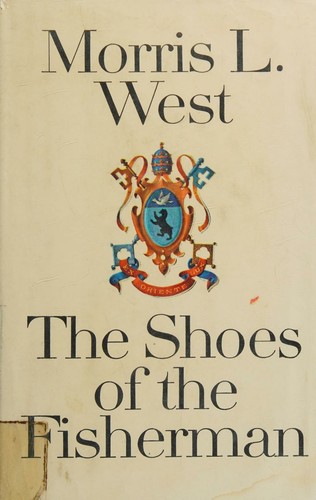
The Shoes of the Fisherman
Morris West · 1963
Vatican pressure point An unexpected pope inherits a global crisis and a curia unsure what kind of leader it has elected
Closest Conclave connection Papal succession, unlikely candidacy, private conscience, and the political consequences of spiritual office
Main difference The novel continues far beyond the election into geopolitical and pastoral leadership
Best for Readers who want the strongest combination of papal politics, conscience, international stakes, and the loneliness of supreme office.
Know before you start The book includes political imprisonment, torture in recollection, famine, Cold War tension, clerical debate, and dated geopolitical assumptions.
Kiril Lakota, a Ukrainian archbishop released after long imprisonment in Siberia, arrives in Rome carrying little of the conventional apparatus of ambition. When the papacy becomes vacant, the cardinals eventually turn toward this outsider. His election is less a conclusion than a transfer of impossible responsibility. A famine and an international confrontation force him to decide whether the Church's accumulated wealth, diplomatic caution, and inherited habits can remain untouched by suffering visible beyond Vatican walls.
West presents the pope as simultaneously the freest and most confined man in the Church. Lakota can make decisions no subordinate could authorize, yet every gesture acquires doctrinal, financial, and geopolitical interpretations. Advisers protect him by narrowing his options. Crowds transform his person into symbol. The office grants extraordinary reach while threatening to make direct human response seem irresponsible.
Some politics and psychology reflect the early 1960s, and the novel's seriousness occasionally becomes grandiloquent. Its imagined crisis is wider than Harris's intimate contest. It ranks first because it supplies the ideal second half to Conclave. After every ballot, compromise, and revelation, someone must put on the white cassock. The Shoes of the Fisherman asks whether a man chosen by an institution can change it before the institution teaches him to mistake preservation for wisdom.
Which Vatican Power-Politics Novel Should You Read First?
Choose The Shoes of the Fisherman for the closest continuation of Conclave's central question. It begins with an unlikely election and follows the winner into the harder problem of governing. Choose The Devil's Advocate if what stayed with you was Cardinal Lomeli's conscience: one church official, one formal process, and no way to make a human judgment perfectly clean.
Read The Fifth Gospel for Vatican daily life and a patient theological mystery. The Bishop's Man is the most psychologically severe selection and the best choice when institutional complicity interests you more than Rome. The Vicar of Christ offers the broadest consideration of leadership across secular and sacred offices.
For a conventional thriller, begin with The Confessor or The Third Secret. Choose The Name of the Rose when you want a more demanding historical and intellectual experience, The Pope's Rhinoceros for baroque Renaissance excess, and Angels & Demons for the quickest route back into a conclave under threat.
Vatican fiction often promises a secret, but its most interesting subject is interpretation. Documents do not act on their own. Cardinals, archivists, confessors, investigators, and popes decide what a fact means, who may know it, and whether disclosure serves truth or merely changes the distribution of power.
The Shoes of the Fisherman ranks first because it understands election as the beginning of moral exposure. An office capable of magnifying a person's authority also magnifies his compromises. Like Conclave, it finds suspense in an institution that speaks confidently across centuries while depending, at a decisive hour, on one fallible person to choose what faith requires now.