Carrie endures because Stephen King makes supernatural power arrive after years of ordinary cruelty. Carrie White's telekinesis is extraordinary; the humiliations surrounding it are not. Home, school, religion, and adolescence teach her that other people may define her body and punish her for failing to understand rules no one kindly explained. The horror comes when an outcast's private anger finally acquires physical reach. Mike Flanagan's eight-episode television adaptation arrives on Prime Video in fall 2026, with an exact date still to be announced.
Many books borrow Carrie's prom, blood, or telekinesis. The better descendants borrow her moral discomfort. Their protagonists are bullied girls, isolated boys, exhausted women, and outsiders invited into groups that offer belonging at a price. Power may provide defense, revenge, community, or a new form of exploitation. It does not automatically repair the person forced to discover it alone.
This ranking emphasizes horror in which exclusion and supernatural awakening are causally entangled. A witch novel does not qualify simply because its heroine becomes strong. The magic must expose what a family, school, church, clique, or town has been doing to someone it preferred not to see. The strongest selections also preserve the unsettling question at the heart of Carrie: when rage becomes catastrophic, who gets to pretend the catastrophe began with the outcast?
10
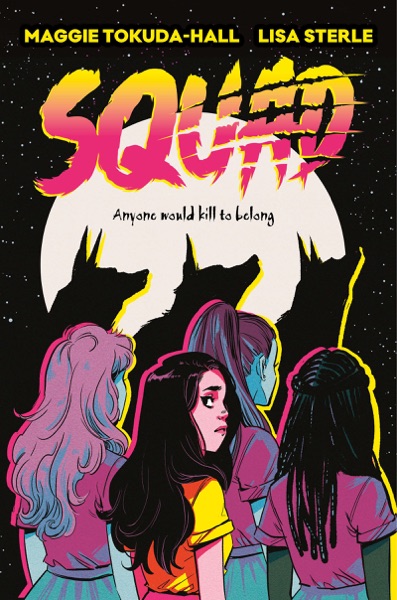
Squad
Maggie Tokuda-Hall and Lisa Sterle · 2021
Supernatural force A clique of popular girls transforms into werewolves and hunts predatory boys
Closest Carrie connection A lonely student discovers that power can reverse the social order without ending her need to belong
Main difference A contemporary graphic novel with queer romance, satire, and a lighter surface
Best for Readers who want an accessible queer graphic novel, female werewolves, high-school cliques, and revenge with consequences.
Know before you start The book includes murder, blood, predatory teenage boys, peer pressure, toxic friendship, and illustrated violence.
Becca arrives at a wealthy San Francisco high school expecting invisibility. Instead, the glamorous girls who dominate the social scene invite her into their group. Their secret is not merely access to parties and clothes: under the full moon they become werewolves and select boys whose behavior makes them seem unlikely to be missed or mourned. Membership gives Becca immediate status and frightening purpose.
Tokuda-Hall and Sterle understand the seduction of a monstrous clique. Becca's new friends offer protection from the humiliations that accompany being new, queer, and uncertain. Their violence initially looks like collective justice because its targets behave badly. The danger emerges when loyalty to the group requires Becca to ignore how easily a rule can become an appetite.
It ranks tenth because the graphic format and darkly comic tone keep the story more buoyant than Carrie. Its central insight belongs here: an outcast may not dream of destroying the popular girls. She may dream of being chosen by them. Supernatural power becomes complicated the moment belonging depends on using it the way the group expects.
9
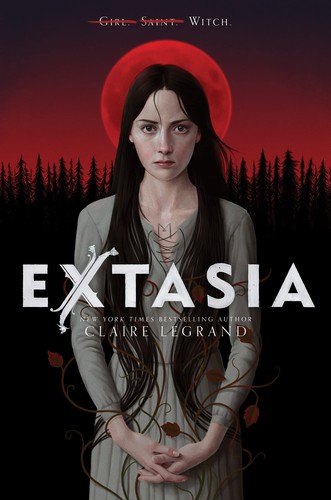
Extasia
Claire Legrand · 2022
Supernatural force A girl selected for ritual sacrifice discovers the witchcraft her community has defined as evil
Closest Carrie connection Religious authority teaches a young woman to fear her body until persecution awakens the power it condemns
Main difference A post-apocalyptic folk-horror setting rather than contemporary high school
Best for Readers who want feminist folk horror, religious dystopia, witchcraft, sapphic longing, and an isolated settlement.
Know before you start The novel includes religious abuse, self-harm, ritual punishment, misogyny, animal death, body horror, execution, and sexual violence references.
Amity lives in Haven, an isolated settlement founded after the collapse of the old world. Girls are taught that women's sin caused the disaster and that obedience keeps the community safe. Chosen to become a saint, Amity expects suffering to purify her people. When mutilated animals and other signs of danger appear, she begins questioning whether the evil outside Haven is as real as the violence authorized within it.
Legrand makes religious misogyny a language that colonizes self-perception. Amity's first response to power is not liberation but terror that the elders were right about her. Anger must pass through layers of shame before it can become useful. Even then, using it risks reproducing the certainty with which Haven classified every disobedient woman as monstrous.
The novel ranks ninth because its allegory is broad and its world far removed from King's recognizable Maine. It nevertheless offers a strong Margaret White parallel at institutional scale. A doctrine obsessed with female corruption creates the conditions under which supernatural female rage becomes the settlement's most honest form of testimony.
8
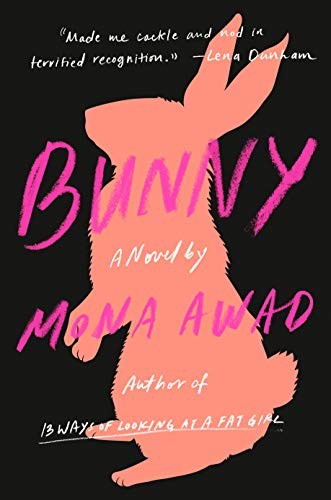
Bunny
Mona Awad · 2019
Supernatural force A graduate-school clique performs grotesque workshops that turn desire into living creations
Closest Carrie connection An isolated student is invited into the circle that excluded her and discovers how humiliation feeds fantasy
Main difference Surreal literary satire whose reality remains deliberately unstable
Best for Readers who want bizarre campus horror, literary satire, female friendship, body horror, and an unreliable narrative.
Know before you start Expect animal death, gore, psychological manipulation, substance use, class resentment, sexual material, and ambiguity about what literally occurs.
Samantha Mackey is a scholarship student in an elite MFA program, contemptuous of the four wealthy women who call one another Bunny and produce sweetly interchangeable workshop prose. When the Bunnies invite Samantha to their "Smut Salon," disdain gives way to the pleasure of being welcomed. Their creative process involves transformations far more literal, bloody, and unsuccessful than ordinary writing workshops.
Awad makes artistic belonging feel like enchantment. Samantha's outsider identity protects her judgment but also leaves her vulnerable to any ritual promising intimacy. The Bunnies convert longing into objects and then judge those objects for failing to become ideal men. Their magic is absurd, yet its emotional logic is recognizable: desire, criticism, and resentment made flesh.
It ranks eighth because revenge is secondary to unstable identity and the supernatural may be read several ways. The Carrie connection lies in the invitation. Both novels know that a cruel group can be most dangerous when it offers the outcast one perfect evening of inclusion. The wish to be seen creates the opening through which the horror enters.
7

Sawkill Girls
Claire Legrand · 2018
Supernatural force Three girls develop different forms of power while confronting a monster that has consumed girls for generations
Closest Carrie connection A community normalizes missing girls until rage makes continued silence impossible
Main difference An ensemble creature horror with friendship, romance, and organized resistance
Best for Readers who want feminist YA horror, a literal monster, queer romance, female anger, and a story about believing missing girls.
Know before you start The book includes murder, abduction, gore, racism, misogyny, grief, parental abuse, asexuality-related prejudice, and violence against teenage girls.
Marion moves to wealthy Sawkill Rock after her father's death. Zoey, furious and outspoken, refuses the island's comfortable explanations for disappearing girls. Val belongs to the family whose beautiful estate conceals the monster's history. Their distrust becomes an uneasy alliance as the creature called the Collector prepares to continue a cycle protected by powerful men and community denial.
Legrand distributes the outcast role across three characters. Marion is economically vulnerable, Zoey is dismissed for her anger, and Val is isolated by complicity she did not create but has benefited from. Supernatural power does not make them immediately united. It magnifies grief, desire, and suspicion before it becomes a means of fighting back.
The novel ranks seventh because its villain is external in a way Carrie's classmates and mother are not. Its social horror remains close. Girls disappear, adults explain, and institutions value order over attention. Zoey's anger is treated as unpleasant until unpleasantness becomes the only response proportionate to what everyone else has accepted.
6
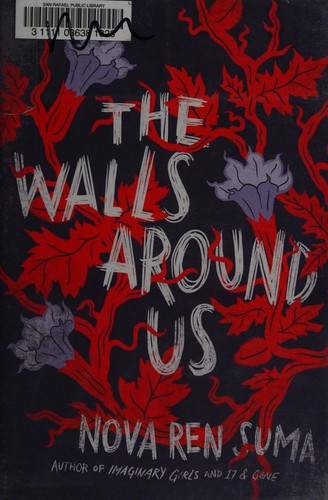
The Walls Around Us
Nova Ren Suma · 2015
Supernatural force The dead girls of a juvenile detention center press against the stories told by the living
Closest Carrie connection Female cruelty, public judgment, and a disastrous act of revenge are reconstructed through competing accounts
Main difference A dreamlike ghost story told through fractured timelines and multiple narrators
Best for Readers who want lyrical YA horror, ballet, unreliable friendship, incarcerated girls, and a ghost story that unfolds like a memory.
Know before you start The novel includes murder, juvenile incarceration, bullying, abusive relationships, eating-disorder themes, death, and intentionally ambiguous chronology.
Violet is a promising ballerina leaving for Juilliard. Amber lives inside the Aurora Hills juvenile detention center. Between them is Orianna, Violet's former best friend, a gifted dancer imprisoned for a violent crime. The novel moves through memory, testimony, and an impossible night when the locked girls briefly find the doors open.
Suma is interested in the social production of a "bad girl." Ballet rewards beauty while concealing competition, and prison reduces complex lives to files and sentences. Violet's account of Ori changes depending on what she needs innocence to mean. The ghosts refuse that clean division, returning the emotional reality excluded from the official version.
It ranks sixth because the supernatural force is collective and retrospective rather than a single protagonist discovering power. The atmosphere, however, is deeply Carrie-like. A community settles on one girl's guilt, another girl's promise, and a story that protects the future it prefers. Anger becomes supernatural because ordinary testimony has already been contained.
5
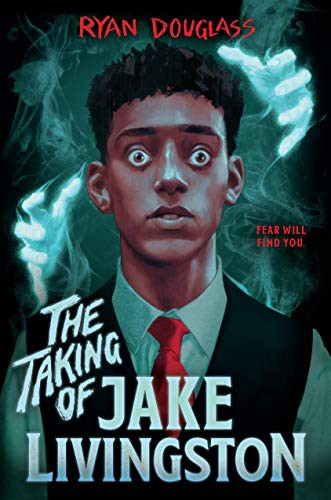
The Taking of Jake Livingston
Ryan Douglass · 2021
Supernatural force A teenage medium is targeted by the ghost of a school shooter
Closest Carrie connection Racist bullying and social isolation collide with a supernatural adolescent threat born from school violence
Main difference A possession story centered on a Black gay boy trying not to inherit another outcast's rage
Best for Readers who want concise YA possession horror, ghosts, a queer coming-of-age story, and a thoughtful treatment of school violence.
Know before you start The novel includes a school shooting, suicide, racism, homophobia, bullying, child abuse, possession, gore, and violence against animals.
Jake Livingston sees dead people replaying their final moments, a burden he conceals while navigating St. Clair Prep as one of its few Black students. Most ghosts cannot interact with him. Sawyer Doon can. The dead school shooter recognizes Jake's loneliness and begins forcing his way into Jake's body, dreams, and relationships.
Douglass places two alienated boys in a deliberately uncomfortable relation. Jake experiences racism and homophobia but retains empathy and the possibility of connection. Sawyer's history includes abuse and isolation, yet the novel refuses to make those injuries absolve mass violence. Supernatural contact becomes a struggle over whether resemblance creates obligation.
It ranks fifth because it answers a question often raised around Carrie: how should horror acknowledge the making of an outcast without converting victimhood into innocence? Jake's developing power is defensive and relational. He survives not by proving that pain made him exceptional but by resisting Sawyer's demand that pain make them the same.
4
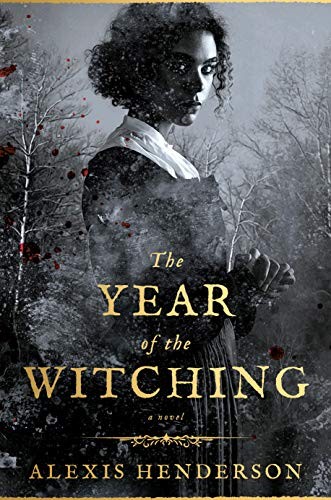
The Year of the Witching
Alexis Henderson · 2020
Supernatural force A young woman descended from an executed witch enters the forbidden woods and inherits dangerous knowledge
Closest Carrie connection Puritanical religion marks a girl's body and family as sinful, turning shame into the beginning of rebellion
Main difference A secondary-world historical fantasy about an entire theocratic community
Best for Readers who want atmospheric witch horror, religious oppression, a forbidden forest, romance, and a heroine challenging inherited shame.
Know before you start The book includes religious abuse, racism, misogyny, forced marriage, sexual exploitation, plague, animal death, body horror, and execution.
Immanuelle Moore lives in Bethel, where the Prophet's church controls marriage, labor, punishment, and the permitted shape of womanhood. Her mother's relationship with an outsider left Immanuelle racially marked and socially suspect. In the Darkwood she encounters the witches associated with her mother's death and receives a journal that reveals how Bethel's holiness was built.
Henderson makes exclusion both intimate and structural. Immanuelle has absorbed enough doctrine to police herself, even while the church's hypocrisy is visible in the treatment of women and the Prophet's household. The supernatural plagues she unleashes are not random evil. They externalize crimes the community has buried beneath scripture.
The novel ranks fourth because its heroine's anger expands into political awakening rather than solitary catastrophe. It shares Carrie's deepest religious horror: adults define female power as corruption, then use the resulting fear to maintain control. Once the accusation of witchcraft becomes true, the institution loses the ability to dictate what truth should require.
3
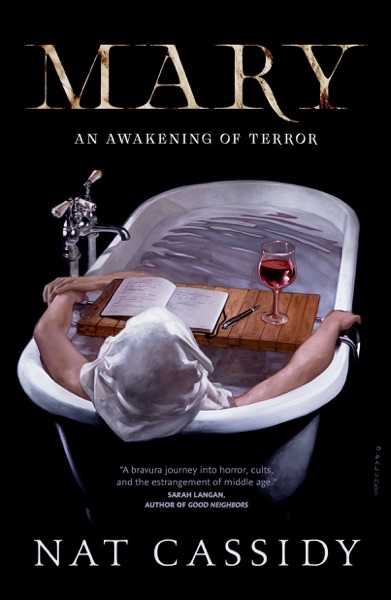
Mary: An Awakening of Terror
Nat Cassidy · 2022
Supernatural force A middle-aged woman returning to her hometown develops visions and a connection to its murdered women
Closest Carrie connection A woman taught to apologize for existing discovers that suppressed anger has an enormous supernatural history
Main difference Adult horror centered on menopause, memory, and a serial killer's legacy
Best for Readers who want intense adult horror, feminine rage, menopause, psychic visions, serial-killer mythology, and dark humor.
Know before you start The novel includes extreme gore, misogyny, fatphobia, workplace humiliation, animal death, serial murder, body horror, mental-health distress, and suicidal ideation.
Mary Mudgett has spent years making herself small at work and in relationships. After losing her job, she returns to Arroyo, Arizona, to care for the aunt who raised her. Hot flashes arrive with visions of mutilated women. The town's devotion to a dead serial killer and Mary's gaps in memory suggest that her humiliation is connected to something far older and bloodier than professional invisibility.
Cassidy relocates Carrie's emotional architecture into middle age. Mary has survived by treating other people's discomfort as evidence that she should occupy less space. Menopause makes her body newly unruly, and the horror around her refuses to remain polite. Rage becomes frightening partly because Mary has so little practice recognizing it as her own.
It ranks third for showing that the outcast awakening does not belong only to adolescence. The novel is more graphic, comic, and maximalist than King, but it understands the same delayed eruption. A lifetime of being dismissed creates no moral duty to remain harmless when the forces doing the dismissing finally become visible.
2
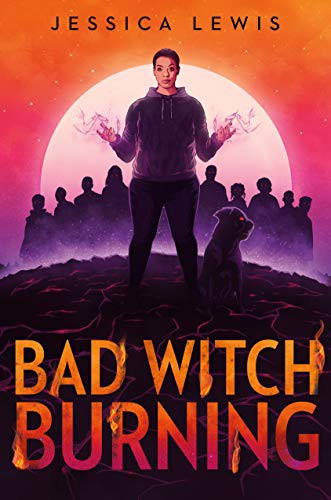
Bad Witch Burning
Jessica Lewis · 2021
Supernatural force A teenage girl can summon the dead and begins charging grieving clients for temporary reunions
Closest Carrie connection Poverty, abuse, and isolation turn a girl's dangerous gift into the only control available to her
Main difference A contemporary Southern story focused on economic exploitation and necromancy
Best for Readers who want Black girl magic, necromancy, economic horror, fierce friendship, and a protagonist allowed to be furious and wrong.
Know before you start The book includes parental neglect, domestic abuse, poverty, animal death, corpses, blood, suicidal thoughts, exploitation, and intense grief.
Katrell has been using her ability to speak with ghosts to help pay household bills while her mother neglects her and brings dangerous men home. When Katrell accidentally raises a dog from the dead, she realizes the gift can earn far more money. Clients arrive with grief and cash. Each resurrection also damages the boundary between worlds, but immediate survival makes distant consequences difficult to prioritize.
Lewis gives anger material conditions. Katrell is not seduced by abstract power; she needs food, rent, safety, and a future beyond the adults consuming her labor. Friends warn her, but stopping would mean surrendering the first system that pays her directly. The supernatural business reproduces the exploitation it seemed to solve.
It ranks second because Katrell may be the closest emotional relative to Carrie who is not a deliberate retelling. Both girls are poor, socially isolated, and endangered at home. Their gifts arrive without responsible adults to help interpret them. The tragedy lies not in female anger becoming powerful, but in a world that waits until catastrophe to admit the girl had reasons to be angry.
1

The Weight of Blood
Tiffany D. Jackson · 2022
Supernatural force A bullied biracial teenager possesses telekinetic power that erupts around her high school's first integrated prom
Closest Carrie connection It deliberately reimagines King's premise through racism, passing, viral humiliation, and segregated Southern tradition
Main difference A multi-format retelling that makes the town's racial narrative central
Best for Readers who want the clearest Carrie retelling, social horror, a documentary-style structure, telekinesis, and a sharper examination of race.
Know before you start The novel includes racism, passing enforced by a parent, bullying, viral humiliation, domestic abuse, animal death, fire, murder, and mass-casualty violence.
Madison Washington has been forced by her white father to hide that she is biracial, keeping her hair covered and enduring isolation at school. When rain exposes her natural hair, classmates turn the revelation into a viral humiliation. Public outrage over the bullying pushes Springville High to hold its first integrated prom. Some white students decide the event can be turned into another joke at Maddy's expense.
Jackson uses podcasts, interviews, and retrospective testimony to ask how a town narrates disaster after contributing to it. Residents know from the beginning that Maddy is blamed, but blame is not explanation. Racism appears in open cruelty, paternal control, liberal self-congratulation, and the desire to treat integration as a successful event rather than a transfer of power.
It ranks first because it enters direct conversation with Carrie and finds a new structure inside it. Maddy's telekinesis is terrifying, but the town's ability to produce a racial story that excuses itself is equally supernatural in its reach. The novel insists that asking whether she became a monster is less useful than asking who needed her to occupy that role before prom night began.
Which Supernatural-Outcast Horror Novel Should You Read First?
Choose The Weight of Blood for the most direct companion to Carrie. It deliberately retains telekinesis, prom, humiliation, and a retrospective community narrative while shifting the social center toward race. Bad Witch Burning is the strongest choice if you care more about the trapped girl at home than the iconic prom imagery.
Read Mary for an adult version of the awakening, where a woman discovers rage after decades of practiced self-erasure. The Year of the Witching and Extasia expand Margaret White's religious control into entire theocratic communities. The Taking of Jake Livingston offers the list's best examination of why victimization cannot be allowed to excuse mass violence.
For group dynamics, choose Sawkill Girls for solidarity, Bunny for surreal initiation, or Squad for a faster graphic novel. The Walls Around Us is the quietest and most dreamlike selection, rewarding readers who prefer ghostly atmosphere to direct revenge.
The phrase "female rage" can make anger sound like a subgenre rather than a response. These novels restore the missing first half of the sentence: rage at abuse, poverty, racism, misogyny, religious control, abandonment, or the exhausting demand to remain agreeable while being harmed. Supernatural power makes the response visible, but it did not create the cause.
The Weight of Blood ranks first because it understands that a community will often examine the explosion more eagerly than the pressure. Maddy becomes a story Springville can tell about one dangerous girl. Like Carrie, Jackson's novel keeps pointing back toward the people who arranged the stage, supplied the humiliation, and then acted astonished when the outcast finally affected the room.