And Then There Were None removes the detective, seals the exits, and turns every remaining character into both suspect and prospective victim. That design is more frightening than an ordinary locked-room mystery. The puzzle is not simply how a crime occurred inside an impossible space. It is whether anyone in the space can be trusted long enough to solve it.
Agatha Christie's island also supplies a countdown. Ten people arrive, an accusation exposes the guilt each has escaped, and the group shrinks according to a pattern they cannot stop. Modern read-alikes reproduce that machinery with tidal islands, ski chalets, family reunions, and even a generation ship crewed by clones. The best understand that isolation is not only geography. It is the collapse of outside authority. Once rescue becomes impossible, manners and alliances become temporary survival strategies.
The ranking considers the strength of the closed circle, fairness and satisfaction of the solution, atmosphere, characterization, and how directly the book speaks to Christie's original. Number one is an explicit Japanese homage that helped revive traditional puzzle mysteries in its own country while still finding a new way to deliver the final shock.
10
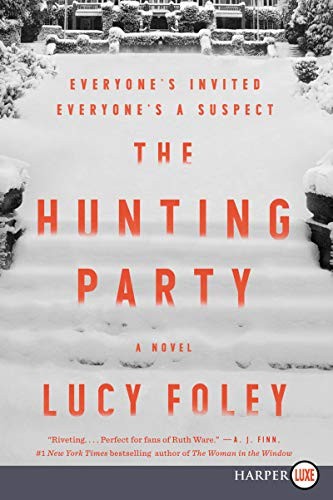
The Hunting Party
Lucy Foley · 2018
Closed circle Old university friends snowed in at a remote Scottish Highlands estate
Closest Christie connection A social gathering, concealed grievances, multiple viewpoints, and a killer within the group
Main difference The victim's identity is initially withheld, and the novel emphasizes friendship toxicity over a chain of murders
Best for Readers who want contemporary psychological suspense, old friends behaving badly, and a wintry weekend setting.
Know before you start The book includes bullying, infidelity, drug use, sexual humiliation, and toxic friendship dynamics.
A group of Oxford friends continues its annual New Year's tradition at an isolated Highland lodge. The landscape is beautiful, the staff are watchful, and snow soon makes travel impossible. The friends have known one another long enough to possess both rehearsed stories and private resentments. On New Year's Day, one of them is dead.
Lucy Foley constructs the mystery from alternating viewpoints and two timelines. Readers know early that a body has been found but not which member of the party it belongs to. That choice creates a double puzzle—victim as well as killer—and makes every old humiliation a possible motive before the crime has even been fully identified.
The comparison to Christie is strongest in location and social pressure. This is not a one-by-one elimination game, and the friend group can feel designed around recognizable secrets: infidelity, envy, class resentment, and the person everyone tolerated longer than they liked. Some reveals are easier to anticipate than the narrative suggests. The setting, however, works exactly as required. Snow turns people who might simply leave an uncomfortable reunion into inmates of it.
9
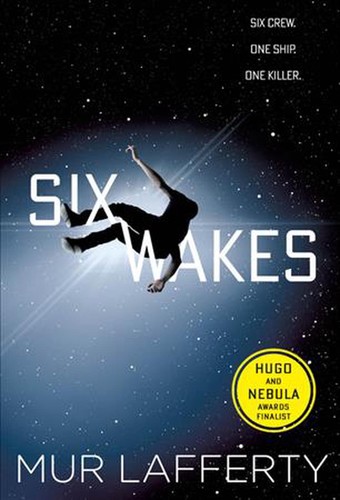
Six Wakes
Mur Lafferty · 2017
Closed circle Six cloned crew members aboard a generation ship between solar systems
Closest Christie connection Every suspect has a hidden crime, no outside killer can have entered, and the cast has already been murdered once
Main difference Science-fiction worldbuilding about cloning, memory, identity, and artificial intelligence
Best for Science-fiction readers who want a locked-ship murder, an untrustworthy crew, and ethical questions about copied selves.
Know before you start The story includes murder, suicide, body horror, criminal histories, and repeated descriptions of damaged cloned bodies.
Six crew members wake in freshly cloned bodies aboard the starship Dormire. Their previous bodies float dead around the cloning bay. Memory backups that should explain the murders are missing, the ship has been sabotaged, and its thousands of sleeping colonists cannot help. The killer must be one of the six—possibly someone who no longer remembers doing it.
Mur Lafferty finds an ingenious science-fiction equivalent to Christie's guilty guests. The crew were selected from convicted criminals because clones can survive a centuries-long voyage by replacing their bodies. Each possesses a past that may supply motive, leverage, or expertise. Death is reversible in body but not in consequence; a missing memory turns identity itself into corrupted evidence.
The novel alternates present suspicion with substantial history about cloning law and each crew member's earlier life. That material gives the puzzle thematic weight but slows the immediate crisis. Some technological rules arrive when the solution needs them, making the mystery feel less strictly fair than a Golden Age construction. As a closed circle, it is excellent. Space is the ultimate island, and resurrection only allows the suspects to discover their own crime scene.
8
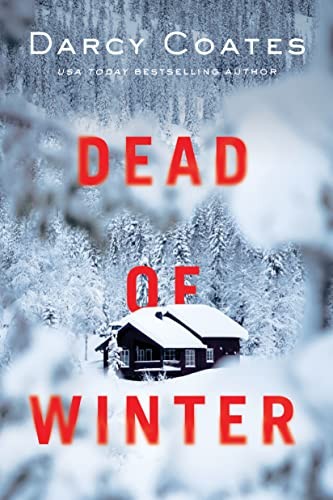
Dead of Winter
Darcy Coates · 2023
Closed circle A stranded tour group sheltering in an abandoned Rocky Mountain cabin
Closest Christie connection Strangers die one by one while a storm prevents escape and a hidden killer controls the sequence
Main difference A graphic survival-horror slasher with more emphasis on fear than elegant deduction
Best for Readers who want the one-by-one structure turned into fast, bloody wilderness horror.
Know before you start Expect decapitation, displayed remains, severe weather danger, panic, and a high on-page body count.
Christa joins a winter tour toward a remote luxury lodge, hoping distance will quiet a traumatic past. A violent storm separates the group from their guide and forces nine travelers into an abandoned cabin. Then the guide is found murdered. The weather can kill anyone who leaves, while the person inside is willing to make staying equally dangerous.
Darcy Coates embraces the countdown more literally than most modern mysteries. Supplies diminish, bodies accumulate, and each death removes another possible ally. The surrounding snow erases direction and limits forensic certainty. Christa must read behavior under extreme stress while knowing that fear makes innocent people secretive too.
The killer's displays move the book toward slasher horror, and the characters are drawn broadly enough that the body count sometimes matters more than the people. Experienced thriller readers may identify the central trick early. Coates compensates with pressure. Where Christie maintains drawing-room composure as long as possible, Dead of Winter lets civilization deteriorate almost immediately.
7

Everyone in My Family Has Killed Someone
Benjamin Stevenson · 2022
Closed circle A deeply estranged family reunion at an Australian ski resort
Closest Christie connection A self-conscious fair-play puzzle in which every family member has a death to explain
Main difference Comic metafiction narrated by a man who openly discusses the rules of Golden Age mysteries
Best for Readers who like Knives Out, family dysfunction, dark comedy, and mysteries that talk back to the audience.
Know before you start The book begins the Ernest Cunningham series and contains family violence, imprisonment, drug crime, and deaths involving children.
Ernest Cunningham writes guides explaining how mystery authors construct crimes. His family gathers at a snowy resort to welcome his brother home from prison, an imprisonment Ernest helped cause. Then a body appears. Ernest promises to narrate reliably, identify clues when they matter, and follow the old rules even though everyone in his family—including Ernest—has killed someone.
Benjamin Stevenson treats genre knowledge as part of the entertainment. Ernest names conventions, anticipates reader objections, and turns chapter structure into evidence. The family history supplies a chain of deaths that range from criminal to accidental, so the title is both joke and investigative inventory. The closed circle is emotional as much as meteorological: nobody can explain the present murder without reopening the death attached to their own name.
The narrator's cleverness can become exhausting, particularly when a serious revelation is immediately followed by commentary about storytelling. Readers who prefer Christie's invisible craftsmanship may resent seeing the scaffolding labeled. The humor also softens the menace. The puzzle is genuinely constructed, however, and the book understands that "fair play" is a compact between author and reader rather than a guarantee that the narrator is pleasant company.
6
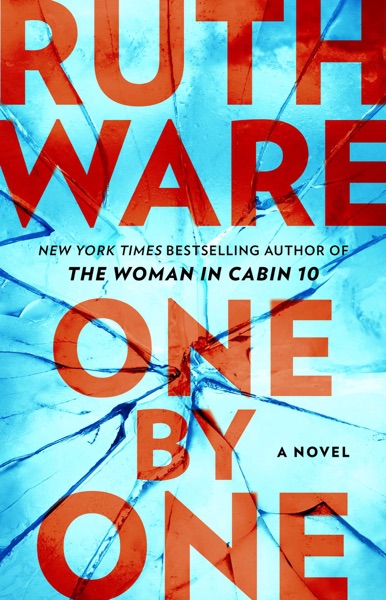
One
One by Ruth Ware · 2020
Closed circle Employees and chalet staff trapped by an avalanche in the French Alps
Closest Christie connection Ten people, worsening isolation, private motives, and a group that shrinks after someone disappears
Main difference A corporate thriller centered on a technology company's sale rather than past moral accusations
Best for Readers who want an accessible, polished ski-chalet thriller with corporate secrets and two female viewpoints.
Know before you start The novel includes avalanche trauma, past sexual assault, stalking, financial coercion, and mountain peril.
The founders and employees of music-streaming company Snoop travel to a luxury ski chalet to decide whether to accept a lucrative buyout. The vote could make some participants rich and destroy what others helped build. One employee vanishes on the mountain. An avalanche cuts off the chalet. Then the company app begins marking users offline one by one.
Ruth Ware alternates between Liz, a socially anxious former employee whose minority share gives her unexpected power, and Erin, a chalet host with reasons to fear the mountain. The dual perspective combines inside knowledge of the company's grudges with practical awareness of the isolated building. Technology supplies both motive and a modern countdown.
The title invites comparison with Christie so directly that the smaller surprises are easy to predict. Snoop's business dispute receives enough explanation to create motive but not always enough to make the company feel real. The suspense eventually becomes more chase-driven than deductive. Still, the avalanche is an effective locked door, and Ware understands how money turns colleagues into suspects before the first death is confirmed.
5
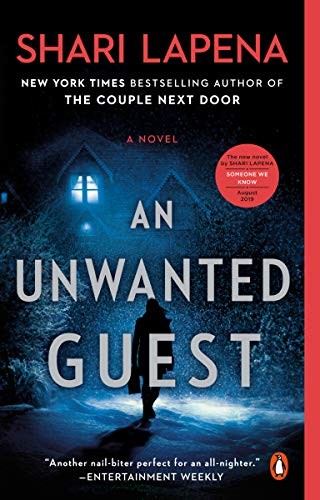
An Unwanted Guest
Shari Lapena · 2018
Closed circle Guests trapped without power at a remote Catskills inn during an ice storm
Closest Christie connection Strangers arrive with secrets, deaths accumulate, outside help is impossible, and no detective is available
Main difference A contemporary hotel thriller told in brisk, transparent prose rather than a formal moral fable
Best for Readers who want the closest modern version of Christie's isolated-strangers setup without supernatural elements.
Know before you start Domestic abuse, sexual assault history, murder, and anxiety in enclosed spaces feature in the characters' backgrounds.
Mitchell's Inn promises fireplaces, good food, and a weekend without the distractions of modern life. A winter storm turns that luxury into a liability. The roads close, electricity fails, phones become useless, and one guest dies at the bottom of the stairs. An accident remains plausible until a second death makes the obvious conclusion unavoidable: someone inside the inn is killing the others.
Few books on this list reproduce the immediate conditions of And Then There Were None so cleanly. The guests do not know one another, no professional detective can impose order, and every room contains a person whose background has not been verified. The owners must continue feeding and sheltering people who may include a murderer. Suspicion becomes the only available security system.
Shari Lapena values pace over depth. The cast can feel like a tray of mystery archetypes, and the solution depends more on concealed history than clues a reader can confidently organize. Its plainness is also a strength. The book does not dilute the premise with an elaborate frame. It places strangers in a dark hotel, removes the exits, and lets each new noise change the list of possible survivors.
4
The 7½ Deaths of Evelyn Hardcastle
Stuart Turton · 2018
Closed circle A country-house party repeating the same fatal day
Closest Christie connection A large suspect cast, mapped estate, hidden histories, planted clues, and an exacting solution
Main difference The investigator relives the day in different bodies under supernatural rules
Best for Puzzle readers who want diagrams-in-the-head complexity, body swapping, time loops, and a mystery that rewards note-taking.
Know before you start The US title uses "7½"; the UK title is The Seven Deaths of Evelyn Hardcastle. It includes suicide, violence, confinement, and body-based humiliation.
A man wakes in a forest without his name or memories. He learns that Evelyn Hardcastle will die that night at Blackheath, and the day will repeat until he identifies her killer. Each morning he wakes inside a different guest. The hosts have different bodies, social positions, weaknesses, and access to information, forcing the investigator to solve not only the murder but the rules of his own imprisonment.
Stuart Turton builds a maximalist country-house puzzle. A conversation glimpsed by one host becomes legible through another. Seemingly irrelevant movements acquire importance several days later. The investigator sometimes encounters earlier or later versions of himself, turning chronology into a locked room whose exits must also be deduced.
The complexity is the attraction and the flaw. Keeping hosts, timelines, alliances, and rules straight requires more effort than Christie's elegant narrowing. The metaphysical explanation is less satisfying than the mechanical puzzle, and the treatment of one fat host relies on unpleasant stereotypes. When the machinery works, it produces the rare feeling that an entire mansion has become a clock and every character is moving through its gears.
3
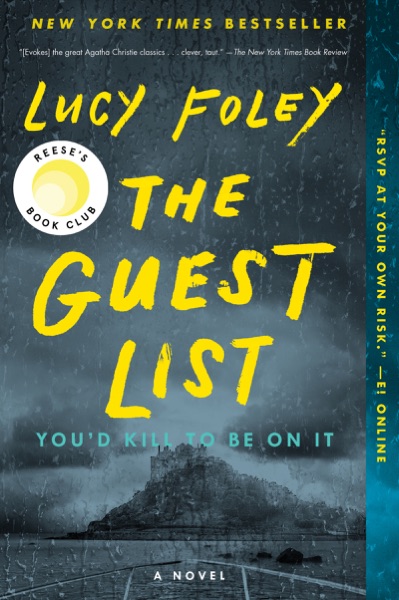
The Guest List
Lucy Foley · 2020
Closed circle A glamorous wedding on a storm-lashed island off the Irish coast
Closest Christie connection An island, a limited guest list, old wrongdoing, and a celebration becoming an inventory of motives
Main difference The narrative withholds both victim and killer while focusing on one central murder rather than a countdown
Best for Readers who want a stylish, accessible island mystery with multiple narrators and socially satisfying revelations.
Know before you start Bullying, self-harm, sexual exploitation, pregnancy loss, class cruelty, and school trauma shape the motives.
Magazine publisher Jules and television personality Will stage their wedding at an exclusive island venue. The guest list includes a resentful bridesmaid, an uneasy plus-one, former school friends, and a wedding planner whose knowledge of the island exceeds everyone else's. A storm gathers while private histories begin connecting people who believe they arrived for different reasons.
Foley improves on the method she used in The Hunting Party. Alternating viewpoints reveal motive without identifying the body discovered during the reception. The delayed victim turns social observation into evidence. A cruel anecdote, an unwanted speech, or a moment of recognition may explain who will die before it explains who will kill.
This is more psychological suspense than fair-play detection. The convergence of backstories is highly engineered, and almost every major character carries a secret calibrated to the wedding. Readers may guess the victim early by noticing whose perspective is absent. The island nevertheless performs beautifully. Its bog, cliffs, ruined structures, unreliable boats, and bad weather turn a curated luxury experience into a place where the past feels physically near.
2
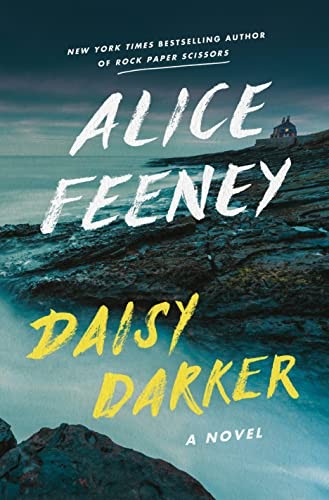
Daisy Darker
Alice Feeney · 2022
Closed circle A family cut off for eight hours in a gothic house on a tidal island
Closest Christie connection A nursery rhyme, a shrinking cast, old guilt, and deaths arriving on a schedule
Main difference A highly stylized psychological twist that changes how the entire narration is understood
Best for Readers who want the most direct contemporary homage, a tidal island, an awful family, and a large final twist.
Know before you start Child neglect, family cruelty, chronic illness, animal death, and multiple murders are central to the story.
The Darker family gathers for Nana's eightieth birthday at her crumbling island house. When the tide rises, nobody can leave until morning. At midnight Nana is found dead, and another family member follows an hour later. Old home videos and a childhood rhyme force the survivors to revisit a family history narrated by Daisy, the daughter whose heart condition made everyone treat her as both fragile and burdensome.
Alice Feeney does not hide the homage. The tidal isolation creates a natural clock; the rhyme makes the sequence visible; the family members possess injuries that predate the gathering. Where Christie's strangers are united by concealed guilt, the Darkers have spent their lives developing incompatible versions of the same childhood.
The central reveal is audacious and divisive. Some readers will admire how earlier details change meaning, while others will feel the book withheld information through narrative sleight of hand. Character names and gothic exaggerations create a fable-like tone rather than realism. It ranks second because few modern novels commit so fully to the one-by-one pattern while using family memory to make the countdown emotionally specific.
1
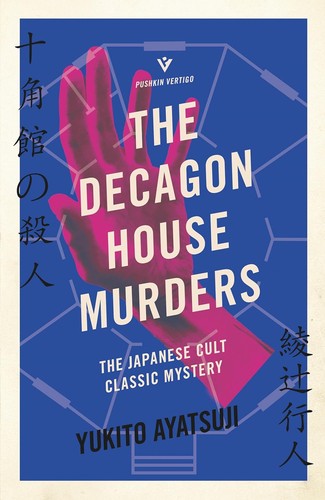
The Decagon House Murders
Yukito Ayatsuji · 1987 in Japan; current English edition translated by Ho-Ling Wong
Closed circle Seven university mystery-club members staying in a ten-sided house on a deserted island
Closest Christie connection An explicit And Then There Were None setup with labeled victims, an earlier island massacre, and a disappearing cast
Main difference Parallel island and mainland investigations rooted in Japanese honkaku puzzle tradition
Best for Readers who want the closest intellectual descendant of And Then There Were None and value solution over psychological depth.
Know before you start The book depicts poisoning, fire, dismemberment, and serial murder, but the prose is less graphic than most modern thrillers.
Members of a university mystery club travel to an island where a mansion burned after a multiple murder. They stay in the Decagon House, the surviving geometric building designed by an eccentric architect. The students use nicknames borrowed from famous mystery writers, discuss Christie's precedent, and soon discover ominous markers identifying future victims, a detective, and a murderer.
Meanwhile, people connected to the club receive letters on the mainland accusing them of involvement in an earlier death. The two narratives create a productive violation of the closed circle. Readers can see information unavailable to the island group, yet the additional knowledge does not make the solution obvious. The mystery asks how past and present crimes connect and how an apparently impossible plan can operate across water.
Characterization is deliberately subordinate to geometry and misdirection. The literary nicknames make the students easy to track but can keep them at an emotional distance. Some logistics invite more scrutiny after the reveal than Christie's compressed classic does. The final realization remains superb: simple enough to state, prepared in plain sight, and capable of changing the shape of the entire book.
It ranks first because it is both homage and argument. Ayatsuji demonstrates that the classic isolated-island puzzle was not exhausted by its most famous example. A writer can acknowledge Christie inside the story, let the characters know the rules, and still use those rules against them.
Which Closed-Circle Mystery Should You Read First?
Choose The Decagon House Murders for the closest formal match and the strongest pure puzzle. Choose Daisy Darker for a direct modern homage with family psychology and a spectacular twist. An Unwanted Guest offers the cleanest stranger-at-an-inn setup, while The Guest List is the most polished contemporary crowd-pleaser.
For snow, start with One by One or The Hunting Party. For horror, choose Dead of Winter. Readers who enjoy narrators discussing genre rules should try Everyone in My Family Has Killed Someone. Science-fiction readers get two excellent options: the time-loop intricacy of The 7½ Deaths of Evelyn Hardcastle and the cloned suspects of Six Wakes.
The closed-circle mystery is often described as artificial, which is true in the same way a chessboard is artificial. Limitation creates the game. By removing escape, reinforcements, and an unlimited suspect pool, the author makes every movement legible. A missing key, an empty chair, or a lie about the weather acquires weight because nothing can enter from outside to explain it away.
The Decagon House Murders ranks first because it understands that knowing the rules does not protect a character—or a reader—from misdirection. Its mystery-club members have read Christie. They recognize the island pattern. Their expertise becomes another surface the killer can arrange. The finest tribute to And Then There Were None is not copying its solution. It is making experienced readers feel trapped again.