Peter Clines's 14 begins with the sort of problem most people would tolerate for cheap rent. Nate's Los Angeles apartment has strange light fixtures, padlocked doors, mutant cockroaches, and dimensions that do not quite agree. Curiosity becomes a communal project. The tenants compare notes, test theories, and discover that their building is not merely haunted or badly constructed. It is part of a much larger system.
That progression is what separates mystery-box horror from a conventional supernatural mystery. The clues must form a mechanism, and the mechanism must open onto a more dangerous scale. Investigation should be pleasurable in its own right: measurements, documents, recordings, expeditions, or experiments give the characters small answers that make the central question worse. Ideally, a group of likable people faces the impossible with enough humor and practical intelligence to make discovery feel earned.
This ranking favors investigative momentum, layered revelations, strange spaces, and horror that expands beyond its first apparent boundary. Not every book shares 14's warmth. Several are harsher, more formally experimental, or deliberately unresolved. Each nevertheless offers the specific satisfaction of characters finding a door, asking why it exists, and learning that opening it was only the first test.
10
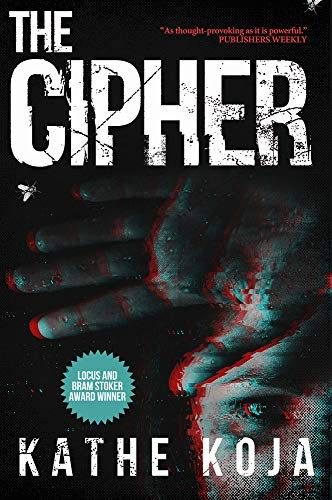
The Cipher
Kathe Koja · 1991
Mystery box A black, apparently bottomless opening in a storage room
Closest 14 connection Ordinary tenants discover an impossible feature in an unremarkable building and begin experimenting on it
Main difference Abrasive transgressive horror with no friendly ensemble or reassuring explanatory framework
Best for Readers who want grimy early-1990s weird horror, destructive obsession, and an impossible phenomenon that resists explanation.
Know before you start The novel includes self-harm, addiction, sexual violence, animal harm, body horror, toxic relationships, and graphic physical deterioration.
Nicholas finds the hole with Nakota, whose fascination quickly exceeds caution. The opening—soon named the Funhole—does not reflect light or offer a visible bottom. Objects lowered into it return altered, if they return. A videotape produces impossible imagery. Curiosity becomes art project, relationship weapon, and compulsion as other people enter the orbit of a phenomenon no one is equipped to control.
Kathe Koja gives readers the investigative setup of 14 after removing nearly every comfort that makes Clines approachable. Nicholas is passive, bitter, and physically deteriorating. Nakota treats discovery as entitlement. Their experiments do not build a competent team; they expose how badly each person wants the hole to confer meaning on an otherwise stagnant life.
The prose is feverish and claustrophobic, and the novel refuses a clean cosmology. Readers who need the mystery box to pay out in factual explanation will find the Funhole deliberately hostile to that desire. It ranks tenth because its narrative movement is inward rather than expansive. Yet it belongs here as the dark negative of 14: another cheap building, another impossible opening, and a reminder that not every group of curious tenants becomes a family.
9
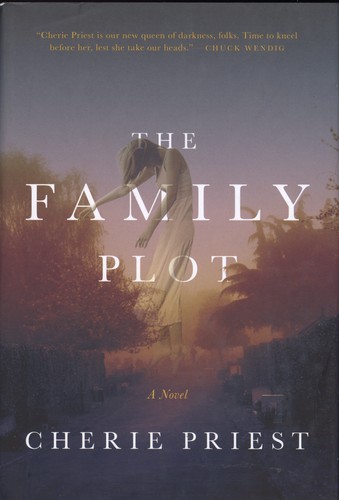
The Family Plot
Cherie Priest · 2016
Mystery box A condemned Chattanooga estate whose contents are being salvaged before demolition
Closest 14 connection A practical crew inventories a strange building and realizes that its physical evidence tells an impossible story
Main difference A relatively traditional ghost story centered on one family's hidden history
Best for Readers who want a blue-collar haunted-house investigation, old tools, sealed rooms, and a crew with a job to finish.
Know before you start The book includes child death, murder, confinement, bones and graves, family abuse, and supernatural violence.
Music City Salvage takes a risky contract to strip the Withrow house of valuable materials. Dahlia Dutton leads a small crew into the property, where sealed rooms, a neglected graveyard, and objects that should not have been left behind complicate the job. Because every day costs money, the characters cannot simply flee at the first unexplained sound. They must determine what is structurally dangerous, what is valuable, and what is following them.
Cherie Priest makes professional competence part of the atmosphere. The crew knows old buildings, tools, and salvage. Their expertise allows them to notice when a wall, floor, or room violates ordinary construction. Like Nate's neighbors, they pool observations and develop a working map. Unlike them, they are dismantling the mystery as they investigate it, which gives the house a deadline and a reason to react.
The explanation remains within recognizable haunted-house tradition, and the family secret is more important than any cosmic mechanism. Some relationships and revelations are sketched quickly. It ranks ninth because the box has a familiar shape. Still, the salvage premise is an excellent match for readers who liked the practical work of 14: remove a fixture, check the cavity, and discover that renovation has become archaeology.
8
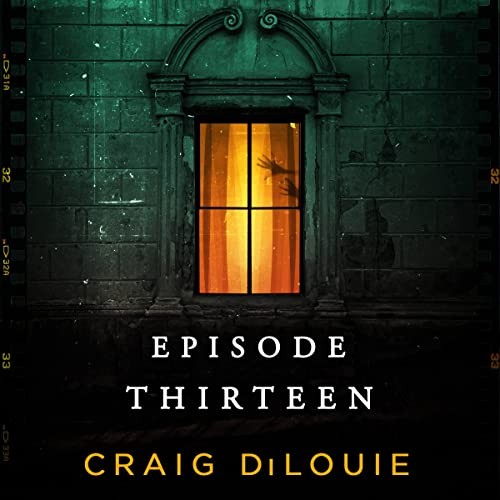
Episode Thirteen
Craig DiLouie · 2023
Mystery box Foundation House, an abandoned mansion associated with 1970s paranormal research
Closest 14 connection A team uses instruments, maps, and competing theories to test an impossible building
Main difference A found-document horror novel designed as the recovered final episode of a ghost-hunting show
Best for Readers who enjoy found footage, paranormal television, scientific séances, floor plans, and reality-distorting houses.
Know before you start The novel includes disappearance, body horror, suicide references, confinement, death, and escalating psychological breakdown.
The cast and crew of Fade to Black enter Foundation House hoping to record a career-making episode. The mansion once held researchers who attempted to prove that consciousness could affect physical reality; they later disappeared. Cameras, audio logs, text messages, and production notes document the crew's attempts to distinguish fraud, haunting, and a phenomenon that may be changing the space around them.
Craig DiLouie understands that paranormal television creates useful tension between evidence and entertainment. The team needs something dramatic to happen, but any dramatic event threatens the trust required to investigate it. As rooms and measurements become unstable, the familiar grammar of an episode—setup, night investigation, reveal—starts to break under a mystery that does not care about production.
The document format creates speed and visual variety, though it can keep emotional depth at a distance. Horror veterans may recognize several stages of the descent before the characters do. It ranks eighth because its final cosmology is less elegant than the investigative apparatus. For 14 readers, however, Foundation House offers exactly the right early pleasure: intelligent people bring equipment into an impossible space and keep recording after the equipment stops describing the same world.
7
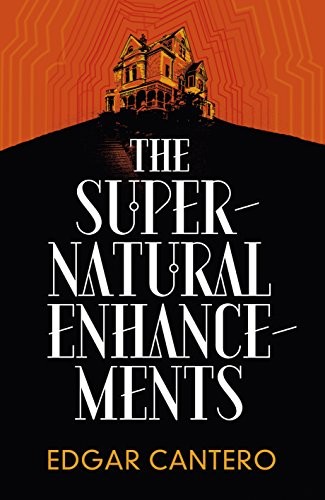
The Supernatural Enhancements
Edgar Cantero · 2014
Mystery box Axton House, inherited after its previous owner dies during a solstice
Closest 14 connection An eccentric pair decodes architectural clues, documents, dreams, and a secret society's rituals
Main difference A playful epistolary Gothic puzzle whose manner is more important than sustained fear
Best for Readers who want an epistolary puzzle, eccentric companions, codes, diagrams, and Gothic atmosphere with humor.
Know before you start The story includes suicide, death, occult ritual, age-gap discomfort, danger to a teenager, and supernatural violence.
A young European known primarily as A inherits a Virginia mansion from a distant relative who died under suspicious circumstances. He arrives with Niamh, his mute teenage companion, and discovers coded notes, surveillance materials, recurrent dreams, and evidence of a society connected to the house. Their investigation unfolds through diary entries, letters, transcriptions, diagrams, and other records.
Edgar Cantero treats the Gothic estate as an escape room assembled across generations. A and Niamh enjoy solving it, and their chemistry gives the book the same social buoyancy that makes Nate's tenant group appealing. Each cipher produces another task rather than a final answer, while the mixed documents let readers inspect evidence at roughly the characters' pace.
The whimsy can make danger feel ornamental, and the relationship between the protagonists includes an age and power imbalance that some readers will find uncomfortable. The ending's complexity may feel more clever than inevitable. It ranks seventh because Axton House is a puzzle first and a source of horror second. When it works, though, the novel delivers a rare combination: haunted inheritance, secret organizations, cryptography, and investigators genuinely delighted by the impossible.
6
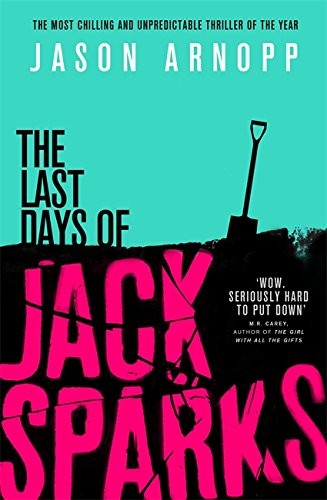
The Last Days of Jack Sparks
Jason Arnopp · 2016
Mystery box The posthumous manuscript of a journalist who mocked an exorcism and then died
Closest 14 connection Recorded anomalies and contradictory witnesses turn a skeptical investigation into a much larger supernatural mechanism
Main difference An unreliable media satire centered on one aggressively unpleasant narrator
Best for Readers who enjoy unreliable narrators, internet-age epistolary horror, exorcisms, and endings that reconfigure the manuscript.
Know before you start The novel includes addiction, withdrawal, exorcism, suicide, child endangerment, cruelty, death, and graphic demonic horror.
Jack Sparks is a celebrity journalist whose contempt for belief is inseparable from his brand. While researching a book about the supernatural, he laughs during an exorcism. A disturbing video then appears on his social accounts, though Jack insists he did not upload it. His unfinished manuscript, assembled and introduced by his brother after Jack's death, records his attempt to prove who created the video and why impossible events keep anticipating his skepticism.
Jason Arnopp makes the reader investigate the investigator. Jack edits, performs, insults, and withholds. Footnotes and testimony from other people expose fractures in his account without providing an entirely neutral alternative. The mystery expands through recordings, online identity, addiction, and a haunting that may understand narrative better than Jack does.
The book is comic and frightening, but spending so much time with Jack is intentionally exhausting. Its structure eventually closes into an elaborate loop, a payoff some readers will admire and others will find overengineered. It ranks sixth because it lacks the collaborative warmth of 14. It shares the more important escalation: one anomalous file becomes evidence of a design that has incorporated the act of investigation into itself.
5
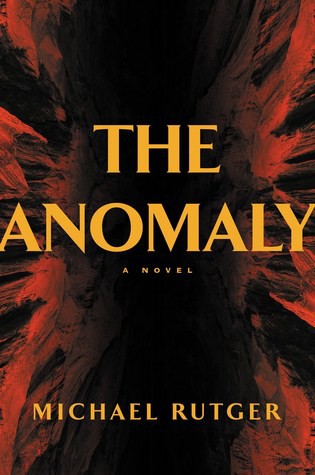
The Anomaly
Michael Rutger · 2018 · The Anomaly Files, book one
Closest 14 connection A likable investigative team follows a fringe theory into an enclosed site where scientific and cosmic explanations collide
Main difference Expedition adventure in a Grand Canyon cave rather than neighborly investigation of a home
Best for Readers who want archaeological adventure, a documentary crew, cave confinement, monsters, and sequel-ready conspiracy.
Know before you start The story includes claustrophobia, death, body horror, cult violence, creature attacks, and prolonged underground peril.
Nolan Moore hosts a web series devoted to archaeological anomalies. His team follows a disputed report about a hidden Grand Canyon cave allegedly discovered by an early-twentieth-century expedition. Finding an entrance could rescue the show. Once the crew enters and the route closes, evidence that should establish a sensational historical discovery begins pointing toward a far older and less human purpose.
Michael Rutger gives each team member a useful function—camera, production, research, skepticism—and lets workplace friction create humor without destroying competence. The cave offers a sequence of tangible discoveries that can be photographed, measured, and misread. Like the rooms in 14, its spaces appear designed around requirements the investigators cannot yet imagine.
The novel moves toward action-adventure and creature horror, with a conspiracy frame that continues into later books. Its characters are broader and its prose more utilitarian than Clines's strongest domestic scenes. It ranks fifth because the investigative rhythm is so close: fringe clue, physical confirmation, sealed environment, impossible mechanism, larger network. The main difference is that Nolan's crew goes looking for the mystery box and is understandably less pleased when it locks behind them.
4
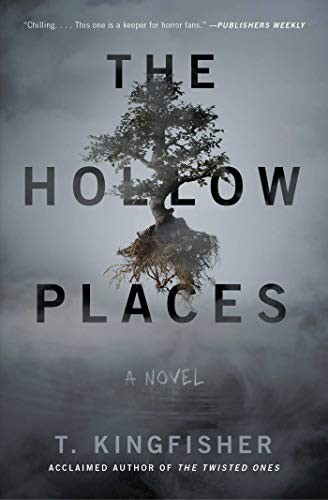
The Hollow Places
T. Kingfisher · 2020
Mystery box A hole behind a wall leading from a roadside museum into an impossible network of islands and bunkers
Closest 14 connection Curious, funny ordinary people investigate bad architecture and discover a portal built around cosmic danger
Main difference A smaller cast, folk-horror imagery, and a more overtly comic first-person voice
Best for Readers who want approachable cosmic horror, a roadside museum, a strong friendship, found warnings, and an impossible adjacent world.
Know before you start The novel includes animal remains, body horror, suicide references, confinement, infestation, and entities that respond to thought.
After her divorce, Kara moves into her uncle's Glory to God Museum of Natural Wonders, Curiosities, and Taxidermy. A hole in an upstairs wall appears to be an inconvenient repair until Kara and her friend Simon pass through it. On the other side lies a flooded landscape of willows, concrete bunkers, and written warnings from people who understood too late that thought itself can attract attention.
T. Kingfisher pairs cosmic horror with protagonists who discuss practical problems because practical discussion is how frightened people remain functional. Kara and Simon test doors, read found documents, and attempt to map a threshold whose geography resists safe use. The museum's odd collection gives the ordinary world enough strangeness that the portal feels like an extension rather than a genre change.
The humor reduces dread for some readers, and the central threat is more experiential than fully explained. A few gross-out sequences last longer than the mystery requires. It ranks fourth because it captures 14's rare tonal balance: discovery can be terrifying without eliminating curiosity, and friendship can remain funny without making the danger unserious. The hole in the wall is not the horror. It is the invitation to learn what the wall was keeping out.
3
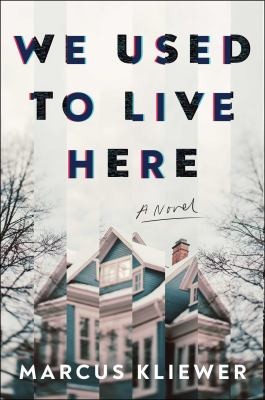
We Used to Live Here
Marcus Kliewer · 2024
Mystery box A house whose former residents arrive at the door and whose interior reality begins to shift
Closest 14 connection Small architectural inconsistencies accumulate into evidence that the building belongs to a larger hidden system
Main difference A destabilizing domestic thriller that withholds more of its mechanism and offers far less communal safety
Best for Readers who want liminal-space horror, home invasion, shifting identity, hidden online clues, and an ending designed for theories.
Know before you start The book includes confinement, gaslighting, disappearance, violence, mental-health distress, and harm involving a child and animal.
Eve is alone in the house she is renovating with her partner Charlie when a man arrives with his family. He says he lived there as a child and asks to show his children around. Allowing a brief visit feels awkward but humane. The family stays too long, weather worsens, and the house begins producing details Eve cannot reconcile with memory. Charlie's absence becomes another uncertainty rather than a source of rescue.
Marcus Kliewer understands the horror of politeness at the threshold. The first concession creates the conditions for the next, while Eve's anxiety makes every objection available for reinterpretation. Codes, recurring symbols, basement spaces, internet traces, and contradictory identities suggest that the intrusion is one instance of a much larger pattern.
The novel is built to destabilize rather than fully solve. Readers who require 14's explanatory payoff may find the ending frustrating, and some ambiguity functions through Eve's repeated hesitation. It ranks third because few recent books turn a normal house into such an effective reality puzzle. The clues imply rules without making those rules safe. Renovation reveals not what previous owners covered up, but how many versions of ownership the building may be able to contain.
2
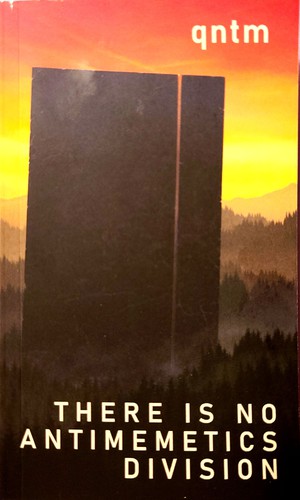
There Is No Antimemetics Division
qntm
First traditionally published 2025, following earlier web-serial and independent editions
Mystery box A secret organization fighting entities that erase themselves from memory
Closest 14 connection Investigators use records, procedures, experiments, and teamwork to infer a cosmic system designed to prevent discovery
Main difference High-concept organizational science fiction in which forgetting is the central monster
Best for Readers who want idea-dense cosmic horror, secret agencies, anomalous files, memory warfare, and aggressive conceptual escalation.
Know before you start The book includes suicide, memory loss, institutional experimentation, body horror, mass death, and threats to personal identity.
The Antimemetics Division contains threats that cannot remain in human memory. Its personnel leave notes for their future selves, use medication to perceive what cognition rejects, and discover absences in records where entire crises should be. Marie Quinn knows how to investigate an enemy no one can remember. The more alarming possibility is that the division has already fought a war it does not remember losing.
qntm turns epistemology into action. Every procedure answers a practical question: how do you staff a department people forget, detect an attack that removes its own evidence, or trust a plan you cannot retain? The book's files, redactions, repeated encounters, and time gaps allow the reader to assemble a mechanism while sharing the characters' inability to hold it continuously.
The 2025 edition revises material that originated in the SCP collaborative-fiction ecosystem and stands independently, though its bureaucratic density and rapid conceptual escalation will not suit everyone. It is colder and more apocalyptic than 14, with less time for ordinary relationships. It ranks second because its mystery box is extraordinarily well engineered. Each answer is usable, horrifying, and immediately creates a larger category of questions the organization may already have forgotten to ask.
1
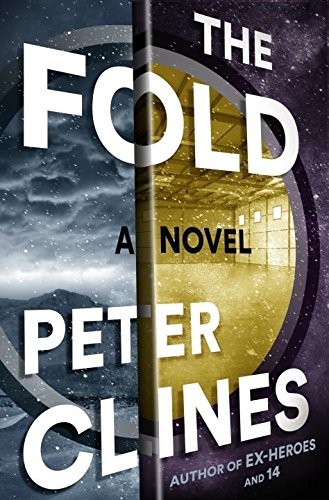
The Fold
Peter Clines · 2015 · A standalone story in the Threshold universe
Closest 14 connection The same universe, the same blend of humor and cosmic danger, and another impossible machine investigated by a practical outsider
Main difference A government science project replaces the apartment building, and the protagonist arrives specifically to audit it
Best for Anyone who finished 14 and wants the most direct next novel, especially readers who value investigation and cosmic explanation equally.
Know before you start The book includes body duplication, death, scientific misconduct, creature violence, and substantial spoilers for the wider Threshold mythology.
Mike Erikson prefers teaching in a small town to using the full extent of his near-perfect memory. A friend persuades him to examine the Albuquerque Door, a DARPA-backed device whose inventors claim it folds space for instantaneous travel. The team resents outside scrutiny, the demonstrations work, and Mike has no obvious flaw to report. Small inconsistencies nevertheless persist in ways only someone unable to forget would notice.
Peter Clines repeats the investigative pleasure of 14 without repeating its setting. Mike studies personnel, logs, physical details, and contradictory recollections. The scientists are not fools, which makes their defensiveness understandable and the hidden problem more dangerous. As in the Kavach Building, the apparent miracle is an interface with a system whose purpose has been catastrophically misunderstood.
Readers should not expect Nate's tenant ensemble or another slow architectural tour. Mike is unusually capable, the science-thriller opening is cleaner, and the connection to 14 becomes more meaningful as the plot develops. It ranks first because it is the safest recommendation and the most exact one. The Fold supplies a new mystery box built from the same narrative machinery: intelligent curiosity, ordinary humor, testable clues, and a door that works perfectly except for where it actually goes.
Which Mystery-Box Horror Novel Should You Read First?
Read The Fold first if you have not already. It is the direct Threshold-universe answer and preserves Clines's balance of skeptical investigation, humor, and cosmic scale. Choose There Is No Antimemetics Division if you want the most inventive mechanism and do not mind a colder, denser book.
For another impossible house, choose We Used to Live Here when ambiguity appeals and The Family Plot when you prefer a traditional ghost explanation. The Hollow Places is the best tonal match outside Clines: funny people, practical investigation, and a portal that opens onto cosmic horror.
Read The Anomaly for expedition adventure, Episode Thirteen for found-footage form, and The Supernatural Enhancements for codes and ephemera. The Last Days of Jack Sparks suits readers who enjoy an unreliable document, while The Cipher is the harshest option and the least interested in making curiosity healthy.
A good mystery box makes every answer feel like a physical achievement. The characters measure the wall, recover the file, test the device, or compare memories. Then the achievement exposes a scale of danger that ignorance had been containing.
The Fold ranks first because it understands the contract 14 made with its readers. Curiosity is not punished merely for existing. It is rewarded with intelligible discovery, even when discovery is terrible. The door leads somewhere, the machine has rules, and the people trying to understand it remain worth following after the box opens.